
If you’re reading this because you care about wildlife but have no idea how to actually help, I want you to know something.
I was you.
Long before I was photographing bears in Alaska, tracking orangutans through the rainforests of Sumatra, sitting with mountain gorillas in Uganda, or searching for one of the world’s rarest bears here in Italy, I was simply someone who loved animals.
I cared deeply, but I had no idea what to do with that passion.
I assumed wildlife conservation was something reserved for scientists, park rangers, and people with PhDs. I thought you needed decades of experience before anyone would take you seriously.
I couldn’t have been more wrong.
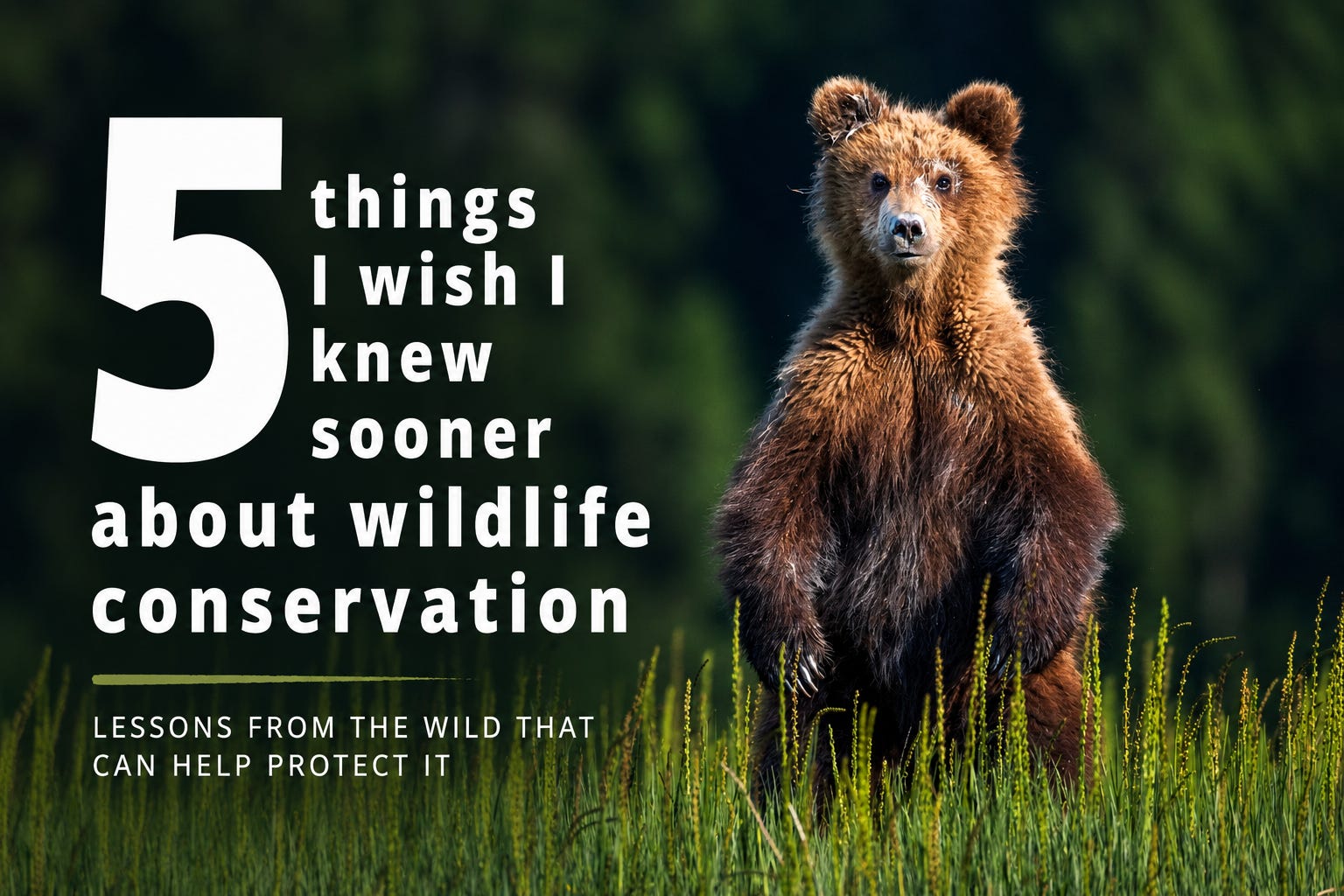
Today, I’ve been fortunate enough to work alongside some of the most inspiring conservationists on Earth. I’ve seen incredible successes. I’ve also witnessed heartbreaking losses. I’ve spent countless hours around boardroom tables, in government meetings, and in remote villages discussing conservation, and just as many hours sitting in forests, mountains, and tundra watching wildlife simply exist.
The more time I spend in conservation, the more I realize how much I still have to learn.
But there are a handful of lessons I wish someone had shared with me years ago.
Maybe they’ll help you begin your own journey.
1. You Don’t Need Permission to Care
For years, I was waiting.
Waiting until I knew enough.
Waiting until I had the right experience.
Waiting until someone invited me into conservation.
I thought there would be some moment when I’d finally be “qualified.”
That moment never came.
Instead, I slowly realized that conservation isn’t a club with a membership card. Nobody is standing at the entrance checking your credentials.
If you care about wildlife, you’re already part of it.
My own path certainly wasn’t traditional.
I spent nearly a decade working as an economist at the World Bank. Conservation wasn’t in my job description. Photography wasn’t either.
Then bears changed everything.
What began as a fascination slowly became an obsession. That obsession became a purpose. Eventually it led me to create The Wildlife Collective, not because I knew exactly what I was doing, but because I simply couldn’t imagine not trying.
Looking back, I’m grateful I stopped waiting.
If I had continued waiting until I felt ready, I’d probably still be waiting today.
2. Conservation Needs More Than Scientists
One of the biggest surprises for me has been discovering how many different skills conservation actually needs.
Of course we need biologists.
But we also need storytellers.
Photographers.
Lawyers.
Fundraisers.
Teachers.
Graphic designers.
Filmmakers.
Social media managers.
Economists.
Policy experts.
Business owners.
Volunteers.
Every successful conservation campaign I’ve been involved with has been built by people with completely different backgrounds.
Science tells us what is happening.
Stories convince people to care.
Policy turns ideas into action.
Fundraising makes it possible.
Communication inspires others to join.
No one person can do everything.
And that’s actually the beauty of conservation.
Whatever your skills are, chances are wildlife needs them.
3. Conservation Is About People Just as Much as Wildlife
This is probably the lesson that surprised me the most.
When I first became passionate about wildlife, I thought conservation was mostly about animals.
It’s not.
It’s about people.
It’s about understanding why communities make the decisions they do.
It’s about listening before speaking.
It’s about building trust.
It’s about finding common ground with people who may see the world very differently than you.
Some of the most successful conservation projects I’ve visited haven’t succeeded because they had the best science.
They succeeded because they had the support of local people.
I’ve also learned this through advocacy.
One campaign that really shaped my thinking was the effort to stop the proposed Pebble Mine in Alaska.
On paper, it was an unlikely coalition.
Environmental organizations.
Commercial fishermen.
Local Indigenous communities.
Business owners.
Hunters.
Even bear trophy hunters.
Many of these groups disagreed on countless other issues.
But they agreed on one thing.
Some places are simply too important to lose.
That campaign taught me that conservation isn’t about finding people who agree with you on everything.
It’s about finding enough common ground to protect something that matters.
Sometimes that requires setting aside differences in pursuit of a larger goal.
4. Passion Gets You Started. Strategy Gets Results.
I used to think caring deeply was enough.
It’s not.
Passion gives you energy.
Strategy gives you impact.
The longer I’ve worked in conservation, the more I’ve realized that changing hearts and minds is incredibly difficult.
Facts alone rarely change opinions.
Neither does anger.
People respond to stories.
To hope.
To belonging.
To solutions.
Some of the most successful conservation campaigns in history didn’t succeed because they shouted the loudest.
They succeeded because they understood people.
They knew how to communicate.
They knew when to push.
When to collaborate.
When to compromise.
And when not to.
This is something I continue to learn every single day.
Every photograph I share, every article I write, every tour I lead, every campaign we support through The Wildlife Collective begins with one question.
How can this inspire one more person to care?
Because people protect what they love.
Everything else follows from that.
5. Never Lose Hope
I’ll be honest.
Conservation can be emotionally draining.
I’ve walked through forests where orangutans used to live that have now become palm oil plantations.
I’ve seen bears threatened because of politics.
I’ve watched incredible habitats disappear.
I’ve sat with conservationists who dedicate their entire lives to protecting species while constantly worrying about funding.
Some days it feels overwhelming.
But then something happens.
A child tells me they now want to become a conservationist.
A former hunter becomes an advocate.
A community decides to protect wildlife instead of exploiting it.
A photograph reaches millions of people and starts conversations that otherwise wouldn’t have happened.
A campaign succeeds against impossible odds.
Those moments remind me why this work matters.
Conservation isn’t measured in days.
It’s measured in decades.
Sometimes generations.
Progress is often frustratingly slow.
But it is progress nonetheless.
If there’s one thing I’ve learned from bears, it’s perseverance.
Every spring they emerge from months of hibernation and simply begin again.
No fanfare.
No certainty.
Just another season.
I think conservation is much the same.
We wake up each day and choose to keep going.
Not because success is guaranteed.
But because wildlife deserves people willing to try.
One Final Thought
If you’re wondering whether one person can really make a difference, let me leave you with this.
Every conservation movement in history started because someone cared enough to act.
Not because they had all the answers.
Not because they were the smartest person in the room.
Simply because they decided that doing something was better than doing nothing.
I certainly don’t have all the answers.
I’m still learning every single day.
But I do know this.
The world doesn’t need more people who love wildlife from a distance.
It needs more people willing to step forward and become part of its future.
I hope you’ll be one of them.
I’d love to hear from you.
What lessons has wildlife conservation taught you? Or if you’re just getting started, what’s holding you back? Share your thoughts in the comments below.
Quote of the Day
We can’t all be Superman, but we can all do super things.
— Darma Pinem
Kenya Big Cat Safari Openings
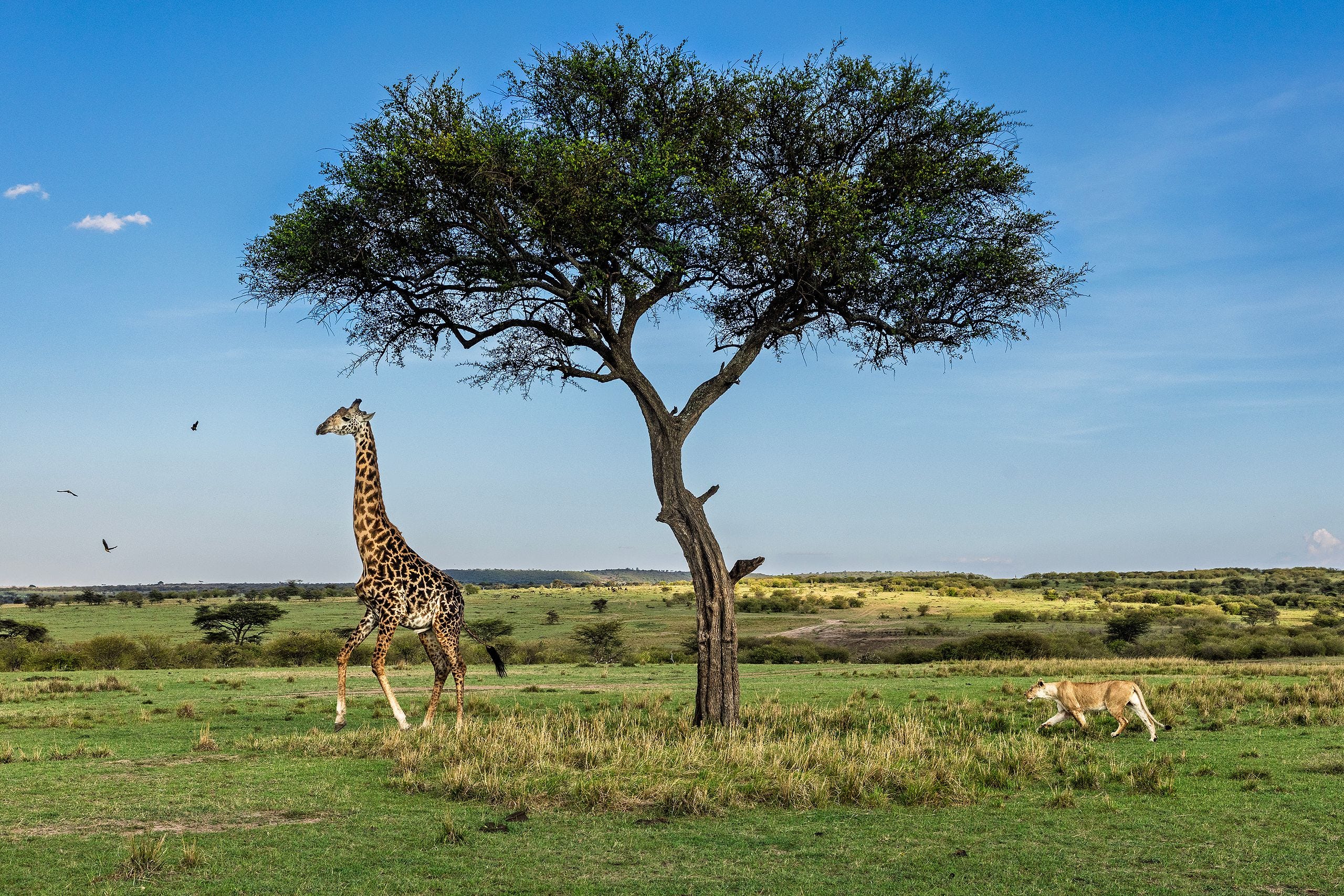
We have just two spots left on our September 2–9 Kenya Big Cat Safari. We’ll be staying at our very own Kapoto Camp in the heart of the Masai Mara, spending our days searching for lions, leopards, cheetahs, elephants, and so much more. There’s something truly magical about the Mara: the incredible wildlife, the golden light, the endless plains, and the amazing people who make this place so special. If you’ve ever dreamed of experiencing Africa’s iconic big cats in the wild, I’d love to have you join us. Please send me a message if you’re interested.
Thank you for being part of The Wildlife Collective. Together, we are helping build a deeper connection between people and the natural world while supporting the conservation of wildlife and wild places. Stay tuned for more stories from the field, conservation news, photography tips, and unforgettable wildlife encounters from around the globe.
Until next time, keep exploring, keep learning, and keep falling in love with the wild.
Zac Mills
The Wildlife Collective