
There was a time when grizzly bears lived across much of North America.
Long before highways divided the landscape and cities stretched across the plains, grizzlies roamed from the Pacific Coast to the Great Plains, from northern Mexico through the Rocky Mountains and all the way into Alaska.
They lived in California, Colorado, Arizona, New Mexico, Utah, Nevada, Oregon, Washington, Idaho, Montana and Wyoming.
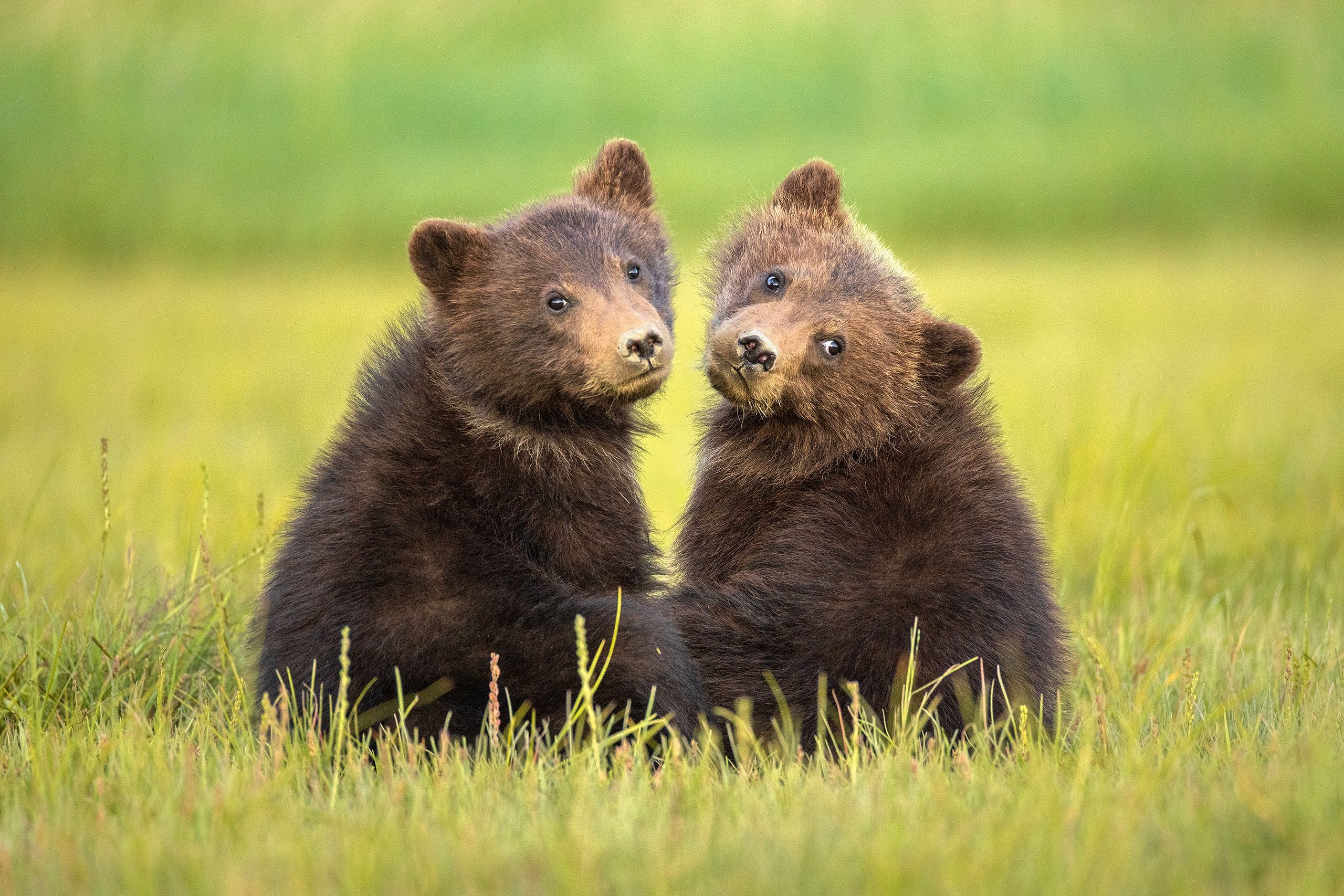
Today, that is almost difficult to imagine.
Most Americans now associate grizzlies with Yellowstone or the mountains of Montana. California has a grizzly bear on its state flag, yet there hasn’t been a wild grizzly there in more than a century.
The California grizzly was once widespread. Indigenous peoples had lived alongside these bears for thousands of years. Then came European settlement and, eventually, the Gold Rush.
Bears were shot, trapped and poisoned. Some were captured and forced into brutal bear-and-bull fights for entertainment. Bounties encouraged people to kill them.
By the early twentieth century, the California grizzly was gone.
The same thing happened across much of the American West.
As settlers moved west, grizzlies weren’t seen as something worth protecting. They were considered dangerous, a threat to livestock and an obstacle to expansion.
Governments paid people to kill them. Predator eradication programs poisoned and trapped them. Railroads, logging, mining, ranching and agriculture transformed the places where they lived.
And we were very good at killing bears.
By the middle of the twentieth century, grizzlies had disappeared from approximately 98 percent of their historic range in the Lower 48.
Fewer than 1,000 remained.
We had taken one of the great symbols of wild North America and nearly wiped it out.
Then something changed.
In 1975, the grizzly bear was listed as threatened under the Endangered Species Act.
What followed was one of America’s great conservation success stories.
Hunting largely stopped. Bears received federal protection. Habitat was better protected. Scientists began closely monitoring populations. Wildlife managers developed ways to reduce conflicts. Tribal Nations, conservation organizations, ranchers, government agencies and local communities all played a role.
It didn’t happen quickly.
Grizzly bears reproduce incredibly slowly. Females don’t usually begin having cubs until they are several years old, and they may raise only a few cubs every several years.
When a population is that small and reproduction is that slow, every breeding female matters.
Slowly, bears began coming back.
Today, more than 2,000 grizzlies live in the Lower 48, with most living in and around the Greater Yellowstone and Northern Continental Divide ecosystems.
It is an incredible recovery.
But it is not a finished one.
Grizzlies still occupy only a tiny fraction of the land they once inhabited in the contiguous United States. Several of the areas identified for their recovery still have few bears or no established population at all.
For decades, many of the surviving populations have also existed as islands.
That is beginning to change.
Bears are expanding into new areas. Grizzlies from the Northern Continental Divide and Greater Yellowstone ecosystems are now within dispersal distance of one another, with bears documented in the landscape between them. Bears have also begun moving toward the Bitterroot and between other recovery ecosystems.
This might be one of the most exciting parts of the entire grizzly recovery story.
The bears are beginning to reconnect the landscape themselves.
A young grizzly walking out of one ecosystem and eventually breeding in another might not make national news, but biologically it matters enormously. It brings new genes into populations that have been isolated for generations and makes those populations more resilient over the long term.
To me, that is what recovery should be about.
Not simply reaching a number and declaring victory.
Giving bears enough space, and enough connected space, that they can survive for generations without us constantly having to engineer their survival.
And there are still enormous opportunities to do that.
The Bitterroot Mountains of Idaho and Montana contain some of the largest remaining wild country in the Lower 48, yet there is currently no established grizzly population there. Individual bears are already beginning to disperse into the region.
In Washington’s North Cascades, the federal government has gone even further.
In 2024, the United States approved a plan to actively restore grizzly bears to the North Cascades, where they are considered functionally extirpated. No bears have been moved there yet, but for the first time in generations there is an approved pathway for their return.
Think about that for a moment.
We spent more than a century removing grizzlies from these landscapes.
Now we have the opportunity to bring some of them back.
That is what real recovery can look like.
It doesn’t mean putting grizzlies back everywhere they once lived. That isn’t realistic. The West has changed enormously over the past two centuries. Millions of people now live in former grizzly habitat.
But there are still huge areas of wild country capable of supporting bears.
Why wouldn’t we want them there?
Why should the ambition of conservation be simply to maintain the populations we have today?
I think we can aim higher.
And that is why what is happening right now concerns me so much.
In July 2026, the Trump administration proposed a significant change to the way grizzly bears are managed in the Lower 48.
To be clear, the proposal does not delist grizzly bears. They would remain protected as threatened under the Endangered Species Act, and public sport hunting would remain prohibited while those protections remain in place.
But the proposed rule would give states and Tribal governments considerably more flexibility to manage grizzlies in certain areas, including additional authority over actions that would otherwise constitute “take” under the Endangered Species Act. The administration describes this as returning more management authority to the people who live with bears.
I understand the argument for local management. I also understand that there are situations where dangerous bears have to be removed and that people living in bear country deserve effective tools for preventing conflict.
But I am completely opposed to delisting grizzly bears at this point in their recovery.
And I am deeply concerned about transferring more authority to states whose political leaders have spent years pushing to delist grizzlies and reopen trophy hunting.
That isn’t some hypothetical fear.
We have already seen where this can lead.
When Yellowstone-area grizzlies lost federal Endangered Species Act protection in 2017, Wyoming and Idaho immediately moved toward trophy hunting seasons. Wyoming approved a hunt that could have killed as many as 22 grizzlies, while Idaho authorized one grizzly tag.
Those hunts were stopped only because a federal court restored protections.
The intention was perfectly clear.
Delist the bears. Return authority to the states. Start killing them for sport.
I want to be equally clear about my own position on this.
I despise trophy hunting.
I have spent thousands of hours around bears. I have watched mothers raise cubs, watched young bears learn how to fish, watched enormous males walk past me, and watched individual bears develop completely different personalities and ways of moving through their world.
I cannot understand the desire to kill one of these animals simply to possess its skin, skull or head.
It makes me sick.
There is a profound difference between reluctantly killing an individual bear because it presents a genuine threat to human life and killing a grizzly because someone wants a trophy.
We should stop pretending those things are remotely equivalent.
And if anyone wants to know why I am so concerned about handing wildlife management back to states determined to reduce predator populations, look at what happened to wolves.
Gray wolves were one of the great success stories of the Endangered Species Act. After being exterminated across most of the Lower 48, they returned to places like Yellowstone and the Northern Rockies.
Then federal protections disappeared across much of the region.
What followed should concern anyone who cares about large carnivores.
Idaho now allows wolves to be hunted and trapped with no daily or seasonal bag limit, and its regulations explicitly state that hunters are not required to retrieve the meat from a wolf they kill.
Montana has dramatically liberalized wolf killing as well. During the 2024–25 license year, hunters and trappers killed 297 wolves. Individual hunters and trappers were allowed to take large numbers of wolves, and current regulations allow a person who both hunts and traps to legally kill as many as 30 wolves in a season, subject to geographic requirements. Baiting wolves is legal.
In Wyoming, at least 131 wolf deaths were documented in 2024.
This is what “state management” can look like when political pressure shifts from recovering predators to reducing them.
And I find it appalling.
These are extraordinarily intelligent, social animals that form families, raise pups together and play an essential role in wild ecosystems. Yet we have created systems where one person can legally kill wolf after wolf after wolf.
This is precisely why the debate over grizzly bears cannot be reduced to whether there are “enough” bears in Yellowstone or northern Montana.
The question is what happens next.
Right now, the Trump administration’s proposed grizzly rule remains just that: a proposal. It maintains the grizzly’s threatened status under the Endangered Species Act. But the administration has explicitly described the proposal as increasing state management, and political leaders supporting the announcement openly framed it as a step toward eventual delisting.
That should matter to anyone who cares about what happens to these bears.
Because once federal protection disappears, history tells us exactly what some states want to do.
They want trophy hunts.
I want something very different.
I want to see grizzlies continue expanding into suitable habitat.
I want the Greater Yellowstone and Northern Continental Divide populations fully connected.
I want bears returning to places where we exterminated them generations ago.
I want a viable population restored to the Bitterroot.
I want to see grizzlies walking through the North Cascades again.
I want enough connected habitat that a young bear can leave its mother’s territory and actually have somewhere wild to go.
And I want us to have enough imagination to believe that some of the wildest parts of America can still become wilder.
There will be challenges.
Living alongside grizzly bears requires work. It requires securing attractants, protecting livestock, educating people, compensating ranchers for losses, maintaining wildlife corridors and, yes, occasionally removing individual bears when there is genuinely no other option.
But those challenges are not an excuse to turn one of America’s greatest conservation success stories back into a trophy.
We nearly exterminated grizzly bears once.
Their recovery took half a century of federal protection, enormous amounts of money, generations of scientific work and the commitment of countless people.
And after all of that, they still occupy only a fraction of their former world.
We almost lost grizzly bears once.
History shows us exactly how it happened.
I have no interest in watching us walk down that road again.
Quote of the Day
Those who cannot remember the past are condemned to repeat it.
— George Santayana
Catching Up After a Month With Bears
After spending the past month in Alaska with the bears, I’m slowly finding my way back into the real world and catching up on everything I let slide while I was away. There are a lot of emails to answer, a very long to-do list, and plenty of things that need my attention. I’m working my way through it all, slowly but surely, so if you’re waiting to hear from me, I promise I haven’t forgotten about you.
I already miss the bears more than I can say. After a month of waking up surrounded by them, spending long days outside, and having very little connection to the normal world, sitting in front of a computer again feels like a pretty rough adjustment. I’ll get back to you soon, and thank you for your patience while I catch up.
Thank you for being part of The Wildlife Collective. Together, we are helping build a deeper connection between people and the natural world while supporting the conservation of wildlife and wild places. Stay tuned for more stories from the field, conservation news, photography tips, and unforgettable wildlife encounters from around the globe.
Until next time, keep exploring, keep learning, and keep falling in love with the wild.
Zac Mills
The Wildlife Collective