
Today marks the beginning of a new journey.
I’m heading north. Far north. To Nunavut, in the Canadian Arctic, in search of polar bears.
It’s somewhere I’ve never been before, and I can’t tell you how excited I am.
For the past seven years, I’ve travelled to Churchill, Manitoba, to spend time with polar bears. It’s a place I have come to love. I’ve had some extraordinary encounters there, made wonderful friendships, and spent countless hours watching these remarkable animals. I’ll be returning again in just a few weeks.
But Churchill is changing.
It’s becoming increasingly busy, and one of the biggest challenges I face as a guide has nothing to do with the polar bears themselves. It’s navigating all the people who have come to see them.
And I understand why they’re there. I really do. Polar bears are extraordinary animals, and Churchill is one of the most accessible places in the world to see them in the wild. I want people to experience them. I want people to fall in love with them, because I believe that connection is so important to their future.
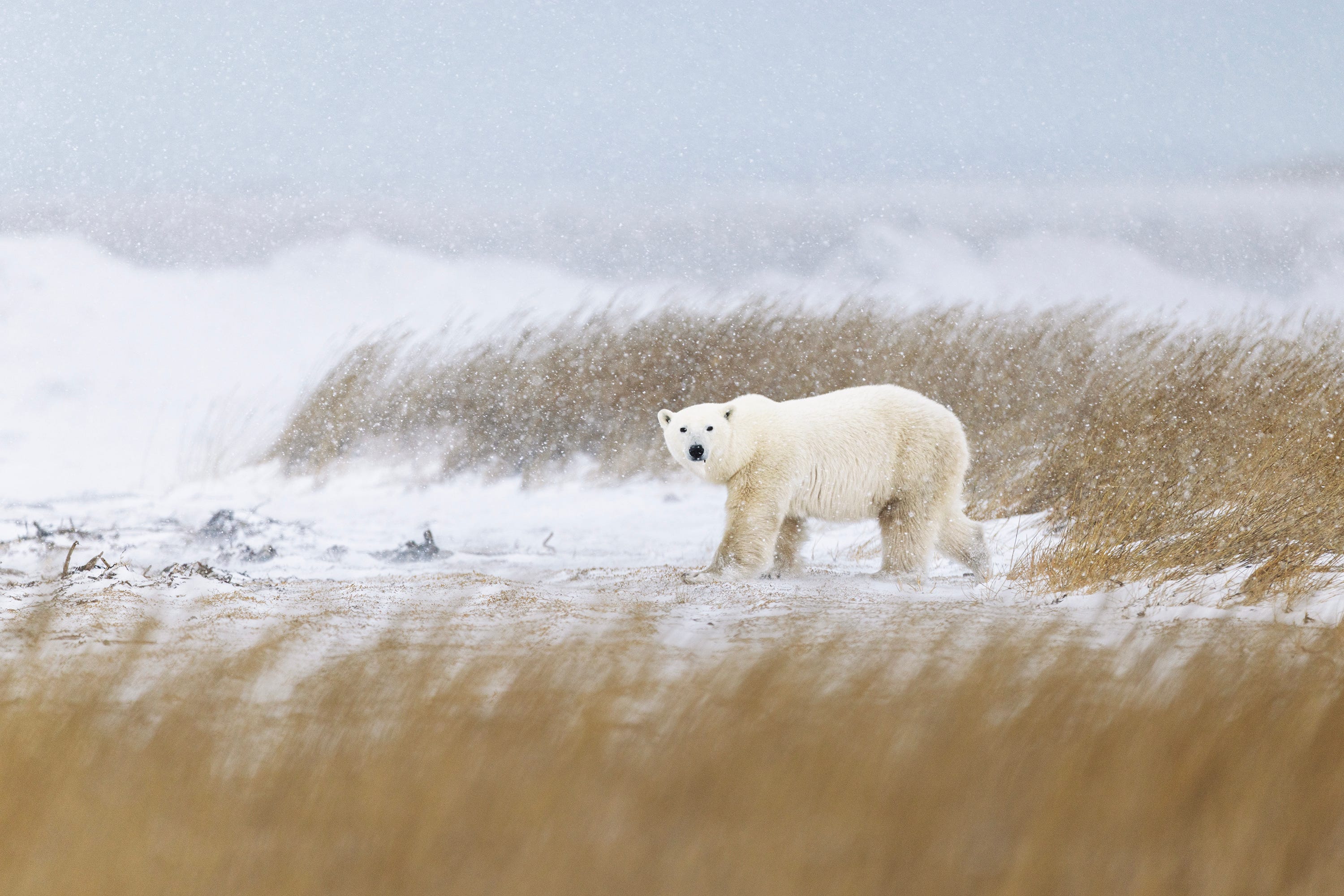
But when you’re trying to create a quiet, intimate experience with wildlife, having so many other people around can make things difficult.
I don’t want our guests to feel like they’re part of a procession of vehicles, all trying to get a glimpse of the same bear. I want us to have the time and space to watch, to learn, to photograph, and sometimes just to sit and appreciate where we are.
That’s what I’m always searching for at The Wildlife Collective.
New places. Different experiences. Opportunities to get away from the crowds and spend meaningful time with wildlife.
And that search has brought me to Nunavut.
From everything I’m hearing from our team on the ground, there are plenty of polar bears around right now. Of course, wildlife is never guaranteed, and the Arctic has a way of reminding you that you’re not in control of much. But the reports have been encouraging, and I’m hopeful we’re going to have some incredible encounters.
What excites me most, though, isn’t just the possibility of seeing lots of bears.
It’s the possibility of having the place to ourselves.
Just our small group, our local team, the Arctic landscape, and the bears.
No crowds. No competing for space. No feeling that we need to rush an encounter because another group is waiting behind us.
And the opportunity to be out on foot.
There is something very different about experiencing wildlife on foot. You’re much more aware of your surroundings. You notice the little things. You feel the cold, hear the wind, and appreciate just how enormous and wild these landscapes really are.
With polar bears, of course, this requires tremendous care, experience, and respect. They’re powerful predators, and their welfare and everyone’s safety must always come first. But with the right local expertise, conditions, and precautions, I believe these experiences can be incredibly special.
I have spent so much of my life searching for places like this.
And I hope Nunavut becomes somewhere we return to for many years to come.
The future of polar bears
As excited as I am about this trip, there’s something else I think about every time I head north.
The future of the bears themselves.
I’ve been fortunate to spend time with polar bears year after year, but I also know that the world they’re living in is changing, and changing far too quickly.
Polar bears depend on sea ice. It’s where they hunt seals, which provide the energy they need to survive, reproduce, and raise their cubs.
When the ice disappears earlier in the spring and returns later in the autumn, the bears lose valuable hunting opportunities. In many places, that means spending longer periods on land, relying on the energy they’ve stored, and facing increasingly difficult conditions.
And this isn’t some distant possibility. It’s already happening.
The Arctic is warming several times faster than the global average. Sea ice has been declining for decades, and the changes are enormous.
The science is clear, and it has been for a very long time.
What troubles me is that we know so much about what’s happening, and yet we’re still not doing nearly enough to change where we’re heading.
It’s difficult to reconcile.
We have some of the world’s best scientists studying these animals. We have decades of research. We have satellite records documenting the loss of sea ice. We have models showing what the future could look like.
And still, the political response has been nowhere near the scale of the problem.
I find that incredibly frustrating.
Because polar bears aren’t responsible for what’s happening to them.
They’re simply trying to survive in a world we’re changing around them.
And the decisions we make over the next few decades will have an enormous influence on whether future generations get to experience these animals in the wild.
Why I believe storytelling matters
I spent many years working as an economist before becoming a wildlife photographer and guide.
I believe in science. I believe in data. I believe in the importance of understanding problems properly before trying to solve them.
But I’ve also come to believe that facts alone are rarely enough.
We can tell people that the Arctic is warming. We can show them graphs of declining sea ice. We can explain what climate change means for polar bears.
And we should do all of those things.
But I don’t think information alone necessarily changes how people feel, or what they’re willing to do.
Stories can.
Experiences can.
I’ve seen it happen so many times.
Someone comes on a trip because they want to photograph a polar bear. Perhaps it’s been on their bucket list for years. They want that beautiful image of a bear walking across the snow.
And then they spend time with these animals.
They watch a mother caring for her cubs. They see a young bear exploring its surroundings. They notice their intelligence, their curiosity, their personalities, and all the little behaviours that make each animal an individual.
And something changes.
The bear is no longer just a photograph they wanted to take.
It’s an animal they feel connected to. An animal they care about.
And suddenly the threats facing polar bears aren’t just something they’ve read about in the news.
They’re personal.
That’s one of the reasons I love guiding so much.
Yes, I want our guests to have incredible wildlife encounters. I want them to come home with photographs they’re proud of, memories they’ll treasure, and stories they’ll tell for years.
But I also hope they come home caring a little more deeply about the animals they’ve met.
Because I believe that matters.
Not everyone who joins us is going to become a conservationist. Not everyone is going to start campaigning for climate action or supporting wildlife organizations.
But perhaps they’ll share what they learned with their friends. Perhaps they’ll make different choices. Perhaps they’ll support an organization doing important work. Perhaps they’ll speak up when wildlife needs a voice.
And perhaps they’ll inspire someone else to care.
I don’t think we should underestimate the importance of that.
A reason to keep going
There’s a question I ask myself often.
What more can I do?
I love what we’ve built at The Wildlife Collective. I love taking people to extraordinary places and sharing the wildlife that means so much to me.
But increasingly, I feel a responsibility to do more than simply bring people to see these animals.
I want to tell their stories.
I want to use my photography, my writing, the relationships I’ve developed, and the community we’ve built to help protect them.
And I want the experiences we offer to contribute to that work.
Because the more time I spend with bears, the more I realize how much they need people willing to stand up for them.
Climate change is by far the greatest long-term threat facing polar bears, but it’s not the only challenge. Across the Arctic, these animals are also navigating increasing industrial activity, pollution, and growing interactions with people as their habitat changes.
Their future isn’t entirely in our hands. But an enormous part of it is.
We have the knowledge and the means to reduce greenhouse gas emissions. What we need is the collective determination to act on that knowledge, and to act much faster than we have so far.
And I think those of us who have the privilege of spending time with these animals have a responsibility to share what we’re seeing.
Not just the beautiful moments.
The difficult stories, too.
I don’t know exactly what the coming days in Nunavut will bring.
Maybe we’ll have spectacular encounters with polar bears. Maybe the weather will make life difficult. Maybe we’ll spend hours searching across an empty Arctic landscape.
That’s part of what makes these journeys so exciting.
But I do know what I hope to bring home.
Photographs, of course. Stories. New friendships. A deeper understanding of this part of the Arctic and the bears that live here.
And hopefully, something that helps a few more people understand why these animals are worth fighting for.
Because I don’t want my children, or their children, to grow up in a world where polar bears exist only in photographs and stories of what once was.
I want them to have the same opportunity I’ve had.
To travel north.
To stand in the cold.
And to see a polar bear walking across the Arctic landscape, exactly where it belongs.
Quote of the Day
Those that say that individuals are not capable of changing anything are only looking for excuses.
— Václav Havel
Thank you for being part of The Wildlife Collective. Together, we are helping build a deeper connection between people and the natural world while supporting the conservation of wildlife and wild places. Stay tuned for more stories from the field, conservation news, photography tips, and unforgettable wildlife encounters from around the globe.
Until next time, keep exploring, keep learning, and keep falling in love with the wild.
Zac Mills
The Wildlife Collective