
I’ve spent a good part of my life in Alaska, photographing bears and sharing these extraordinary animals with people from around the world. Every summer, I return to the same rivers and coastlines, watching bears fish for salmon, mothers raise their cubs, and young bears learn how to survive in the wild.
I’ve come to know some of these bears as individuals. I recognize their faces, their personalities, and their relationships with other bears. And the more time I spend with them, the more I appreciate just how intelligent, adaptable, and remarkable they are.
Which is why the news coming out of Washington this week makes me so angry.
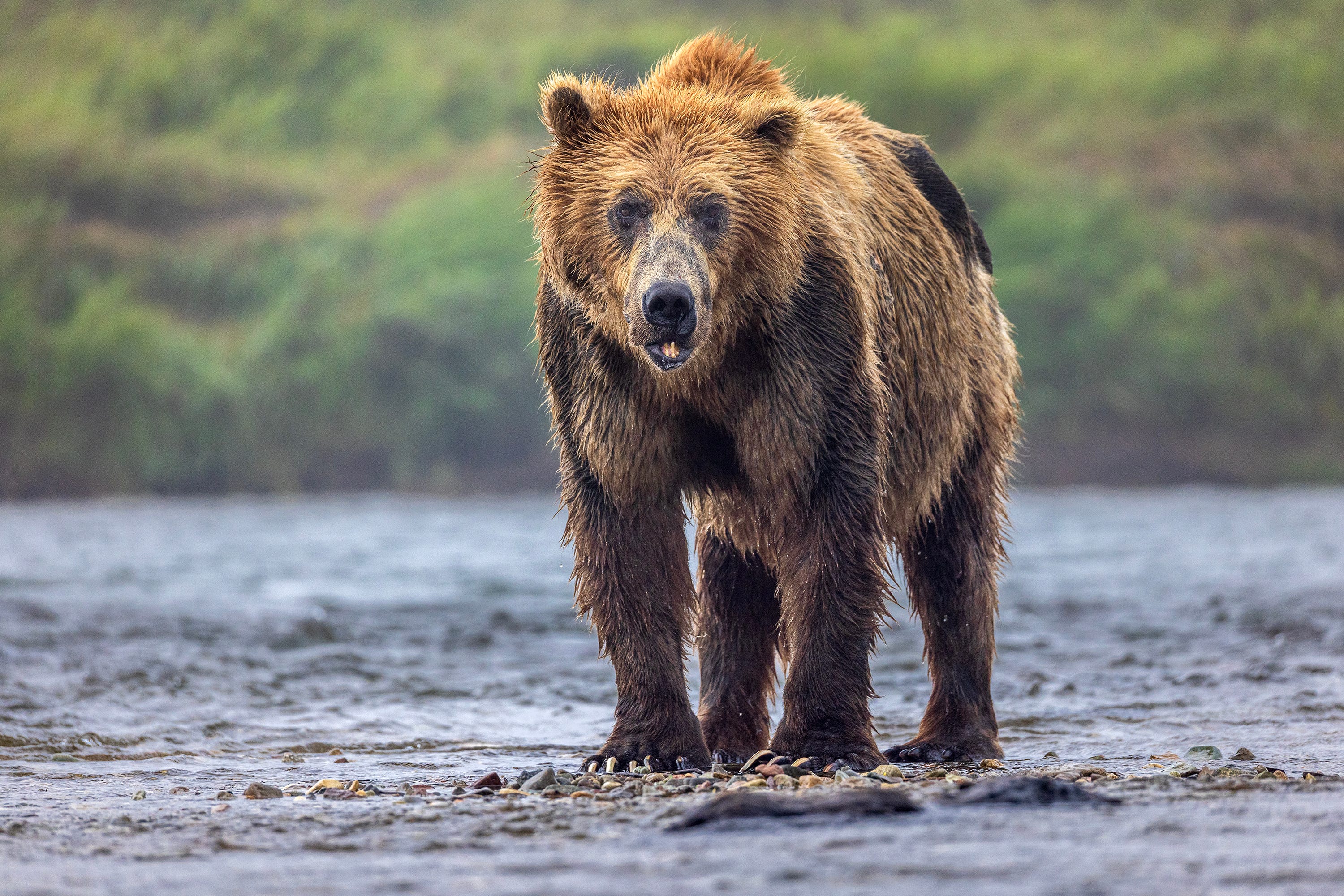
On October 16, the Trump administration announced a new rule overturning federal restrictions on bear baiting in Alaska’s national preserves. The rule, published on October 19 and scheduled to take effect November 18, reverses protections that were restored under the Biden administration in 2024.
For those unfamiliar with bear baiting, it’s exactly what it sounds like. Hunters place food in an area to attract bears, then wait for them to arrive so they can shoot them. The bait can include donuts, pastries, bacon grease, and other foods that bears find irresistible.
Think about that for a moment.
We spend enormous amounts of time and money educating people about the dangers of feeding bears. Throughout North America, wildlife agencies tell us to secure our garbage, store our food properly, and never allow bears to associate people with an easy meal.
And for good reason. Food-conditioned bears can become a danger to themselves and to people. In some cases, those bears end up being killed because of behaviour that humans encouraged in the first place.
Yet here we have the federal government allowing hunters to deliberately attract bears with food, for the purpose of killing them.
How does that make any sense?
What the ruling actually means
First, an important distinction. This ruling applies to Alaska’s national preserves, not a blanket opening of national parks to hunting.
Unlike most national parks, Alaska’s national preserves allow hunting under the Alaska National Interest Lands Conservation Act of 1980. The question here is whether certain hunting practices, including bear baiting, should be permitted on these federally protected lands.
In 2015, the National Park Service prohibited a number of controversial hunting practices in Alaska’s preserves, including bear baiting. Those restrictions were reversed during Trump’s first administration, restored in 2024 under Biden, and have now been overturned again.
The latest rule also changes other hunting and trapping regulations, but bear baiting is the provision that particularly concerns me.
The administration argues that Alaska should have greater authority over wildlife management and that state regulations are sufficient to ensure the practice is conducted safely.
Interior Secretary Doug Burgum described the decision as a return to a longstanding management framework that gives Alaskans a greater say in how wildlife is managed.
The Alaska Department of Fish and Game has welcomed the change, arguing that bear baiting is a regulated hunting method with a long history in the state.
And in the final rule itself, the National Park Service now argues that the available evidence does not establish sufficient public safety risks to justify the prohibition.
But here’s what bothers me about that argument.
Even if bear baiting could be conducted without creating additional risks to people, does that make it an acceptable way to kill a wild animal?
I don’t think so.
The problem goes much deeper than bear baiting
I want to be clear that I am not arguing against subsistence hunting. I recognize that hunting is an important part of life for many rural Alaskans, including Indigenous communities that have relied on wildlife for generations.
This ruling is particularly significant because it restores bear baiting for recreational sport hunters in national preserves. Bear baiting for subsistence purposes was already permitted under separate federal rules.
I think that distinction matters.
There is an enormous difference between hunting to feed your family and deliberately luring a bear to a pile of food for a recreational kill.
And unfortunately, this ruling is part of a much larger problem with how Alaska treats its predators.
Over the past several years, Alaska has expanded predator-control programs that allow bears and wolves to be killed from helicopters in a widely debunked effort to increase populations of moose and caribou.
I find it especially frustrating that Alaska promotes its bears as one of the state’s great natural treasures while simultaneously allowing practices that show so little respect for them.
What are we actually trying to protect?
There is another aspect of this decision that troubles me.
These are national preserves. Lands that Americans collectively decided were important enough to protect.
Yes, hunting is legally permitted in them. And yes, Alaska has a unique history and a legitimate role in managing its wildlife.
But surely the National Park Service should be holding wildlife management to a higher standard than simply allowing whatever hunting methods the state permits.
The agency’s own 2024 regulations restricted bear baiting in part because of concerns about food-conditioning and public safety. Two years later, the same agency has reversed its position.
The underlying ethical question hasn’t changed.
Is it appropriate to deliberately attract a wild bear with food and then shoot it?
For me, the answer is obvious.
I know there are people who will disagree. I know some hunters consider baiting a legitimate and effective method, and I recognize that wildlife management is rarely straightforward.
But I also think we have become far too comfortable justifying the killing of wildlife because a particular practice is legal, traditional, or convenient.
We should be willing to question those practices.
Especially when they involve animals as extraordinary as bears.
We need to do more than admire bears
Over the past year, I’ve been thinking a great deal about how I can do more for bears beyond photographing them and taking people to see them.
The more I learn about what’s happening to bears around the world, the more concerned I become.
From habitat loss and conflict with people to trophy hunting, commercial exploitation, and poorly justified predator-control programs, bears face an extraordinary range of threats.
And despite being among the world’s most recognizable and loved animals, they often have remarkably few people advocating for them.
That’s something I want to help change.
I believe storytelling can play an important role. Scientific research is essential, but facts and figures alone don’t always change people’s minds. Sometimes it takes a photograph, a film, or an encounter with a wild animal to make someone care.
But storytelling also needs to be accompanied by action. We need to support the organizations challenging harmful policies, demand better science and accountability in wildlife management, and make sure the economic and ecological value of living bears is part of the conversation.
The Trump administration’s latest ruling is a setback. And while the official announcement presents it as a matter of restoring state authority, I believe it represents a failure to give adequate weight to the welfare of bears and the responsibilities that come with managing protected lands.
Alaska is one of the last places on Earth where brown bears still exist in substantial numbers across vast areas of wilderness.
I’ve been fortunate enough to spend countless hours in their company. Those experiences have given me so much, personally and professionally, and I feel an increasing obligation to give something back.
We have an extraordinary opportunity to protect these animals and the wild places they depend on.
Instead, we’re arguing about whether people should be allowed to lure them with donuts and shoot them.
Surely we can do better than that.
Quote of the Day
Trophy hunting is cruel, meaningless, and a cowardly plundering of our animal world.
— Bishop John Arnold
Thank you for being part of The Wildlife Collective. Together, we are helping build a deeper connection between people and the natural world while supporting the conservation of wildlife and wild places. Stay tuned for more stories from the field, conservation news, photography tips, and unforgettable wildlife encounters from around the globe.
Until next time, keep exploring, keep learning, and keep falling in love with the wild.
Zac Mills
The Wildlife Collective