
Congratulations to Robin Dublin!
Robin and a lucky guest will be joining us at our Alaska Bears & Red Fish Camp from July 30 – August 3, 2026, where they’ll experience the unforgettable sight of coastal brown bears fishing for salmon in the wilds of Alaska.
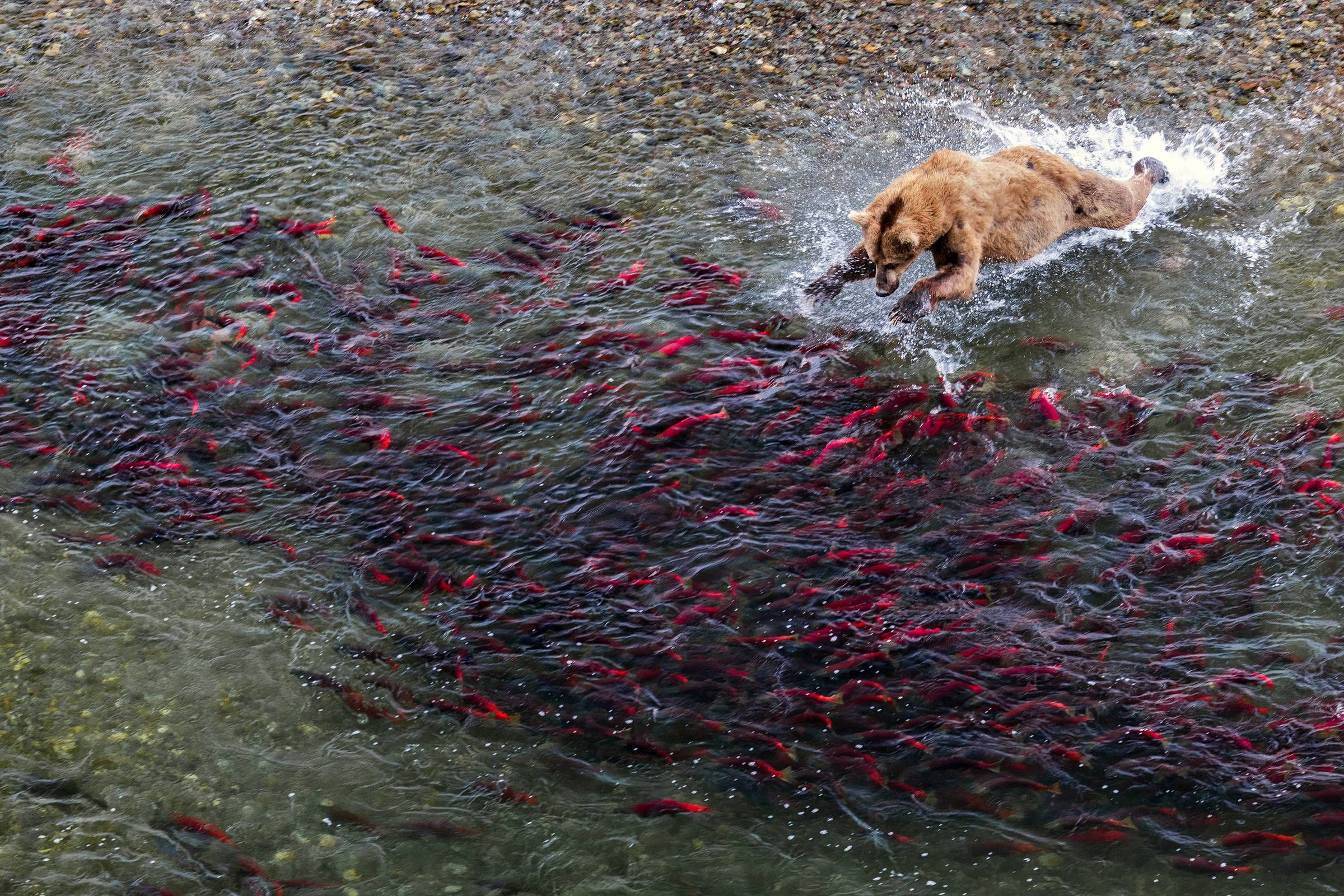
This raffle exceeded all expectations. More than 1,400 tickets were purchased, raising over $7,000 to support the incredible conservation work of the Alaska Wildlife Alliance.
When we started The Wildlife Collective, this is exactly what we hoped to build: meaningful wildlife experiences that do more than just bring people into wild places, they help protect them. Experiences that inspire people to care deeply about wildlife while directly supporting the organizations working on the front lines of conservation.
Once we finalize the latest numbers, we will have contributed more than $20,000 to conservation partners, which is something we are incredibly proud of. And we’re only just getting started.
The Alaska Wildlife Alliance plays a critical role in protecting Alaska’s wildlife and advocating for science-based wildlife management. We are especially proud to support their efforts to end the aerial killing of bears and wolves in the Mulchatna region, a program that has already resulted in nearly 200 bears being killed from helicopters. This practice lacks scientific justification, wastes taxpayer dollars, and raises serious ethical concerns about how wildlife should be managed.
Wild places and the animals that live in them deserve better.
Thank you to everyone who purchased a ticket, shared the raffle, or supported this effort in any way. Your support is helping prove that wildlife tourism can be a powerful force for conservation.
We look forward to hosting Robin and her guest in Alaska next summer, and we hope to run many more conservation raffles like this in the future!
Quote of the Week
The meaning of life is to find your gift. The purpose of life is to give it away.
— Pablo Picasso
Conservation News
How Are the World’s Bears Really Doing?
If you spend enough time around bears, one question comes up again and again: how are bears actually doing around the world? The answer is both encouraging and concerning. Bears are found across four continents and 66 countries, from the Arctic sea ice to tropical rainforests and high mountain cloud forests. Yet despite this remarkable distribution, the outlook for the world’s eight bear species is mixed. Today about four species are stable or increasing, while four are declining. It is a story that reflects both conservation success and the growing pressure on wild landscapes.
The encouraging news is that some of the most familiar bears are doing relatively well. American black bears are thriving across much of North America and now number close to a million animals. Brown bears, including the coastal brown bears many of us love watching in Alaska, are generally stable worldwide and have even been expanding in parts of Europe and North America. Perhaps the most famous conservation success story of all is the giant panda, whose population has slowly increased thanks to decades of habitat protection and carefully managed reserves in China.
The picture becomes more worrying when we look at several other species. Polar bears, which depend on sea ice to hunt seals, face an uncertain future as Arctic ice continues to decline. Sun bears in Southeast Asia are under intense pressure from deforestation and the illegal wildlife trade. Sloth bears in India struggle with habitat loss and frequent conflict with people. And the Andean bear, the only bear species in South America and one I spend time photographing each year in Ecuador, faces increasing fragmentation of its cloud forest habitat.
One interesting pattern is that the bears doing best tend to be the most adaptable. Black bears and brown bears can survive across a wide range of habitats and diets, which has helped them persist even as landscapes change. The species that are declining are often specialists that rely on very specific environments such as Arctic sea ice or tropical forests. When those ecosystems shrink or disappear, the bears have very few alternatives.
There is also an important lesson here about conservation. Where people have invested in protecting habitat, reducing conflict, and valuing wildlife, bears have shown an incredible ability to recover. Europe’s brown bears are returning to landscapes where they had been absent for generations. Giant pandas, once considered on the brink of extinction, are slowly rebounding. These successes show that conservation can work when we give wildlife the space and protection it needs.
At the same time many bear populations remain fragile. Habitat loss, climate change, and human wildlife conflict continue to shape the future of bears across much of the world. The choices we make about forests, wilderness, and how we coexist with wildlife will determine whether bears continue to roam these landscapes.
For me, spending time with bears, whether it is coastal brown bears in Alaska or Andean bears high in the cloud forests, is a constant reminder of what is at stake. Bears are not just extraordinary animals to watch and photograph. They are indicators of healthy ecosystems. When bears are thriving, it usually means the wild places they depend on are thriving too. And that is something worth protecting.
More Tours Coming Soon
Our Alaska Bear Camps for 2026 are now fully sold out, and we are incredibly grateful for the support. The 2027 dates have just been released, and if you love bears, we invite you to join us in one of the most extraordinary places on Earth to watch brown bears dive for red salmon right in front of you. On Monday, we will also be announcing a new series of India expeditions focused on tigers, leopards, and sloth bears, sometimes all in the same landscape, which we are especially excited about.
Our mission is simple but ambitious: to create the most meaningful and ethical wildlife experiences in the world for bears, great apes, and big cats, while supporting the conservation of these remarkable species. Most of our 2026 tours are now full, which we are incredibly grateful for. Below is a list of the remaining available spots for the year, with additional tours for 2027 & 2028 to be announced in the coming weeks.
2026 Tours with Availability
April 27 – May 2: Himalayan Brown Bears (3 spots)
June 16-24: Bolivia Jaguars on Foot (4 spots)
Sept 2-9: Kenya Big Cat Safari (2 spots)
Sept 13-21: Brazil Jaguars (4 spots)
*NEW Nov 24-30: Mountain Gorillas (3 spots)
*NEW Nov 30 – Dec 5: Mountain Gorillas (4 spots)
Click to see our fill list of tours
Feel free to reply to this email with any questions, feedback, or just to share your latest wildlife photos. Feel free to share this message with fellow nature lovers, too—let’s grow this community together!
Thank you for being a part of The Wildlife Collective community. Stay tuned for more updates, tips, and incredible wildlife encounters!
Best regards,
Zac Mills
The Wildlife Collective