
I’m writing this from Sumatra right now, deep in the rainforest, where I’ve been spending the last few days watching wild orangutans with my guests. Every time I come back here, it feels just as special as the first time. There is something about being here, in their world, that makes you realize very quickly that you are not just watching an animal. You are watching a mind at work.
There are moments in the rainforest that make you stop and wonder what really separates us from the other great apes. I’ve spent more than a decade coming back to Sumatra, and every time I watch an orangutan, I feel the same thing. You are not just looking at an animal. You are looking at intelligence, curiosity, memory, and decision making happening right in front of you.
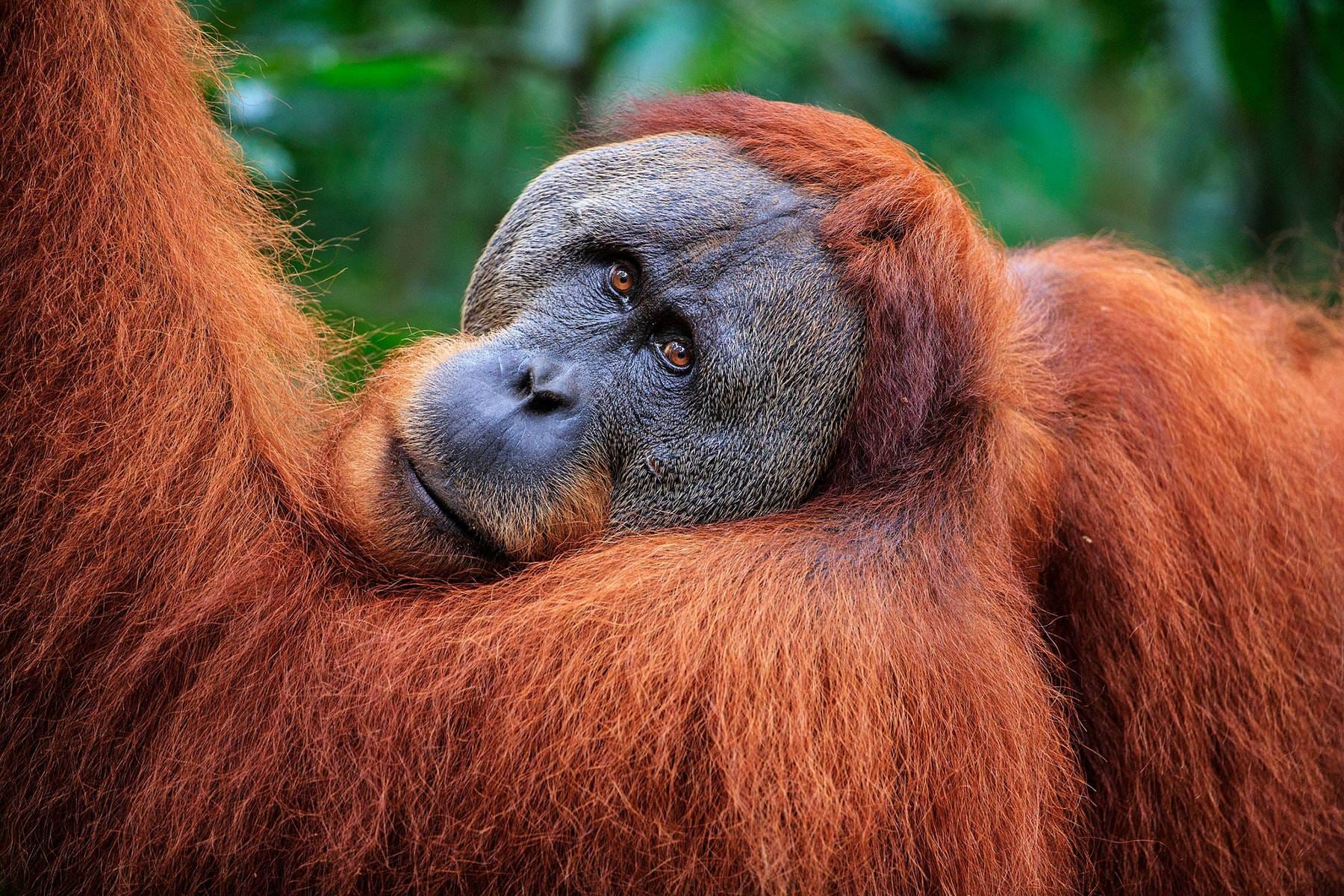
Recent research has only made that feeling stronger. Scientists working here in Sumatra documented something extraordinary last year. A wild male orangutan was seen chewing the leaves of a medicinal plant, making a paste, and carefully applying it to an open wound on his face. He didn’t just eat the plant. He applied it directly to the injury, then covered the wound with the chewed leaves like a bandage. The plant he chose is known to have antibacterial and anti-inflammatory properties, and the wound healed without infection. It is the first documented case of a wild animal deliberately using a biologically active substance to treat a wound.
And this isn’t the only example of how intelligent orangutans are. In some parts of Sumatra, wild orangutans regularly use tools. They use sticks to extract honey or insects from holes, leaves as gloves to handle spiny fruit, and even branches as umbrellas in heavy rain (which I’ve seen with my own eyes). Some populations show traditions of tool use that are passed down from mother to offspring, almost like culture.
In controlled studies, orangutans have shown they can solve problems in ways that require planning and understanding cause and effect. In one experiment, they spat water into a tube to raise a floating peanut within reach, showing they could imagine a solution before they could see the result.
Other research has shown they can even prepare tools in advance for future use, suggesting foresight, something once thought to be uniquely human.
When you spend time with them in the wild, none of this feels surprising. It feels obvious.
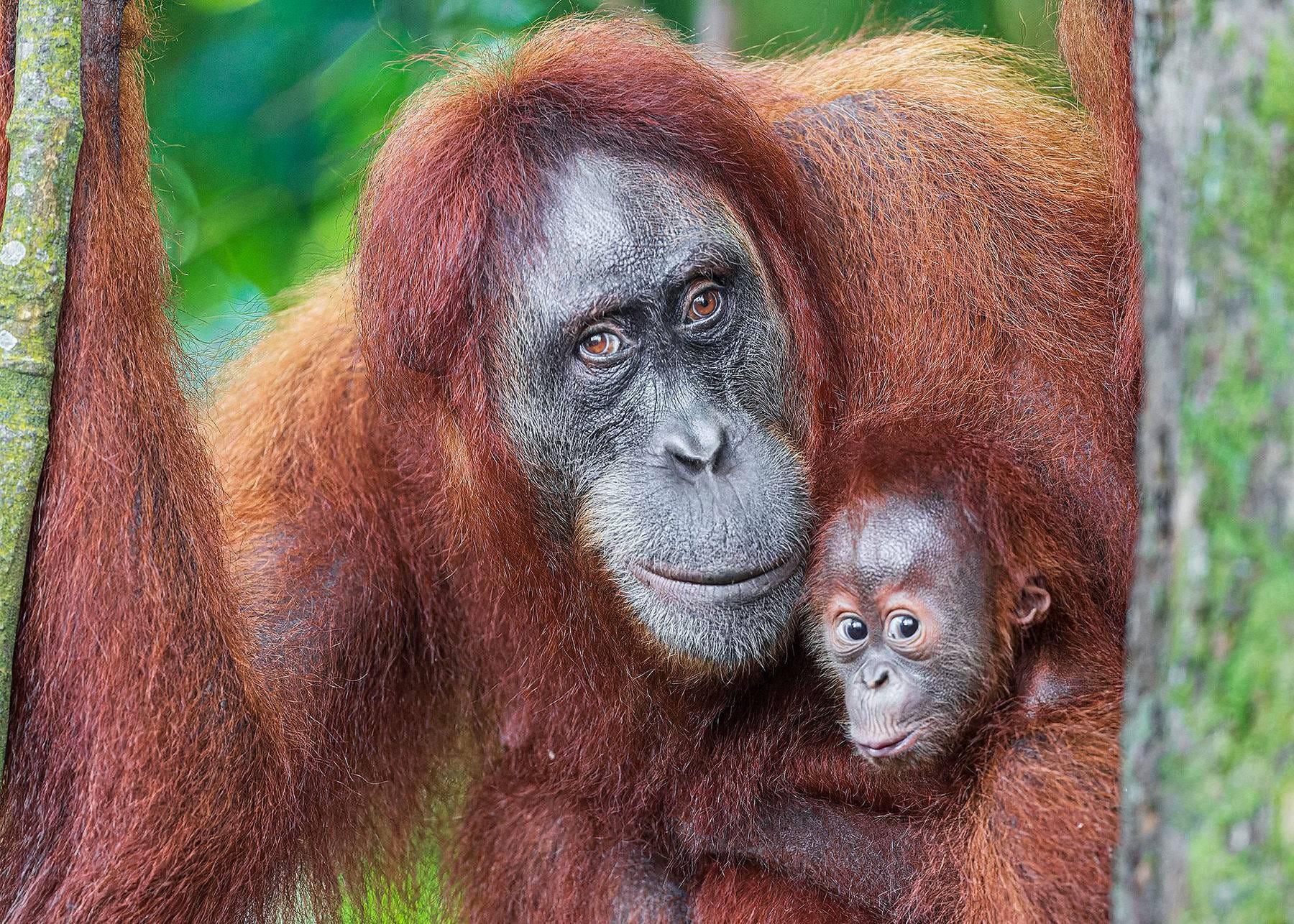
Orangutan intelligence evolved in the canopy of the rainforest, where survival depends on memory, patience, and problem solving. They live largely solitary lives, which means every individual has to figure things out on their own. There is no troop to rely on, no herd to follow. Just one mind, one forest, and a lifetime of learning.
And that is exactly why their future worries me so much.
Because a mind like that takes decades to develop. A forest like this takes centuries to grow. And both are disappearing.
Orangutan populations continue to decline across Sumatra and Borneo due to deforestation, palm oil expansion, and conflict with humans. Every time a forest is cut, we are not just losing trees. We are losing knowledge, culture, and intelligence that took millions of years to evolve.
The more science learns about orangutans, the clearer it becomes that protecting them is not just about saving another endangered species. It is about protecting one of the closest reflections of ourselves that still exists in the wild. Their intelligence, their patience, their curiosity, and the way they learn from experience all remind us how deep the connection really is between humans and the other great apes.
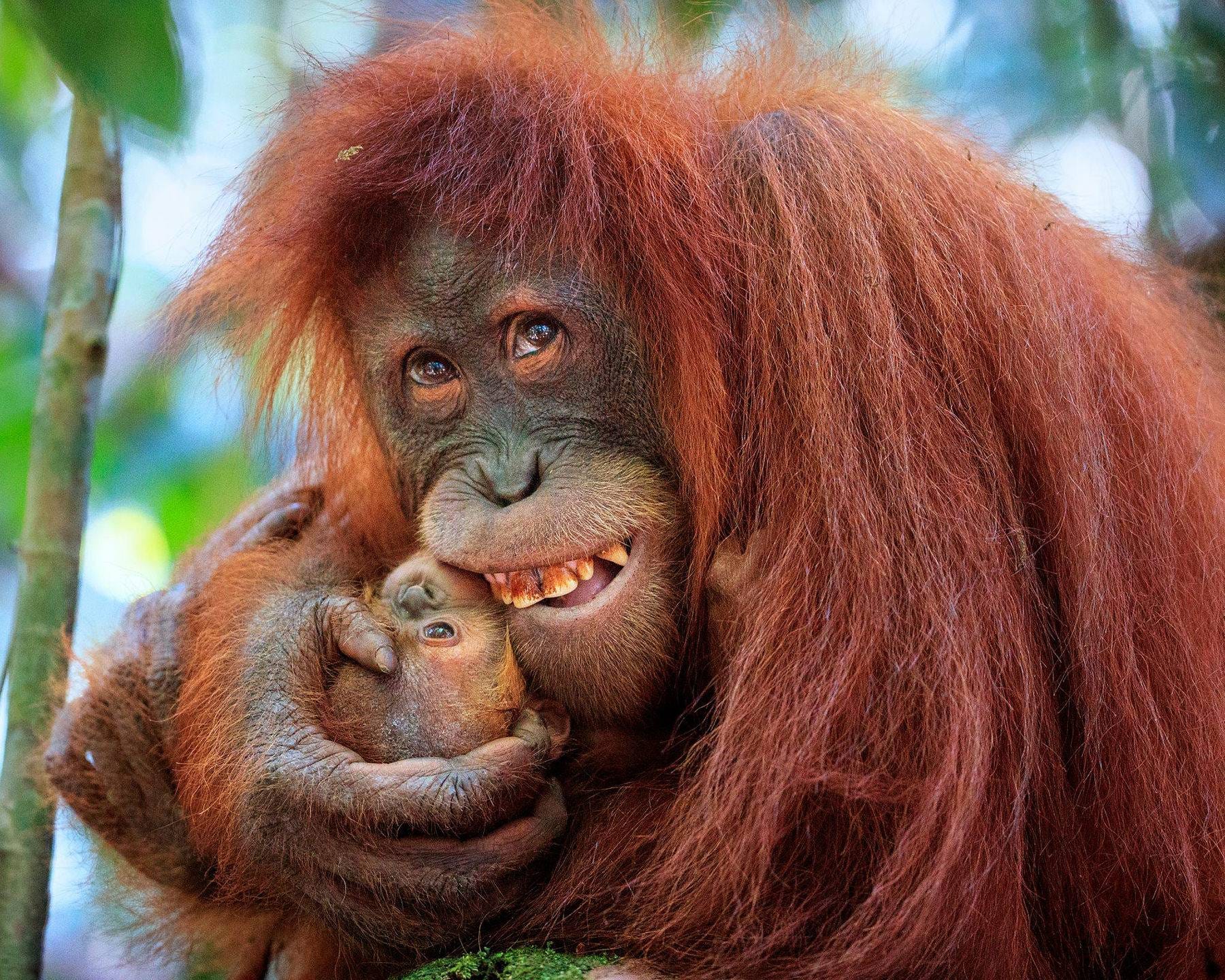
This is something that is almost impossible to fully understand until you see them in the forest yourself. That is why I always tell people that if you truly want to understand why conservation matters, you need to come and see orangutans in the wild. Spend time in their rainforest. Walk slowly beneath the canopy. Sit quietly and just watch. At first it feels like you are simply looking for an animal, but the longer you stay, the more you begin to notice the small decisions they make, the way they test branches before moving, the way a mother guides her baby, the way an old male studies everything around him with incredible awareness.
You start to see how they solve problems, how they remember where food is, how they choose which path to take through the trees, and how often they are watching you just as carefully as you are watching them. There is a depth there that you cannot feel in a zoo, in a documentary, or in a photograph. It only becomes real when you are standing in their world, on their terms, realizing that you are sharing the forest with one of the most intelligent beings on this planet.
Once you experience that for yourself, the science suddenly feels very different. The research about tool use, planning, and even medicine is no longer surprising, because you have seen the intelligence in their eyes. And from that moment on, protecting them no longer feels like an abstract idea. It feels personal.
Quote of the Week
Intelligence is the ability to adapt to change.
— Stephen Hawking
Conservation News
A New Orangutan, Already in Trouble
I’ve been thinking a lot lately about the Tapanuli orangutan, and what their story says about conservation today. The Tapanuli orangutan was only officially described as a separate species in 2017, which makes it the most recently identified great ape on Earth. At the same time, it is also the rarest, with fewer than 800 individuals believed to survive in the wild. That contrast says everything about the moment we are living in. We are still discovering life, while at the same time watching it disappear.
For a long time, these orangutans were thought to be part of the Sumatran orangutan population, but detailed genetic and skull analysis showed they were actually different enough to be their own species, now known as Pongo tapanuliensis. They live in the Batang Toru ecosystem in North Sumatra, a rugged landscape of steep hills, deep valleys, and fragmented forest. Unlike the larger populations of orangutans in northern Sumatra and Borneo, the Tapanuli live in a much smaller and more isolated area, and that isolation is one of their greatest threats.
Fragmentation is the word that keeps coming up in conservation today. It’s not always chainsaws and bulldozers wiping out entire forests. More often, it’s roads, dams, small clearings, farms, and development that slowly break a landscape into pieces. For a species like the Tapanuli orangutan, that can be just as dangerous as deforestation. When forest patches become separated, individuals can’t move freely, populations become isolated, and over time genetic diversity drops. In a species that already has such small numbers, that can push them dangerously close to extinction.
One of the most important tools conservationists are using now is the idea of wildlife corridors. Instead of protecting only small pockets of forest, the goal is to reconnect habitat so animals can move safely between them. In Sumatra, that means restoring forest, protecting ridgelines, and even building canopy bridges in places where gaps have formed. These corridors may not sound dramatic, but for animals that spend their lives in the trees, they can mean the difference between survival and isolation. Keeping populations connected is one of the only ways a species like the Tapanuli orangutan has a chance long term.
There is some cautious hope. Researchers recently confirmed orangutans outside the previously known range, suggesting the population may be slightly more widespread than we thought. Discoveries like that remind us how little we still know about these forests. It’s incredible to think that on an island that has been studied for decades, we are still learning where great apes live. It also shows why protecting entire ecosystems matters, not just the areas we already understand.
The story of the Tapanuli orangutan is both inspiring and sobering. Inspiring because it shows how much there still is to learn, and how dedicated people are working to protect what remains. Sobering because this species was only recognized a few years ago, and already its future is uncertain. Conservation today is no longer just about saving animals. It’s about keeping landscapes connected, keeping forests standing, and giving species enough space to survive in a world that keeps getting smaller.
More Tours Coming Soon
Slowly but surely, the 2027 schedule is starting to come together. I’ve just finalized my Andean Bear tour for February 22 to March 1, 2027, which is one of my favorite trips we run. There is something incredibly special about searching for the only bear species in South America in the cloud forest, working with local conservation partners, and spending time in one of the most beautiful and least-visited ecosystems in the world. I’ll be sharing more details about that tour very soon.
I’m also in the process of finalizing a brand-new polar bear tour, and in the coming months I’ll be scouting a completely new area that I’m very excited about. There is a lot happening behind the scenes right now, and more tour announcements to some incredible destinations will be coming soon.
Below is the list of the remaining available spots for 2026, with additional tours for 2027 and 2028 to be announced in the coming weeks.
2026 Tours with Availability
June 16-24: Bolivia Jaguars on Foot (4 spots)
Sept 2-9: Kenya Big Cat Safari (2 spots)
Sept 13-21: Brazil Jaguars (4 spots)
*NEW Nov 24-30: Mountain Gorillas (3 spots)
*NEW Nov 30 – Dec 5: Mountain Gorillas (3 spots)
Click to see our fill list of tours
Feel free to reply to this email with any questions, feedback, or just to share your latest wildlife photos. Feel free to share this message with fellow nature lovers, too—let’s grow this community together!
Thank you for being a part of The Wildlife Collective community. Stay tuned for more updates, tips, and incredible wildlife encounters!
Best regards,
Zac Mills
The Wildlife Collective