
Do you know what the word orangutan actually means?
It comes from the Malay language: “orang” means person and “hutan” means forest. Put together, orangutan literally translates to “person of the forest.” And honestly, once you spend time with them, you understand exactly why.
I have just arrived back in Sumatra today for my 13th trip, and even after all these years, words cannot fully express how special this place is. The rainforest here feels ancient and alive in a way that few places on Earth still do.
I love orangutans deeply. They are among our closest relatives in the natural world, sharing not only remarkable intelligence but expressions, gestures, and behaviors that feel uncannily human. Spend time watching a mother cradle her baby high in the canopy or a large male move through the trees and you quickly realize that the translation “person of the forest” is not poetic exaggeration. It is the truth.
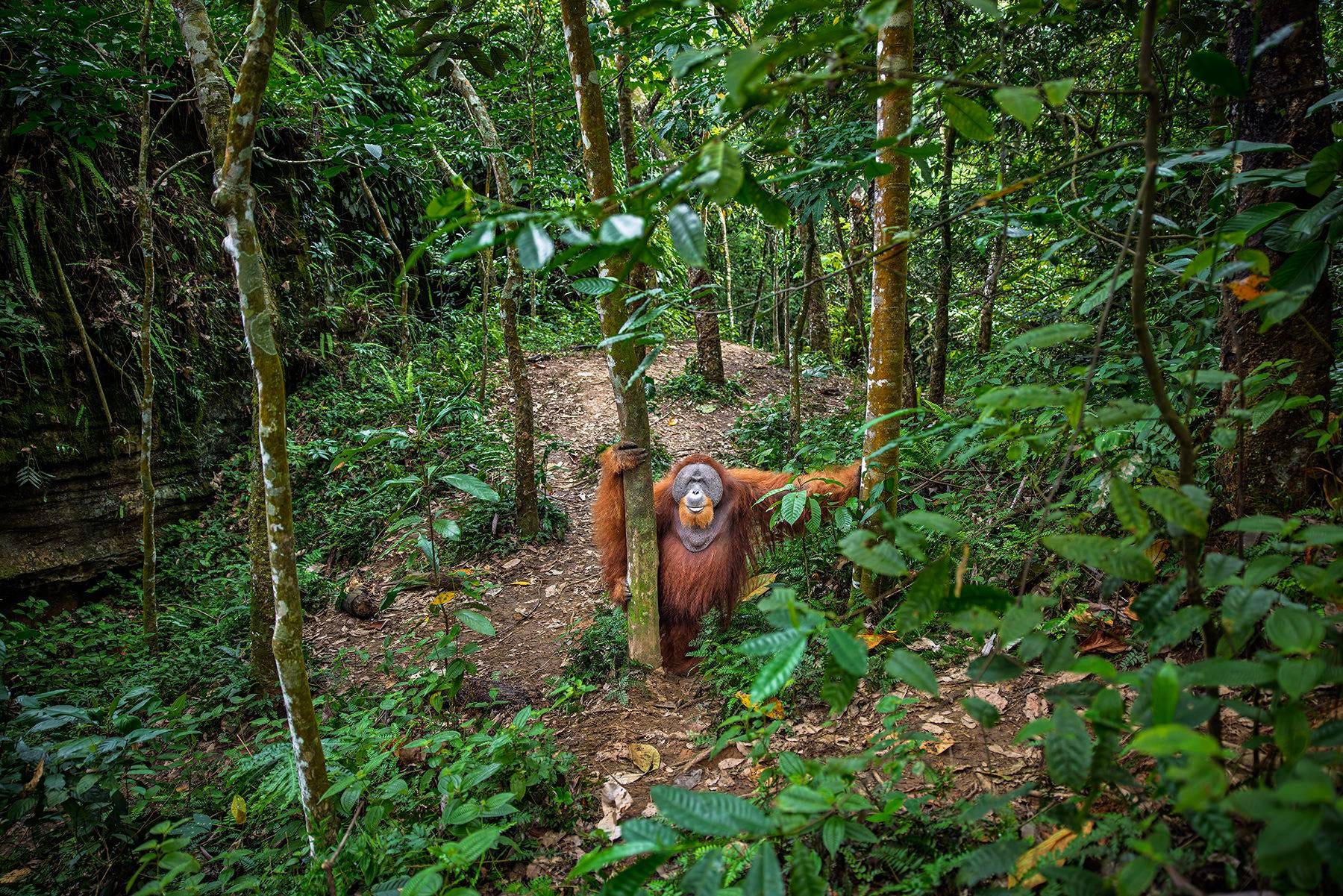
But despite how extraordinary they are, the long-term outlook for orangutans is deeply concerning.
Bornean orangutans: roughly 100,000–104,000 individuals remain in the wild.
Sumatran orangutans: about 13,800–14,000 individuals remain.
Tapanuli orangutans: fewer than 800 individuals, making them the rarest great ape on Earth.
Even those numbers hide a deeper reality. Orangutan populations have declined dramatically over the last few decades, with Bornean populations dropping more than 50% in the last 60 years, largely due to habitat destruction. Models suggest that Sumatran orangutans could decline by more than 80% from historical levels by 2060 if current trends continue.
And unlike many animals, orangutans reproduce incredibly slowly. A female may only give birth once every six to nine years, which means populations simply cannot recover quickly from losses.
The biggest threats are painfully clear.
Deforestation is the number one driver. Vast areas of rainforest have been cleared for palm oil plantations, logging, mining, and infrastructure. And when the forest disappears, orangutans disappear with it. These animals are almost entirely arboreal. Their lives are built around the rainforest canopy. When the forest is cut, the world they evolved for simply vanishes.
Then there is poaching and human conflict. Orangutans are sometimes killed when they wander into agricultural areas, and babies are still occasionally captured for the illegal pet trade.
Despite the challenges, there is real hope and it comes from people working tirelessly on the ground here in Sumatra.
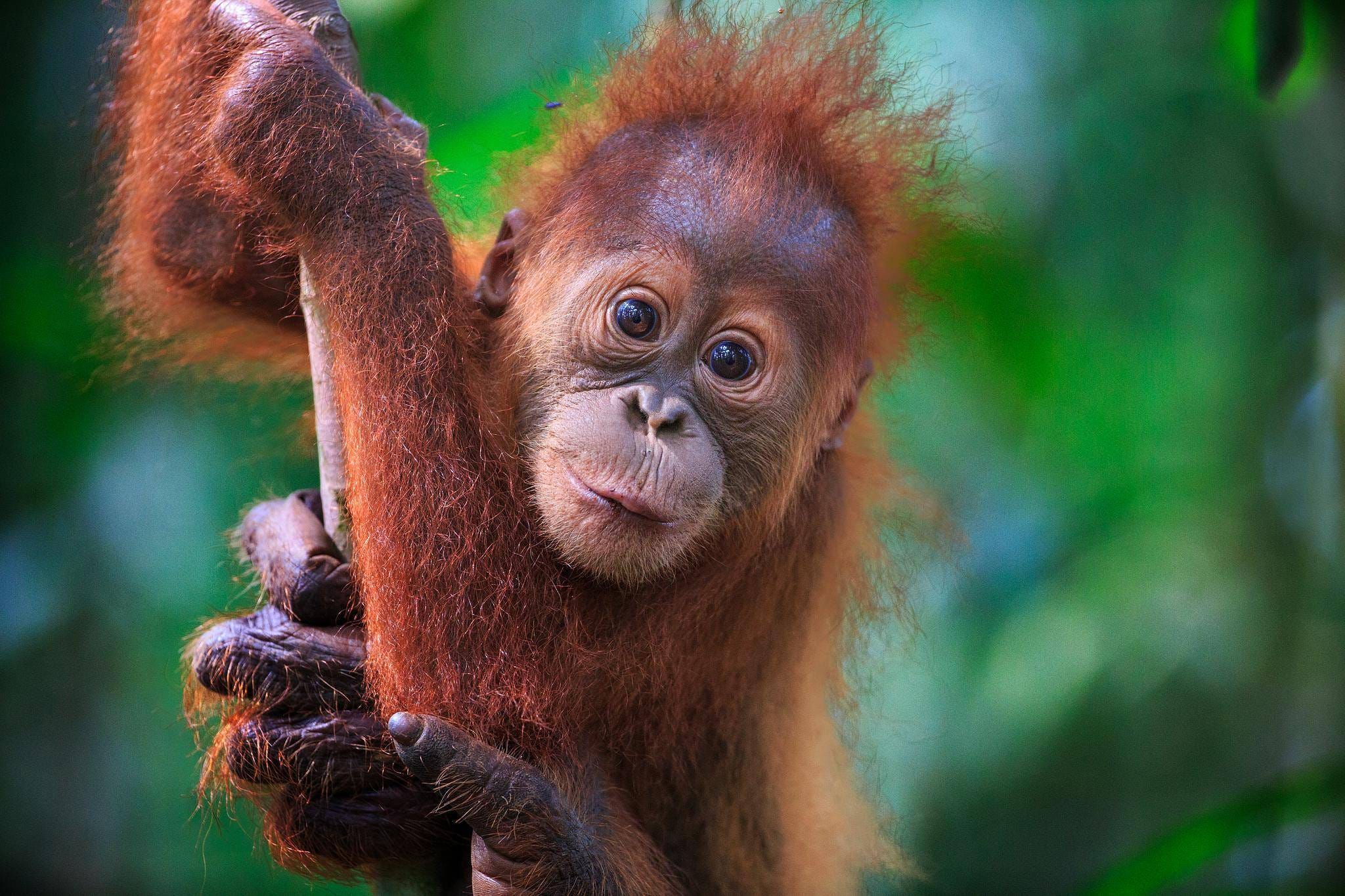
Organizations like Nature for Change and the Sumatran Orangutan Society (SOS) are doing incredibly important work to protect both orangutans and the communities that live alongside them.
Over the next week here in Sumatra, I’ll be sharing more of their story. The story of the orangutans themselves. The story of the forests they depend on. And the incredible conservation work being done by Nature for Change, the Sumatran Orangutan Society, and the many people on the ground who are fighting every day to protect these “people of the forest.”
Quote of the Week
The greatest danger to our future is apathy.
— Jane Goodall
Conservation News
Orangutans and the roots of human language
What if the roots of human language did not begin with us at all, but deep in the rainforests of Sumatra millions of years ago? New research on wild orangutans suggests that some of the building blocks of language may not be uniquely human. Instead, they may come from a much deeper evolutionary past that we share with the great apes.
Scientists studying female Sumatran orangutans discovered something remarkable in their alarm calls. When these apes detect danger, the sounds they make are not random. Their calls follow a layered rhythmic structure. Individual sounds form short patterns, those patterns combine into longer sequences, and those sequences build into extended series. In other words, orangutans appear to organize their calls in a structured way that resembles how humans build sentences and phrases.
Researchers describe this as third order recursion, meaning patterns exist inside other patterns. Think of music where rhythms repeat within larger rhythms, or language where ideas sit inside other ideas. Until recently, many scientists believed this kind of complex structure was unique to human speech and music. Finding it in wild orangutan communication suggests that the foundations for language may have existed long before humans evolved, deep in the shared ancestry of the great apes.
The rhythm of their calls also changes depending on the situation. When orangutans encounter a real predator threat, their alarm calls become faster and more urgent. When the threat is uncertain, the rhythm becomes slower and less regular. The structure of the call carries information about what they are experiencing, showing a level of flexibility and awareness that feels strikingly familiar to us.
For anyone who has spent time with orangutans in the forest, this idea feels surprisingly familiar. When you sit and watch them move through the canopy, the way they observe the world and communicate with one another, it is impossible not to sense the connection. Studies like this simply reinforce what many people feel when they encounter these incredible animals. The distance between us and them is far smaller than we once believed.
More Tours Coming Soon
I know I say this every week, but I promise new orangutan tours and much more are coming very soon. The good news is that I have just finalized two brand new destinations that I will be scouting over the next couple of months, and I am incredibly excited about both of them. I cannot share details just yet, but I will soon.
As a reminder, our mission is to create the most meaningful and ethical wildlife experiences in the world, focused on bears, great apes, and big cats, while directly supporting the conservation of these remarkable species and the people who live alongside them. Every tour we run is built around that idea, and it is something I think about every single day.
Most of our 2026 tours are now full, which we are extremely grateful for. The support this community has shown over the past year has been incredible, and it allows us to keep expanding to new locations while staying true to the small group, conservation-focused experiences that make these trips so special.
Below is the list of the remaining available spots for 2026, with additional tours for 2027 and 2028 to be announced in the coming weeks.
2026 Tours with Availability
June 16-24: Bolivia Jaguars on Foot (4 spots)
Sept 2-9: Kenya Big Cat Safari (2 spots)
Sept 13-21: Brazil Jaguars (4 spots)
*NEW Nov 24-30: Mountain Gorillas (3 spots)
*NEW Nov 30 – Dec 5: Mountain Gorillas (3 spots)
Click to see our fill list of tours
Feel free to reply to this email with any questions, feedback, or just to share your latest wildlife photos. Feel free to share this message with fellow nature lovers, too—let’s grow this community together!
Thank you for being a part of The Wildlife Collective community. Stay tuned for more updates, tips, and incredible wildlife encounters!
Best regards,
Zac Mills
The Wildlife Collective