
What began as a small Facebook competition in 2014 has grown into a global phenomenon, attracting more than 2.3 million votes in 2026. Its success offers an important lesson about how we inspire people to care about wildlife.
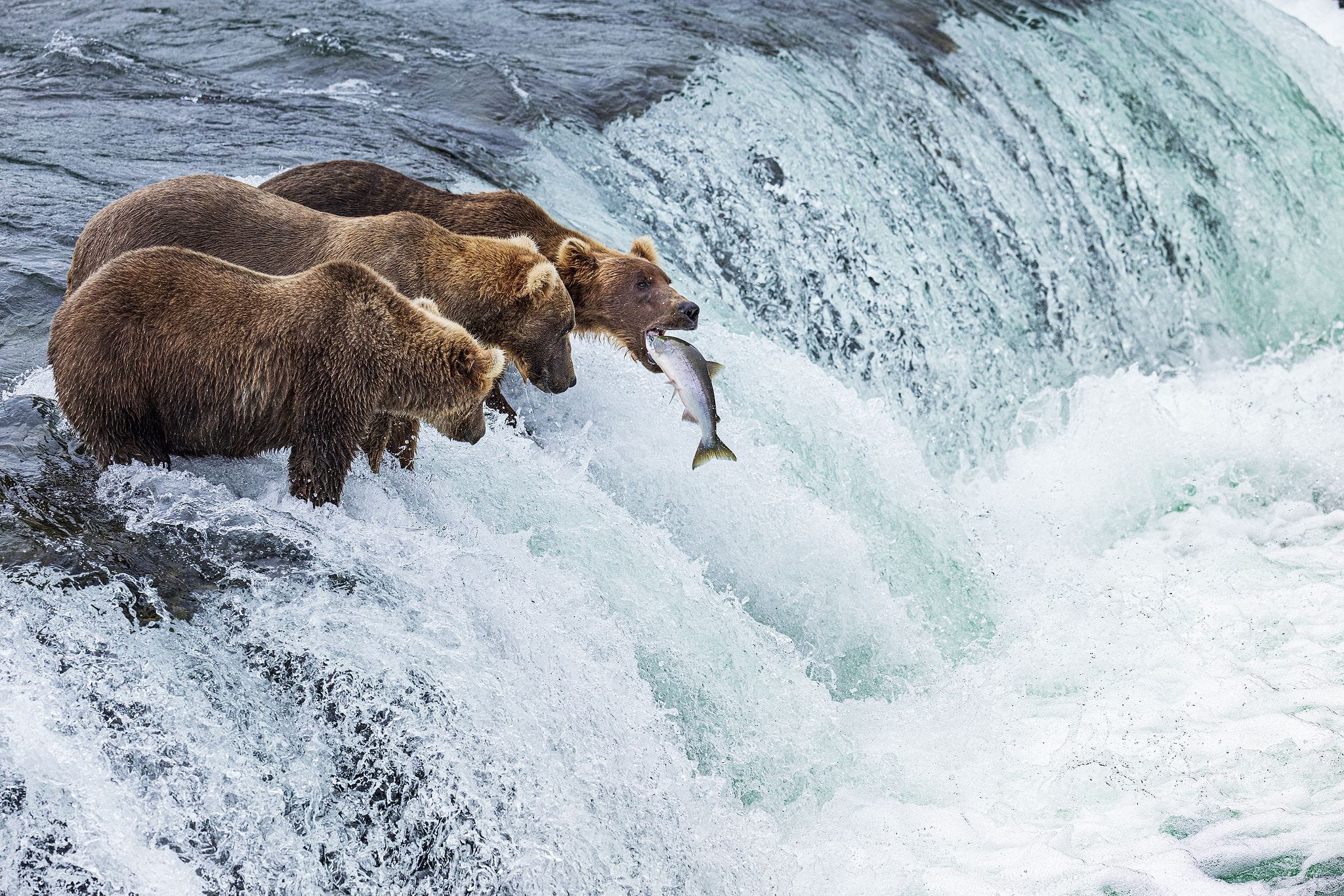
Every year, millions of people around the world come together to celebrate something rather unusual: fat bears.
They watch bears catch salmon, follow their lives throughout the summer, choose their favourites, and vote for which animal has done the best job preparing for winter.
On the surface, Fat Bear Week is a lighthearted competition. But I believe it has become something far more important. It is one of the most successful examples of how storytelling can connect people with wildlife, and how that connection can become the foundation for conservation.
What makes it particularly remarkable is that the competition doesn’t ask people to begin by worrying about the future of bears. It simply invites them to fall in love with them.
And that, I think, is why it works.
From a Facebook Post to a Global Phenomenon
Fat Bear Week began in 2014, when Katmai National Park ranger Mike Fitz noticed something interesting in the comments of the Brooks Falls live camera on Explore.org.
Someone had shared two photographs of the same bear, one taken early in the summer and another several months later. The transformation was extraordinary.
It gave Fitz and his fellow rangers an idea. Why not celebrate the incredible amount of weight bears gain before hibernation?
On September 30, 2014, they launched Fat Bear Tuesday, a one-day competition where people voted for their favourite bear through Facebook likes.
Approximately 1,700 votes were cast.
The idea was so popular that the following year it became a weeklong tournament. Bears were placed into brackets, people voted for their favourites, and a champion was crowned.
Over the following decade, the competition grew into an international event, supported by the National Park Service, Explore.org, and the Katmai Conservancy.
The growth has been extraordinary.
By 2020, approximately 640,000 votes were cast. In 2022, the competition surpassed one million votes. In 2025, participation reached approximately 1.7 million votes from more than 100 countries.
And in 2026, Fat Bear Week broke another record.
2026: Another Record-Breaking Year
This year’s competition, held September 22–29, demonstrated just how powerful Fat Bear Week has become.
More than 2.3 million votes were cast, an increase of approximately 35% over the previous year.
Sixteen bears competed, with Bear 89, affectionately known as Backpack, ultimately crowned champion.
Backpack defeated Bear 910 in a remarkably close final, receiving 103,334 votes against 98,253.
Backpack is the son of Holly, a former Fat Bear Week champion. His name comes from his habit of climbing onto his mother’s back while crossing the river as a cub.
Unlike some of Katmai’s more dominant males, Backpack is known for his relatively peaceful behaviour.
What I find especially interesting about this year’s results is that people weren’t simply voting for the biggest bear.
They were voting for personalities, histories, relationships, and stories.
People have followed some of these bears for years. They’ve watched cubs grow into adults, mothers raise their families, and familiar bears return to the river each summer.
In many ways, these bears have become individuals that people feel they know.
And that is where the real conservation value begins.
Why Fat Bear Week Works as a Conservation Model
Having spent much of my life photographing and observing wild animals, I’ve come to believe that one of the greatest challenges facing conservation isn’t simply a lack of information.
It’s a lack of connection.
We can tell people that bears are important to an ecosystem. We can explain the ecological significance of salmon, the importance of protected habitat, and the threats posed by human activity.
All of that information matters.
But information alone doesn’t necessarily make people care.
Fat Bear Week approaches the problem differently.
It begins with curiosity. A photograph of an extraordinarily fat bear catches someone’s attention. They learn its name. They watch it fishing. They discover that it has cubs, or that it has returned to the same fishing spot for years.
Suddenly, that bear is no longer just another member of a species.
It is an individual with a life and a story.
And once people care about that individual, they become more interested in the world that allows it to survive.
Conservation Through Celebration, Not Just Crisis
Much of conservation communication is understandably focused on what we are losing.
Declining populations. Disappearing habitats. Human-wildlife conflict. Climate change.
These are serious issues, and we cannot afford to ignore them.
But I also believe there is enormous value in showing people what conservation success looks like.
Fat Bear Week celebrates bears doing exactly what wild bears should be doing.
Fishing. Growing. Raising cubs. Competing for resources. Preparing for winter.
It celebrates an ecosystem that is still functioning.
And importantly, it helps people understand why these bears are able to thrive.
The bears of Katmai depend on extraordinary salmon runs. Their survival is connected to the health of rivers, oceans, and the broader Bristol Bay ecosystem.
A fat bear isn’t simply an entertaining photograph. It is evidence of a remarkable ecological relationship.
The competition has also created opportunities for education and fundraising. Teachers use Fat Bear Week to introduce students to wildlife ecology, while supporters can contribute to conservation initiatives through the Katmai Conservancy, including the Otis Fund.
That doesn’t mean millions of votes automatically translate into millions of conservation advocates. Public attention is not the same as measurable conservation outcomes.
But Fat Bear Week has demonstrated something important: conservation education doesn’t always need to begin with a warning.
Sometimes, it can begin with joy.
The Next Challenge: Turning Affection Into Action
There is, however, an important contradiction in how we celebrate Alaska’s bears.
Every September, the world comes together to admire the brown bears of Katmai. We celebrate their strength, their resilience, and their remarkable ability to survive in the wild.
Yet bears elsewhere in Alaska face very different realities.
Some are killed through government predator-control programs. Others face hunting pressure, changes to their habitats, and competition with commercial fisheries for the salmon they depend on.
The same state that has become internationally famous for celebrating its bears is also home to policies and practices that can threaten them.
I don’t think this diminishes what Fat Bear Week has accomplished.
If anything, it makes its success even more important.
We now have millions of people who have demonstrated that they care about wild bears. People who know individual bears by name, follow their lives, and celebrate their survival.
The opportunity is to help those people understand the larger conservation challenges facing bears beyond Brooks Falls.
To move from celebrating the animals we love to protecting the ecosystems they need.
What Fat Bear Week Can Teach the Rest of Conservation
One of the lessons I’ve taken from Fat Bear Week is that wildlife conservation needs better storytelling.
Not necessarily more dramatic storytelling. Not stories that sensationalize wildlife or turn every encounter into a conflict.
But stories that help people recognize animals as individuals, with personalities, relationships, and lives that matter.
The success of Fat Bear Week wasn’t built around frightening people into caring.
It was built around giving people a reason to care in the first place.
And that connection has grown from a few thousand votes on Facebook to millions of interactions across the world.
At a time when so much of the conversation about wildlife is focused on what we stand to lose, Fat Bear Week reminds us of what we still have.
Wild bears. Healthy rivers. Returning salmon. Mothers teaching their cubs to survive. Ecosystems that continue to function as they have for thousands of years.
These are things worth celebrating.
But they are also things worth fighting for.
My hope is that the greatest legacy of Fat Bear Week won’t be the number of votes cast or the bears crowned champions. It will be the number of people who come away understanding that a world with wild bears is a world worth protecting.
And perhaps, one day, the greatest measure of Fat Bear Week’s success won’t be the millions of votes cast, but the millions of people it inspired to care, to speak up, and to ensure that wild bears continue to roam this planet for generations to come.
Quote of the Day
Only if we understand, can we care. Only if we care, will we help. Only if we help, shall all be saved.
— Jane Goodall
Thank you for being part of The Wildlife Collective. Together, we are helping build a deeper connection between people and the natural world while supporting the conservation of wildlife and wild places. Stay tuned for more stories from the field, conservation news, photography tips, and unforgettable wildlife encounters from around the globe.
Until next time, keep exploring, keep learning, and keep falling in love with the wild.
Zac Mills
The Wildlife Collective