
I just got home from Sumatra, and I already miss the rainforest.
Every time I return, I fall more deeply in love with orangutans. There’s something incredibly humbling about spending time with them in the wild. The more I learn about these great apes, and the more time I spend quietly observing their lives in the trees, the more I appreciate how profoundly similar we are. It’s not just the expressions, the hands, or the curious intelligence in their eyes—it’s the way they move through the forest with quiet purpose, the tenderness between a mother and her baby, the occasional drama, the long moments of solitude. Sharing space with them isn’t just a sighting—it’s a surreal, almost spiritual experience.
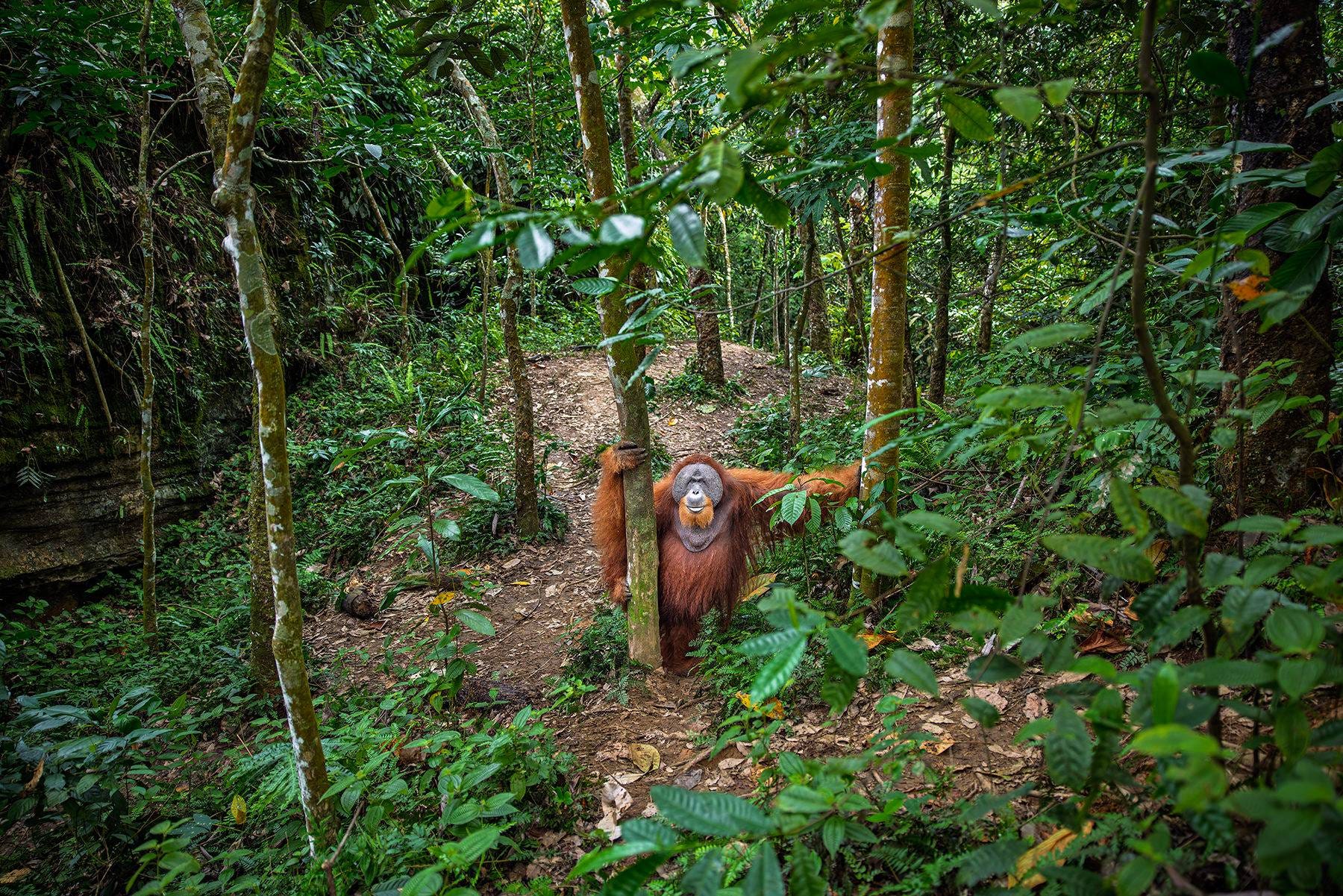
This last trip was full of moments I’ll never forget. We had the immense privilege of seeing the big male orangutan nearly every other day. Before we arrived, we were told he hadn’t been seen in four or five months. To cross paths with him again and again felt like a gift. We also encountered a still-developing male without the flanged face and a younger male too—each at a different stage of life, offering a glimpse into the orangutan journey.
It wasn’t just orangutans either. We had some amazing encounters with other primates and even saw relatively fresh climbing marks from a sun bear—always a thrill for me. Every day felt like nature was opening itself up to us just a little more.
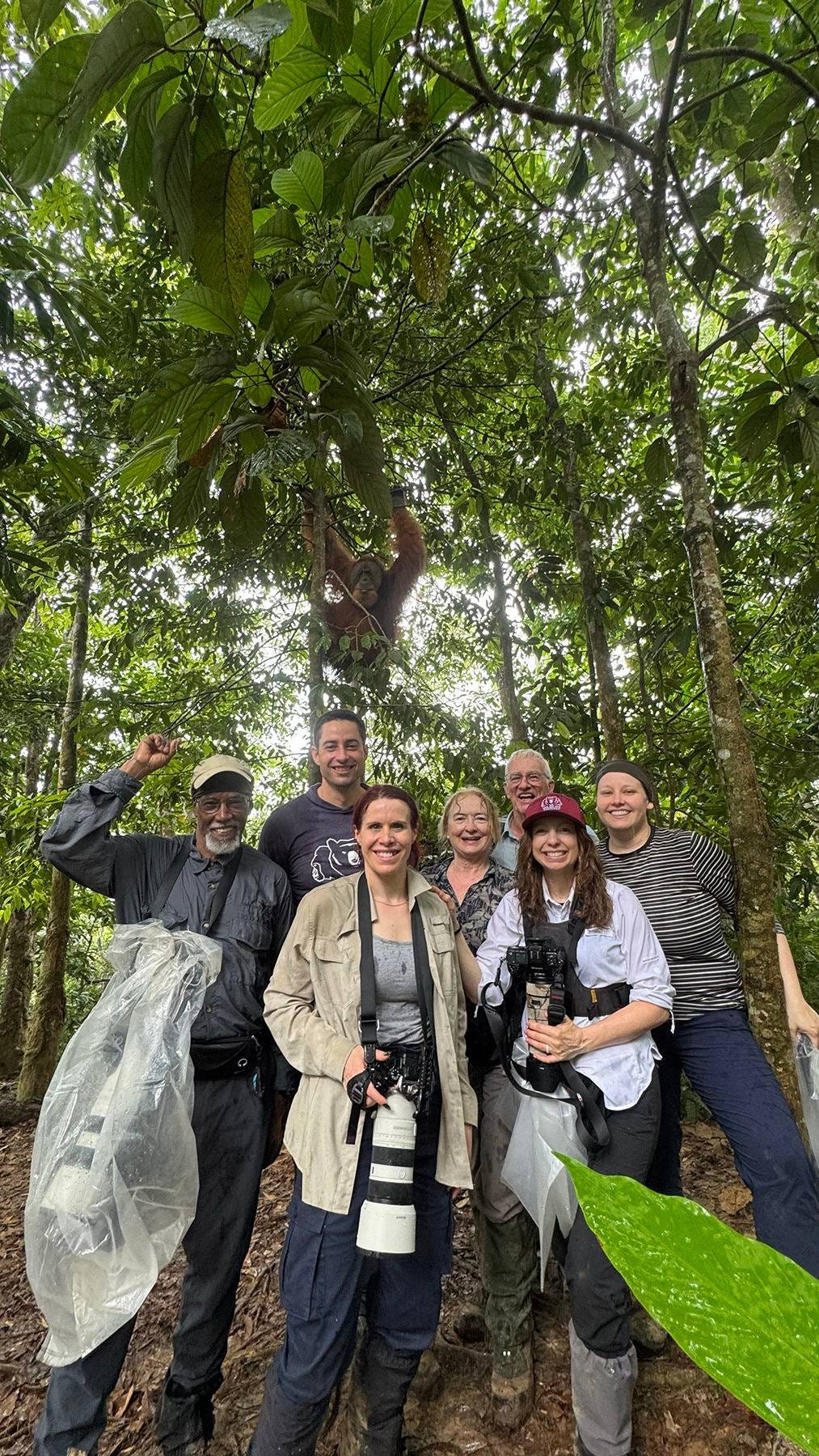
What made this trip even more special was the group. We came from different walks of life—different countries, careers, and backgrounds—but we were all there for the same reason: to witness something extraordinary. That shared experience created such a strong bond. It’s one of those intangible things you can’t really describe unless you’ve lived it. I’ll cherish this group forever.
On our final day, we partnered with Nature for Change to plant 50 indigenous fruit trees—a small gesture, but one rooted in hope and giving back to the land that gave us so much. There’s something grounding about putting your hands in the soil after days of looking up into the trees. It felt like closing the circle.
As part of our commitment to giving back, we were also able to donate $2,500 to support orangutan conservation—split between the Sumatran Orangutan Society and Nature for Change. It’s a small but meaningful way to ensure that these forests, and the incredible wildlife that call them home, continue to thrive for generations to come.
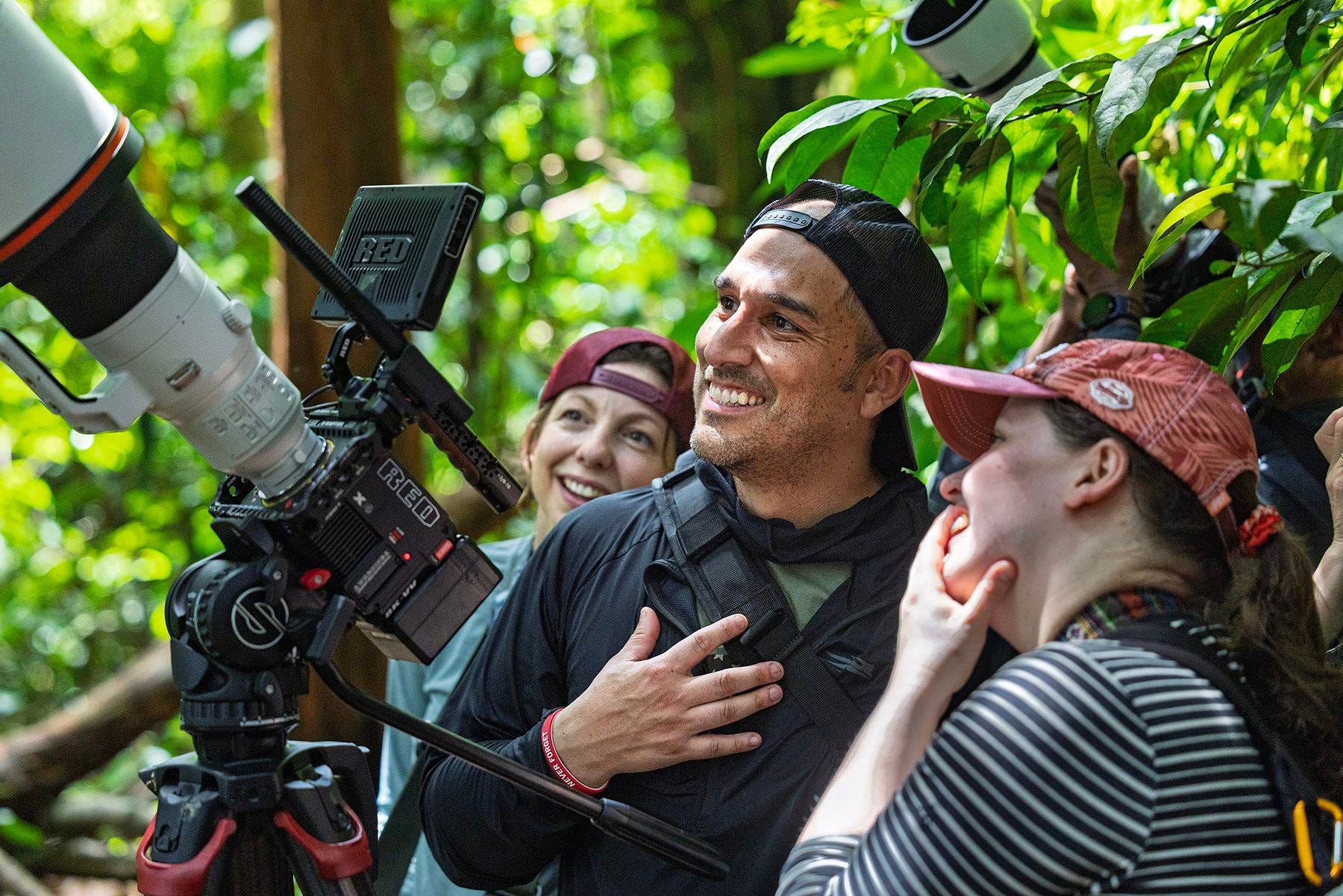
This trip also became something bigger, thanks to a last-minute decision to invite the incredibly talented Hector Knudsen to join us and document the experience. The footage he captured—just wait. We’re editing it now and I promise, it will blow you away. It’s hard to capture the feeling of being there, but Hector’s work gets pretty damn close.
I did have to cut my time short after our second group arrived—my nearly two-month-old daughter was waiting for me at home. But I’m so glad I got to meet the new guests and share in their excitement as they kicked off their own orangutan adventure with Cassie, who continues to guide them through the magic of the forest as I write this.
With our 2026 orangutan tours already sold out and demand continuing to grow, I’m excited to announce two additional tour dates for next year:
If you’ve ever dreamed of seeing wild orangutans, this is one of the most powerful wildlife experiences on the planet. Get in touch if you’d like to join us. It’s hard to describe how much this place changes you—but once you go, you’ll understand.
Favorite Orangutans Photos from 2025
In record time, I sorted through thousands of photos and edited my favorites—all within 48 hours of getting home. Click on the grid below to see some of the most unforgettable moments from this recent journey with the orangutans.

Quote of the Week
Orangutans look you in the eye. They meet your gaze with that of an equal. It is a startling moment—that first, personal exchange—as if there is mutual recognition of kinship.
— Gerald Durrell
Conservation News
Orangutans Stun Scientists with Self-Healing and Language-Like Communication
Two landmark studies—one from last year and another published just days ago—are dramatically reshaping our understanding of wild orangutans and the deep evolutionary roots we share with them.
In early 2024, researchers in Sumatra documented something extraordinary: a wild male orangutan named Rakus was seen self-treating a severe facial wound after a fight. He repeatedly chewed the leaves of a medicinal plant, Fibraurea tinctoria—a vine known to humans for its pain-relieving and antibacterial properties—and applied the paste directly to the open wound below his eye. It healed rapidly with no signs of infection. This is the first recorded instance of a wild animal using a plant as an external medicine, mirroring traditional human wound care techniques. The discovery, published in Scientific Reports, is a powerful reminder of the cognitive and behavioral sophistication of these great apes.
Now, a new study published just days ago by the University of Warwick reveals that orangutans also communicate with a complexity once thought to be uniquely human. Researchers analyzing the alarm calls of female Sumatran orangutans found that their vocalizations exhibit recursive structure—layered rhythms nested within each other, much like the structure of human language (e.g., “the dog that chased the cat that killed the rat…”). These three-tiered vocal patterns weren’t random: orangutans adjusted the rhythm depending on the perceived threat, showing they weren’t just making noise—they were encoding meaning.
This is the first empirical evidence of third-order recursion in a non-human species, challenging long-held assumptions about what separates human language from animal communication. As lead author Dr. Chiara De Gregorio noted, the findings suggest that “the roots of one of the most distinctive features of human language—recursion—was already present in our evolutionary past.”
Together, these discoveries highlight not only the intelligence and adaptability of orangutans but also how little we truly understand about their inner lives. As their forest habitats continue to disappear, these great apes are showing us that protecting them isn’t just an ethical imperative—it’s a chance to better understand ourselves.
Upcoming Tours
We have some exciting tours coming up, and there are still a few spots available! If a tour you’re interested in is listed as full, feel free to reach out—we may be able to add more dates. We’re now booking tours through 2026, and you can also inquire about private tours or additional destinations not currently listed. Don’t miss the chance to join us on these unforgettable wildlife experiences!
2025
MOUNTAIN GORILLAS — June 13-18 (2 spots)
BIG CATS & GREAT MIGRATION — June 18-25 (full)
BEARS & RED FISH 1 — Aug 2-7 (full)
BEARS & RED FISH 2 — Aug 7-11 (1 spot)
BEARS & RED FISH 3 — Aug 11-15 (full)
BIG CATS & GREAT MIGRATION — Sept 8-15 (4 spots)
SPIRIT BEARS — Sept 29 – Oct 3 (full)
HOKKAIDO BROWN BEARS — Oct 9-17 (1 spot)
CHURCHILL POLAR BEARS — Nov 1-6 (full)
CHURCHILL POLAR BEARS — Nov 6-13 (full)
MOUNTAIN GORILLAS — Nov 22-28 (full)
MOUNTAIN GORILLAS — Nov 30 – Dec 5 (3 spots)
KENYA BIG CAT SAFARI — Dec 5-12 (4 spots)
Click to see our full list of tours
I love hearing from you! Feel free to reply to this email with any questions, feedback, or just to share your latest wildlife photos. Feel free to share this message with fellow nature lovers, too—let’s grow this community together!
Thank you for being a part of The Wildlife Collective community. Stay tuned for more updates, tips, and incredible wildlife encounters!
Best regards,
Zac Mills
The Wildlife Collective