
It sounds like a simple question. It isn’t. If you spend enough time in the Arctic, watching bears move along the coastline and along the sea ice, you start to realize how challenging it is to try to count them. These are animals that live across an ocean of shifting ice, in some of the most remote, inhospitable places on Earth. And yet, we try.
You’ll hear the number everywhere: 19,000 to 26,000 polar bears. Sometimes it’s framed a little differently, but it always lands in that range. It sounds precise. Scientific. Reassuring, even. But the truth is, that number is a guestimate at best. It’s stitched together from decades of surveys, aerial counts, mark-recapture studies, and a whole lot of extrapolation across places we rarely reach. The Arctic is not static. Ice shifts, bears move, and entire regions remain largely unstudied. So when someone asks how many polar bears are left, the honest answer is that we don’t really know.
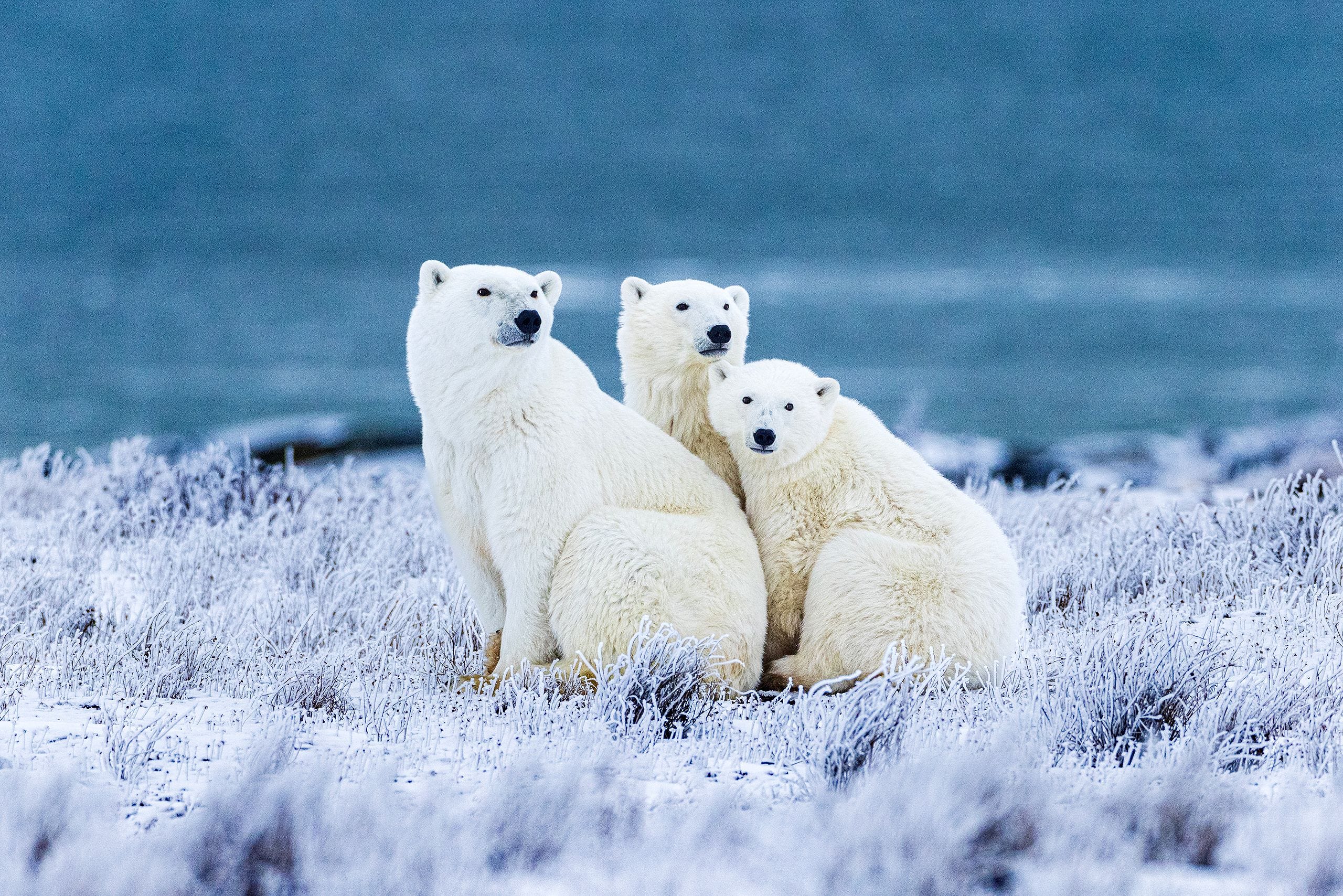
Polar bears are divided into 19 or sometimes 20 subpopulations across the Arctic. It sounds tidy, but once you dig into it, you realize how much of the picture is still missing. A handful of these populations are relatively well studied, but many are data deficient. In some regions, the last reliable surveys are decades old. In others, scientists disagree on whether populations are stable, increasing, or declining. The global estimate is essentially a patchwork of solid data, partial data, and educated assumptions. It gives us a range, but not certainty.
What we do know is far more concerning. Polar bears depend entirely on sea ice to hunt, travel, and survive. And that ice is disappearing. Climate models project population declines of at least 30 percent over the coming decades, with some regions facing local extinctions by mid-century if current trends continue. In places like Western Hudson Bay, bears are already coming ashore earlier, staying longer without food, and showing signs of declining body condition. Cubs are smaller. Survival rates are lower. You don’t need to read a study to see it. You can see it in the field.
And yet, even with that reality, polar bears are still legally hunted. In Canada, which holds the majority of the world’s population, upwards of 600 bears are killed each year. Some of this is Indigenous subsistence hunting, which is tied to culture and tradition. But it doesn’t end there. Trophy hunting still exists, and there is an active, legal global trade in polar bear skins and fur. Thousands of hides have entered international markets over the past two decades. A species classified as vulnerable, facing long-term habitat loss, is still being sold as a luxury product.
This is the part we’d rather not think about. We tell ourselves that we are protecting polar bears, that conservation systems are in place, that things are being managed. But at the same time, we are losing their habitat, uncertain about their true numbers, continuing to hunt them, and allowing a commercial trade in their skins. All of this is happening at once.
So the question becomes less about how many polar bears there are, and more about whether we care enough to protect them. Because we know what we’re capable of. We’ve gone to the moon. We mobilize entire economies for war. We solve complex problems when we decide they matter. Protecting polar bears is not beyond us. It would mean reducing emissions, protecting critical habitat, rethinking hunting quotas where data is uncertain, and ending the commercial trade in their skins. None of that is impossible.
I’ve watched polar bears at eye level, close enough to hear them breathe, close enough to feel the weight of what they are. They are not numbers on a chart or subpopulations on a map. They are the Arctic itself—a gift of nature, shaped by ice, wind, and time. They are presence, power, and stillness in a place that feels like the edge of the world.
So yes, we say there are somewhere between 19,000 and 26,000 polar bears left. But the real question isn’t the number. It’s what that number becomes. Because somewhere out on the ice, in a place most of us will never go, their future is already being written. The only question is whether we decide to change the ending.
Quote of the Week
Not everything that can be counted counts, and not everything that counts can be counted.
— Albert Einstein
Tour Updates
Our 2027 Churchill Polar Bear tours (November 3-10 and November 10-17) are now open for booking, offering another opportunity to experience one of the most iconic wildlife encounters on Earth. These small-group expeditions are designed around peak polar bear activity, giving you the best possible chances to observe and photograph bears as they gather along the shores of Hudson Bay, waiting for the sea ice to form. As always, our approach is rooted in maximizing time in the field, prioritizing meaningful encounters, and creating a seamless, well-supported experience from arrival to departure. Availability is limited and these trips tend to fill quickly, so we recommend securing your spot early.
I’ve also updated our tour page with a few new trips currently in the pipeline, giving you a better sense of where we’re headed next. There’s a lot we’re excited about, and more will be added in the coming days as details come together.
Featured Tour: Bolivia Jaguars
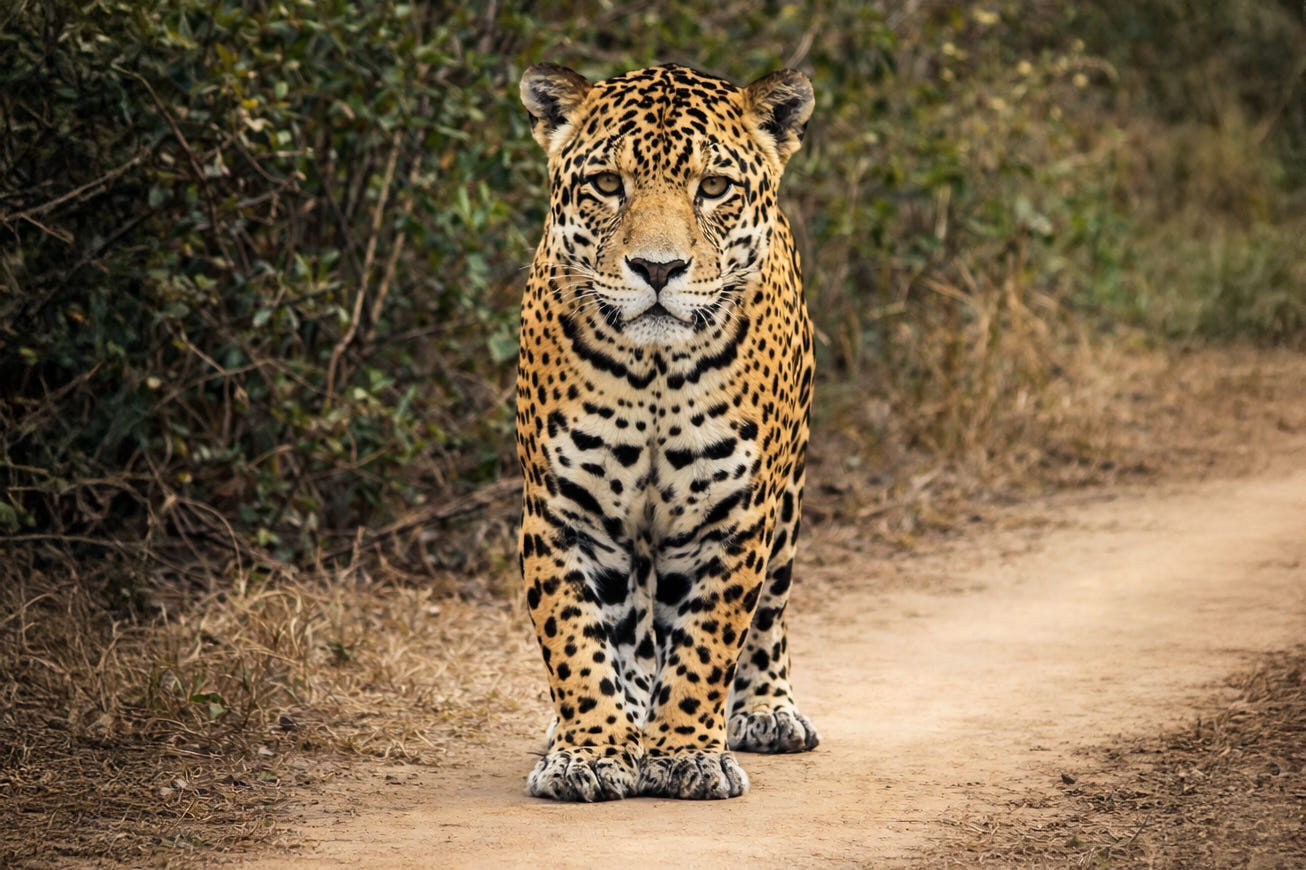
I get asked about this tour a lot and for good reason. Yes, you can be on foot in the presence of the world’s third largest cat and yes we have an excellent chance of seeing jaguars every single day, all in an exclusive remote location where it will just be our group immersed in the wild without the pressure of crowds. Beyond jaguars, this ecosystem is incredibly rich with possible encounters of pink river dolphins, sloths, pumas, tapirs, ocelots, giant anteaters, marsh and brocket deer, capybaras, coatis, peccaries, nine banded armadillos and jaguarundis, along with spectacled caimans and neotropical otters along the waterways. Red howler monkeys move through the canopy and the skies come alive with macaws, toucans and countless other birds. If you are looking to experience a truly wild place, somewhere few people ever go where every day feels raw and unpredictable, this is one of those rare opportunities. The first jaguar of the season has already been sighted hunting capybaras. Let me know if you have any questions.
2026 Tours with Availability
June 16-24: Bolivia Jaguars on Foot (4 spots)
Sept 2-9: Kenya Big Cat Safari (2 spots)
Sept 13-21: Brazil Jaguars (2 spots)
*NEW Oct 19-26: Exclusive Polar Bears (waitlist) COMING SOON!
*NEW Nov 24-30: Mountain Gorillas (3 spots)
*NEW Nov 30 – Dec 5: Mountain Gorillas (3 spots)
Feel free to reply to this email with any questions, feedback, or just to share your latest wildlife photos. Feel free to share this message with fellow nature lovers, too—let’s grow this community together!
Thank you for being a part of The Wildlife Collective community. Stay tuned for more updates, conservation news, and incredible wildlife encounters!
Best regards,
Zac Mills
The Wildlife Collective