
There are still places in this world that make you feel like you’ve discovered something ancient. Places where the mountains seem endless, where wolves still roam the hills, where bears emerge from the peaks, aand where the spirit of the wild has never disappeared. Northern Spain is one of those places.
It’s only been 48 hours since I arrived, but I am completely blown away by how magical this place is. Most people have no idea there are brown bears in Spain. Honestly, when I first found out myself, I knew immediately that I had to come.
The Cantabrian brown bear is one of Europe’s great conservation success stories. Just a few decades ago, the population was on the brink of extinction. In the 1990s, there were believed to be as few as 60 to 100 bears left scattered across the Cantabrian Mountains due to poaching, habitat loss, and persecution. Today, thanks to decades of protection, habitat restoration, anti-poaching efforts, and local communities learning to coexist with bears once again, the population has climbed to more than 400 individuals and continues to grow.
And somehow, on my very first day here, I saw four bears.
First, a single male moving across the mountainside. Then later, one of the most beautiful sightings imaginable: a mother with two tiny spring cubs feeding high above us in the mountain slopes. Three bears in one family group. Four bears total in a single day. Roughly one percent of the entire Cantabrian brown bear population. That’s hard to wrap my head around.
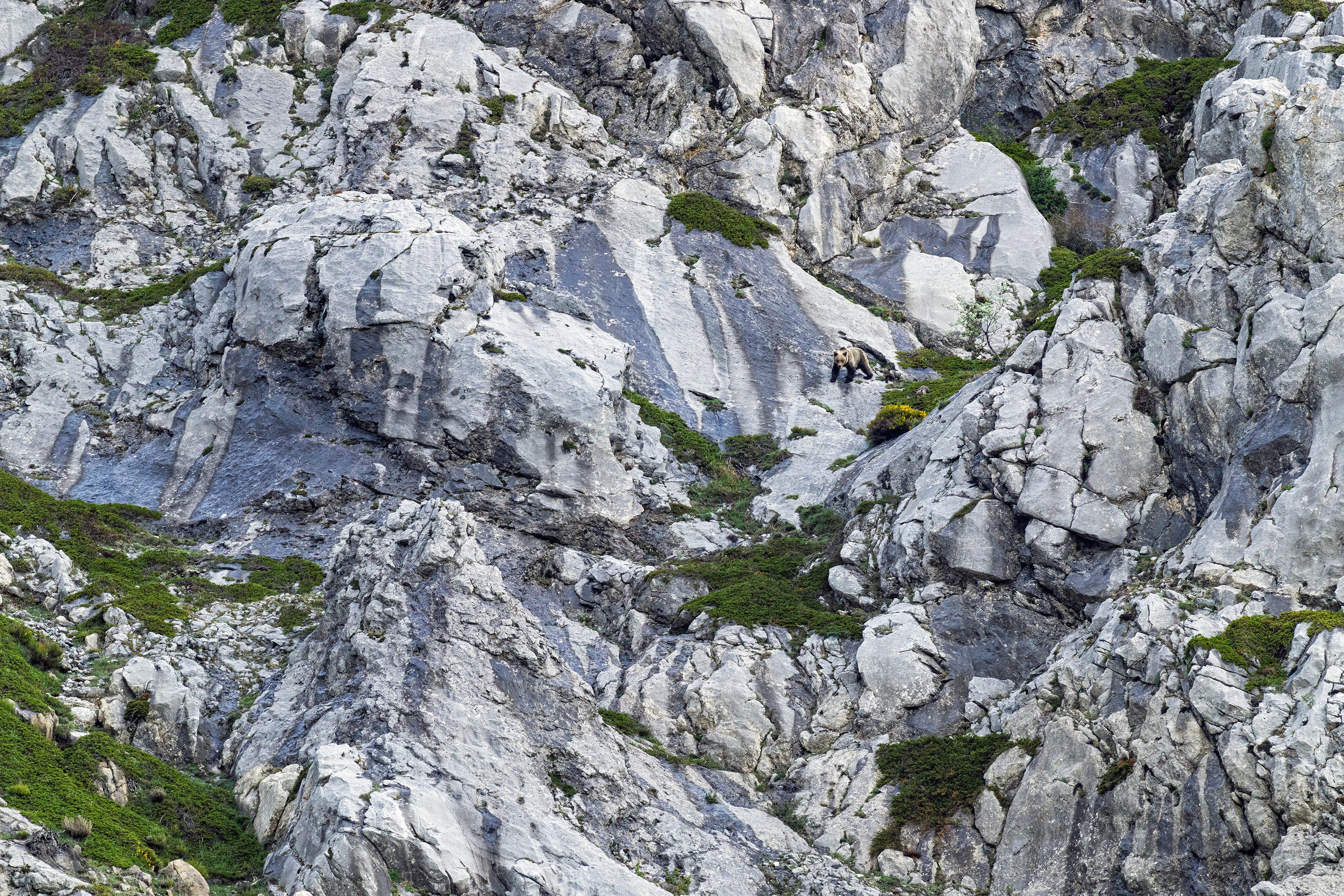
The sightings here are very different from Alaska. Everything is at a distance. You spend hours scanning giant mountainsides with spotting scopes, picking apart folds in the landscape. But honestly, that’s part of what makes this place so special. The scenery is absolutely epic. Rolling mountain peaks disappearing into fog. Verdant valleys. Steep cliffs. Tiny villages tucked into the mountains. It feels like stepping back into another era. Like a land before time.
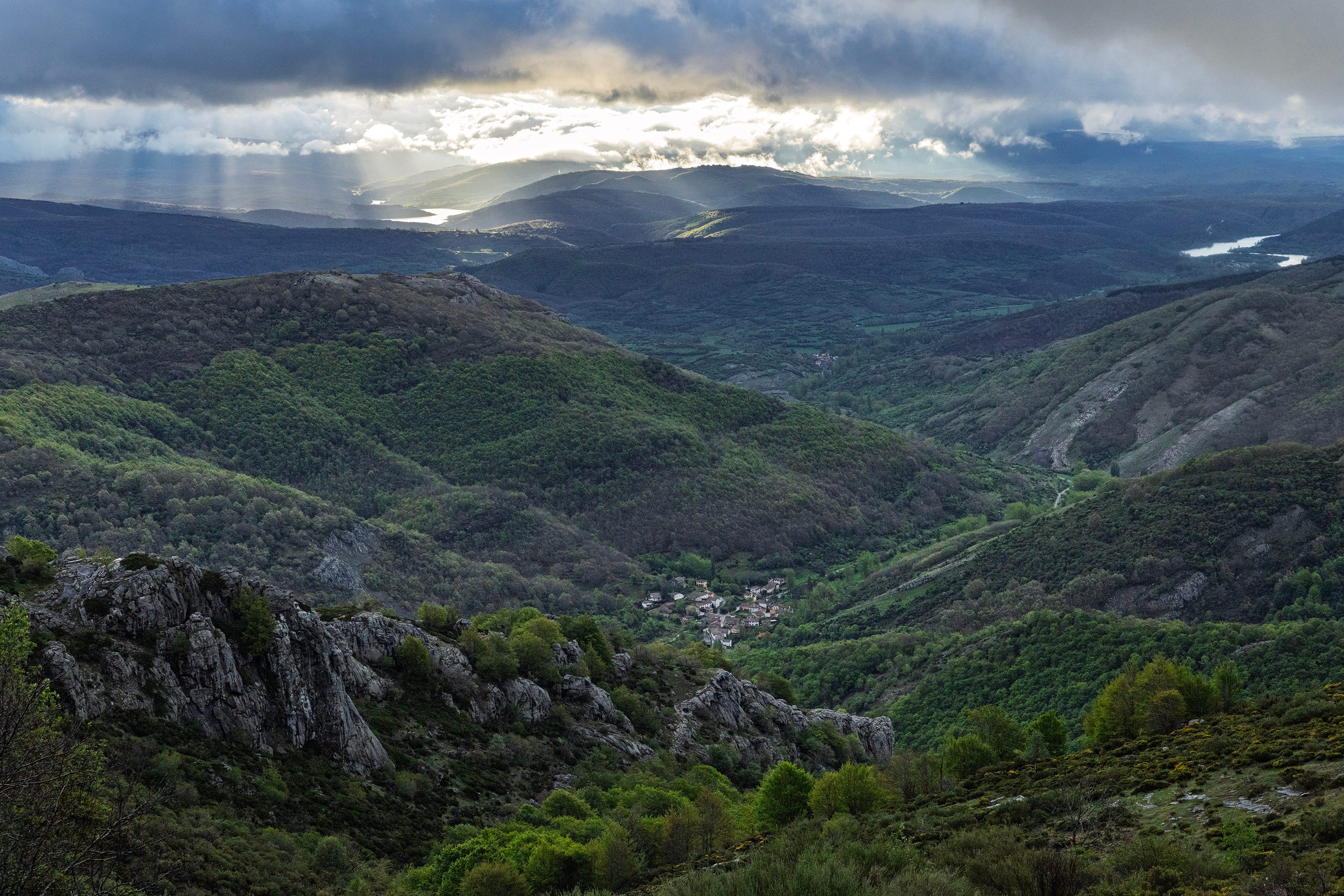
And the surprises just kept coming.
We also saw two wild European wild cats. One of them crossed so close in front of us that I could barely fit it in the frame. I could only manage a head shot because we were that close. Then yesterday, we found two wolves moving across a distant hillside. Again, far away, but incredibly special to witness.
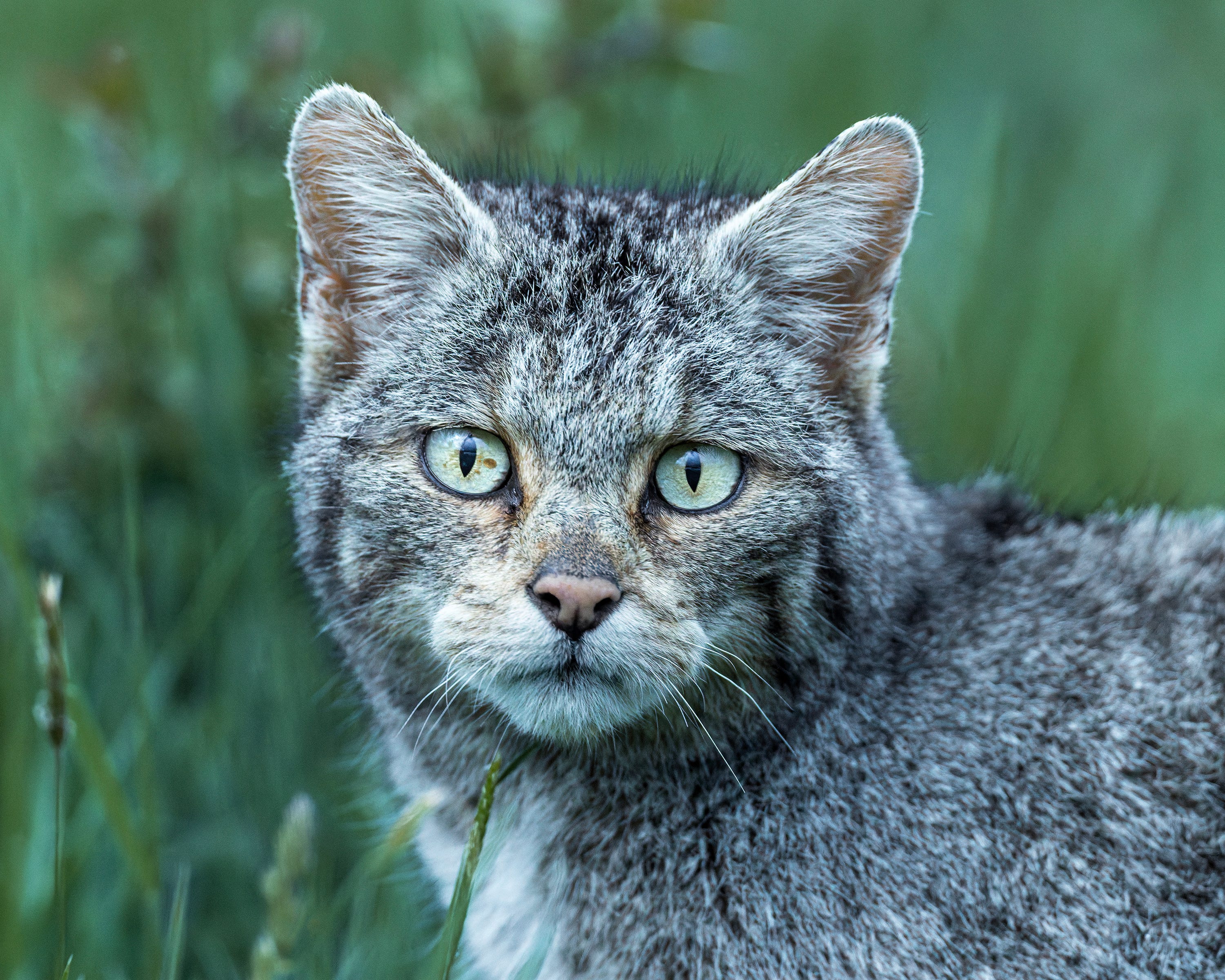
To see bears, wolves, and wild cats all within two days feels surreal. Three predators. Three species surviving and coexisting in this landscape. It gives me hope. In a world where conservation can sometimes feel hopeless,, places like this remind you that recovery is possible when people decide wildlife matters.
And then there’s the food.
As you’d expect in northern Spain, it has been ridiculously good. Long dinners after being out in the mountains all day. It’s one of those places that feeds your soul in every possible way.
There are certain wild places that stay with me forever. Places I feel pulled back to over and over again. Alaska. The Masai Mara. The Virunga Massif. And I already have a feeling this part of Spain may become one too. I came here hoping to see bears, but I found so much more than that. I found a landscape where wildness still endures, where coexistence is possible, and where one of the world’s rarest bears is reclaiming its place in the mountains. More than anything, I leave reminded that conservation victories are still possible, and that when people decide wildlife matters, nature has an incredible ability to recover.
Quote of the Week
Only those who risk going too far can possibly find out how far one can go.
— T. S. Eliot
The Bear That Refused to Disappear
There’s something deeply humbling about looking across a mountainside and realizing the animal you’re watching is one of the rarest bears on Earth. The Cantabrian brown bear is not a separate species of bear, but rather a distinct population of the Eurasian brown bear that has survived for thousands of years in the rugged mountains of northwestern Spain. These bears belong to the same species as the massive costal brown bears of Alaska, yet standing here scanning the foggy slopes through a spotting scope, they feel entirely unique to this landscape. Smaller, more elusive, shaped by centuries of surviving alongside people in one of the most densely populated continents on Earth.
Unlike the coastal brown bears I spend so much time with in Alaska, Cantabrian bears live in a very different world. There are no giant salmon runs here. No endless open tundra. Instead, these bears move through steep oak and beech forests, rocky alpine meadows, chestnut groves, and narrow mountain valleys dotted with tiny villages that have existed for generations. It’s a landscape where wildness and humanity have overlapped for centuries. And because of that, these bears evolved into masters of caution. Most sightings happen from very far away. You rarely stumble upon one unexpectedly. They survive by staying hidden, feeding quietly, and navigating the mountains almost like ghosts.
Physically, they are generally smaller than the giant brown bears people picture from Alaska, particularly because they don’t have access to the same protein-rich food sources. Adult males here typically weigh somewhere between 250 to 400 pounds, while females are significantly smaller. Their fur varies enormously too. Some are dark chocolate brown, others almost blond, and some carry beautiful silver frosting across their backs.
Their diet is one of the most fascinating parts of the story because these bears are overwhelmingly vegetarian. Around 70 to 90 percent of what they eat comes from plants depending on the season and food availability. In spring, they emerge from their dens feeding on fresh grasses, herbs, bulbs, and shoots high in the mountains. Later in the year, berries become critically important, especially bilberries, blackberries, cherries, and rowan berries. In autumn, they gorge themselves on chestnuts, acorns, hazelnuts, and beechnuts to prepare for winter hibernation. They will occasionally prey on livestock or wild ungulates, and they scavenge when opportunities arise, but compared to many other brown bear populations, they rely remarkably little on meat.
One of the most incredible parts of the Cantabrian brown bear story is how close they came to disappearing entirely. By the late twentieth century, the population had collapsed due to poaching, habitat fragmentation, poisoning, and direct persecution. Roads and development split the bears into two isolated subpopulations, eastern and western, with dangerously low genetic diversity. At one point in the 1990s, scientists believed there were fewer than 100 bears left in total. Imagine that for a moment. One of Europe’s great predators reduced to a tiny remnant hanging on in the mountains.
And yet somehow, against the odds, the bears survived. Conservation organizations, local communities, scientists, park staff, and governments slowly began changing the trajectory. Anti-poaching patrols increased. Habitat corridors were restored. Compensation programs reduced conflict with farmers. Environmental education helped shift public perception away from fear and toward pride. Over time, female bears began recolonizing old territories. Cubs survived at higher rates. The western population expanded. Then something extraordinary started happening: bears from the eastern and western populations began mixing again, restoring genetic flow between groups that had been isolated for decades.
That genetic reconnection may ultimately be one of the most important conservation victories of all. Small isolated populations often spiral toward extinction because of inbreeding and low genetic diversity. But in the Cantabrian Mountains, young dispersing males slowly started crossing between the two populations, reconnecting the gene pool naturally. Scientists now see evidence of increasing genetic exchange and improving long-term viability. Today, the population is believed to exceed 400 bears and continues to expand into areas where bears had disappeared generations ago. In conservation terms, that is extraordinary. Especially in western Europe.
But what struck me most being here isn’t just the science or the numbers. It’s the feeling of hope these bears represent. In a world where we constantly hear stories about habitat destruction and extinction, the Cantabrian brown bear reminds us that recovery is possible. Not easily. Not quickly. But possible. These mountains could have lost their bears forever. Instead, through decades of effort, coexistence, and people refusing to give up on wildlife, the bears are still here. And that gives me so much hope.
Tour Updates: Spain anyone?
As I mentioned earlier, I have been completely captivated by my experience here in northern Spain, and I already know this is a place I want to return to again and again. The combination of wild landscapes, brown bears, wolves, incredible food, rich culture, and one of the most inspiring conservation stories in Europe has honestly exceeded every expectation I had. Because of that, I’m seriously considering offering a Wildlife Collective tour here in the future focused on Cantabrian brown bears, wolves, wild cats, photography, conservation, and simply experiencing this incredibly underrated corner of the world. If spending time searching for bears in the mountains of northern Spain sounds like something you’d genuinely be excited about, please let me know. I have a feeling this place is going to become something very special for The Wildlife Collective, and I’d love to share it with a small group of people who feel drawn to wild places like this too.
2026 Tours with Availability
Sept 2-9: Kenya Big Cat Safari (2 spots)
Sept 13-21: Brazil Jaguars (2 spots)
*NEW Nov 24-30: Mountain Gorillas (3 spots)
*NEW Nov 30 – Dec 5: Mountain Gorillas (3 spots)
Feel free to reply to this email with any questions, feedback, or just to share your latest wildlife photos. Feel free to share this message with fellow nature lovers, too—let’s grow this community together!
Thank you for being a part of The Wildlife Collective community. Stay tuned for more updates, conservation news, and incredible wildlife encounters!
Best regards,
Zac Mills
The Wildlife Collective