
From the beginning, our goal has been simple:
To become the very best wildlife tour operator in the world for bears, great apes, and big cats.
Not the biggest.
Not the flashiest.
The best.
For us, that means constantly searching for the right places. Places where wildlife still feels truly wild. Where fewer people venture. Where encounters are not manufactured, but earned. Where the experience has the potential to change you.
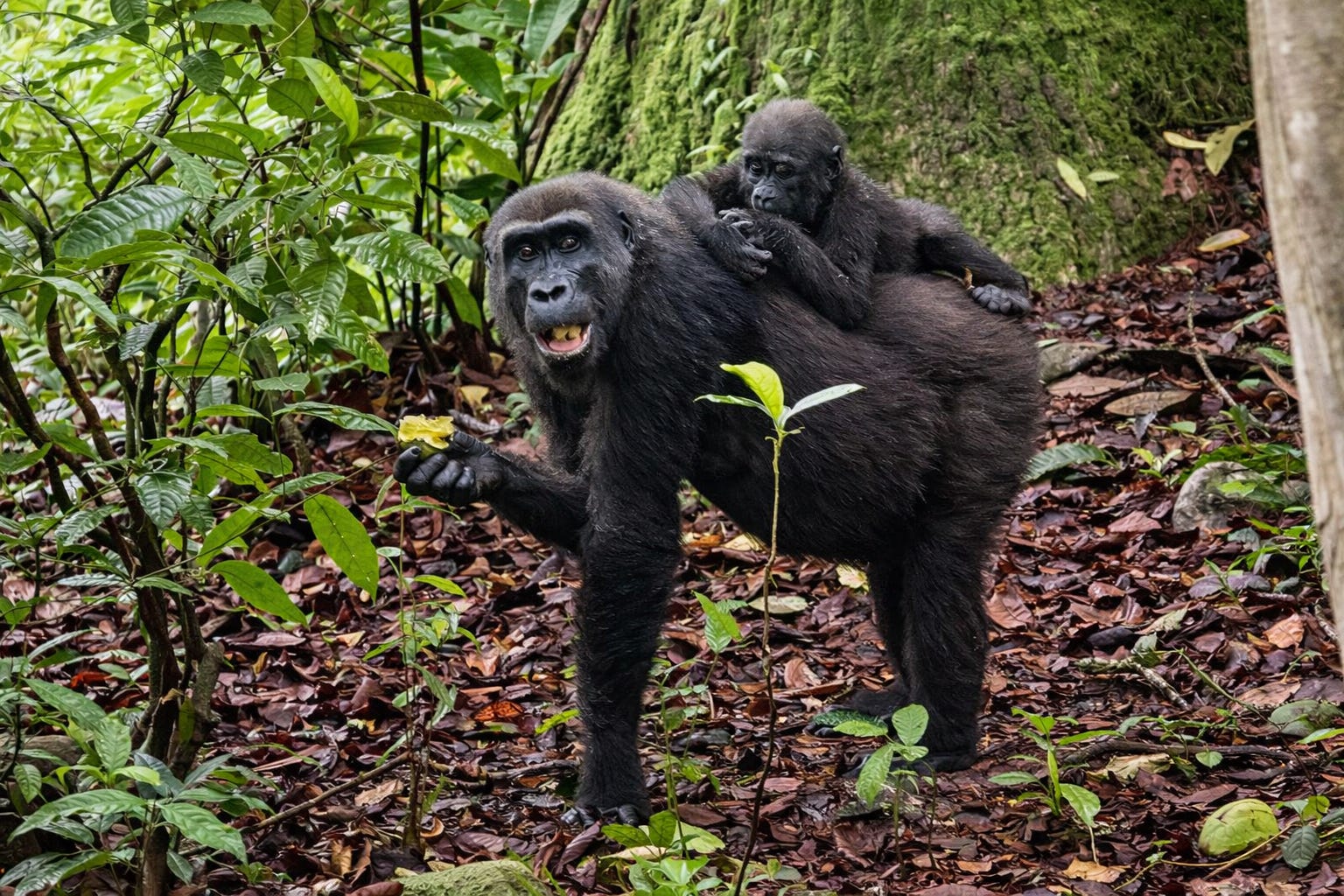
That is why we are so excited to launch our brand-new Gabon Gorillas and Forest Elephants tour from January 30 to February 8, 2027.
I have dreamed about visiting Gabon for as long as I can remember. Maybe it was the country’s extraordinary biodiversity. Maybe its remoteness. Or maybe the simple fact that it is one of the only places on Earth where hippos can be seen along an Atlantic beach. That spark reignited recently when I watched a video of a silverback gorilla beat its chest and run into a river. It felt wild in a way that is increasingly rare.
I have guided around brown bears in Alaska, pumas in Patagonia, orangutans in Indonesia, and mountain gorillas in Uganda more than fifty times. I love every moment with mountain gorillas. But Gabon feels different. Remote. Untouched. A frontier for great ape research and conservation.
In Loango National Park, gorilla trekking directly supports long-term scientific research led by the Max Planck Institute for Evolutionary Anthropology. Researchers there study western lowland gorillas to better understand their behavior, social dynamics, cognition, genetics, and health. This work contributes to global knowledge about great ape evolution and helps inform conservation strategies across Central Africa.
Tourism revenue plays an important role in sustaining this research presence. Habituation efforts, anti-poaching monitoring, veterinary interventions when necessary, and the protection of intact habitat all depend on consistent funding and international attention. By trekking with these gorillas, you are not only witnessing one of the least-seen great apes on Earth, but you are contributing to science-based conservation in one of Africa’s most important ecosystems.
Our journey begins in Libreville and takes us deep into Loango’s wilderness, where rainforest meets ocean in dramatic fashion. We will base ourselves at a riverside tented camp along the Iguela Estuary. Comfortable, but fully immersed in nature. Wildlife moves through camp. The forest soundtrack never stops.
Over nine days, we will experience:
Five western lowland gorilla treks
A dedicated safari day exploring Loango’s river channels
Opportunities for forest elephants
The possibility of hippos along the Atlantic coast
Extraordinary Congo Basin birdlife
And a landscape where rainforest, savannah, river, and ocean converge
This is a journey for those who choose depth over convenience. For those drawn to places that still feel raw and alive. For those who want to support meaningful conservation while experiencing something very few people ever will.
We are limiting this to just three guests. Two spots remain.
If this speaks to you, we would love to have you join us. Please respond with any questions.
Alaska Bear Camp $5 Raffle
What if I told you that for about the cost of a fancy coffee, you could win an unforgettable Alaska bear-viewing adventure… and also help protect the very bears you dream of seeing?
Right now, the For the Bears Adventure Raffle with the Alaska Wildlife Alliance is live — and we’re so proud to support it.
Here’s what one lucky winner will receive:
Two spots on our Alaska Bears & Red Fish Camp from July 30 — to August 3, 2026
Small group, ethical, on foot bear viewing for a truly immersive experience on our favorite tour of the year
Expert guiding and photography support
A trip valued at over $11,000
Imagine standing in some of the most breathtaking bear habitat on the planet, watching massive brown bears dive for bright red salmon right in front of you.
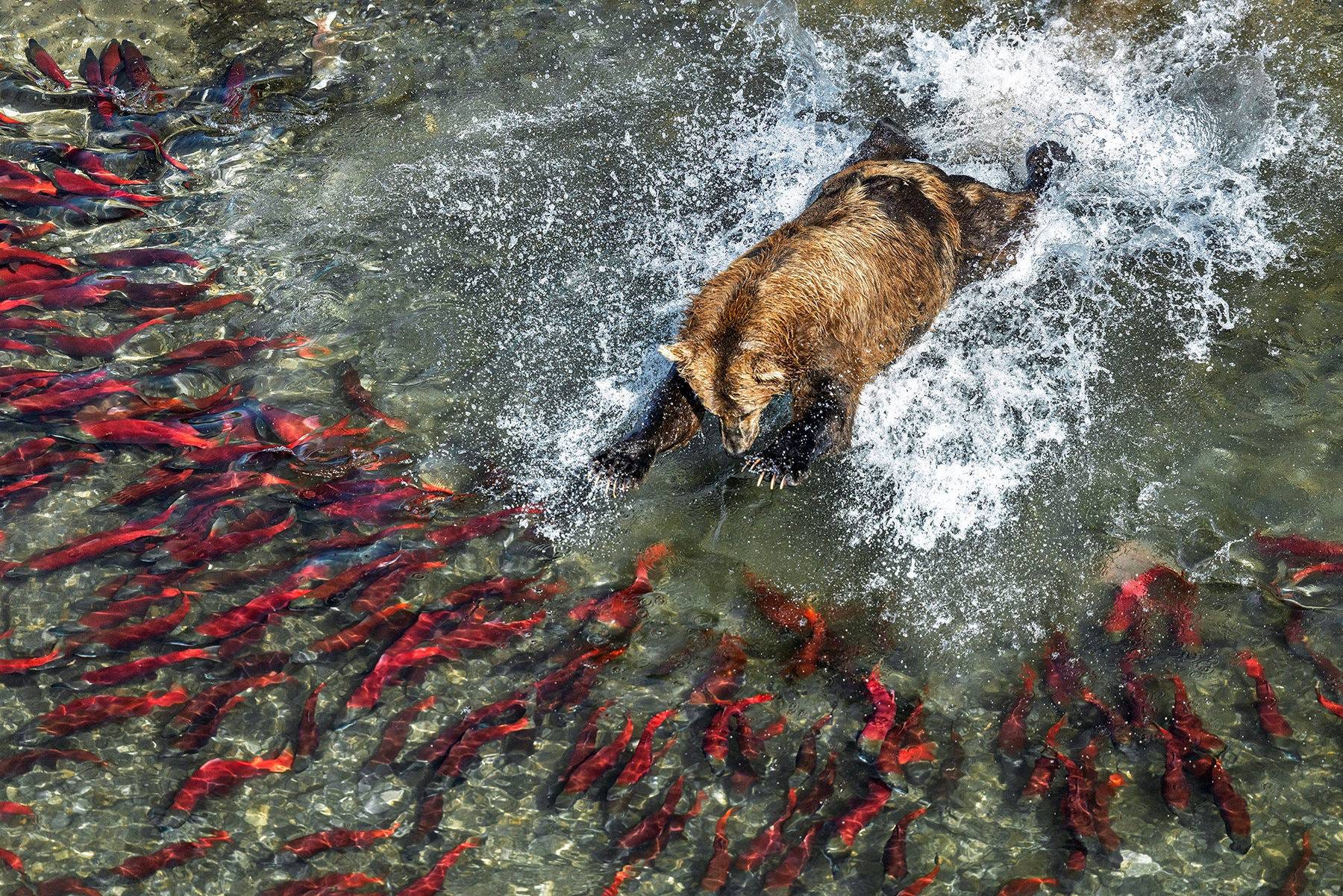
We regularly see up to 40 bears a day during peak season. And you’ll be visiting at the absolute best time when the salmon are running, the bears are the most active, and the landscape feels alive in every direction.
Tickets are just $5.
You can buy as many as you want.
Only 5,000 will be sold.
So please show your support and enter to win the trip of a lifetime. And again — it’s just $5. That’s the power of collective small actions: they add up in a big way. Please share this widely with anyone who loves bears, wild places, and real conservation impact.
And even if your name is not drawn, you can feel proud knowing you helped protect the very bears that make Alaska so extraordinary.
The winner will be drawn at random on March 3, 2025, announced live via video from Anchorage, Alaska, and contacted directly by phone and email. The prize must be claimed within one week of notification.
Quote of the Week
Small deeds done are better than great deeds planned.
— Peter Marshall
Conservation News
The Future of Africa’s Gorillas
Gorilla conservation in Africa remains one of the continent’s most complex wildlife challenges, and the numbers tell that story plainly. All four gorilla subspecies — the mountain gorilla (Gorilla beringei beringei), the eastern lowland gorilla (Gorilla beringei graueri), the western lowland gorilla (Gorilla gorilla gorilla), and the Cross River gorilla (Gorilla gorilla diehli) — are classified as endangered or critically endangered and are declining in the wild due to habitat loss, hunting, disease, and human-wildlife conflict. The mountain gorilla, long on the brink, has seen its population rise to roughly 1,060–1,070 individuals thanks to decades of protection, veterinary care, and community engagement. It is the the only success story in great ape conservation.
The western lowland gorilla is the most widespread and historically the most numerous of the subspecies, ranging across the forests of Cameroon, Gabon, the Republic of Congo, Equatorial Guinea, Angola, and the Central African Republic. Recent assessments estimate range wildly from are 100,000 to 300,000 western lowland gorillas in the wild, although exact figures vary by survey and population model. Despite the relatively high numbers compared to other gorillas, the western lowland gorilla is listed as Critically Endangered by the IUCN because the gorilla’s numbers have declined by more than 60% over the last 20 to 25 years due to poaching and disease.
Long-term research on western lowland gorillas is sharpening our understanding of their behavior and social ecology. Field studies in parts of northern Republic of Congo are revealing complex social relationships within and between gorilla groups, which can affect everything from vulnerability to hunting pressure to how disease moves through populations. These insights help conservationists design strategies that account for movement patterns, group resilience, and habitat use, and go beyond simple headcounts to protecting what makes gorilla societies viable.
Across the Congo Basin and eastern Africa, the eastern lowland gorilla faces steep declines, with current estimates suggesting fewer than ~6,000 individuals remain in the wild due to decades of poaching, mining pressures, and regional instability. The Cross River gorilla is even more imperiled: confined to fragmented forest patches on the Cameroon-Nigeria border, recent research suggests fewer than ~250–300 individuals exist, making it the rarest great ape on Earth. By contrast, the mountain gorilla’s relatively stable growth shows what sustained funding, habitat protection, and community partnerships can achieve even in regions wracked by conflict and human pressure.
By 2100, the fate of Africa’s gorillas will depend almost entirely on what happens to the forests they call home. If current pressures such as logging, mining, hunting, weak governance, and disease outbreaks like Ebola continue unchecked, we could see severe declines, with Cross River gorillas at real risk of extinction and western and eastern lowland gorillas reduced to fragmented strongholds. But if large scale forest protection, sustained enforcement, disease monitoring, and meaningful community partnerships are prioritized, gorillas could stabilize and even recover in key landscapes. The biology is not the limiting factor. The real question is whether we choose to keep Africa’s great forests standing.
New Tours Added
In addition to launching our new Gabon Gorillas and Forest Elephants tour, we are actively expanding our portfolio with several new journeys around the world. If you’re passionate about bears, big cats, or great apes and have a destination in mind, we’d love to hear it. Share your idea with us, and we’ll thoughtfully explore how we can help bring it to life in a way that feels wild, meaningful, and true to our standard of extraordinary wildlife experiences.
Most of our 2026 tours are now full, which we are incredibly grateful for. Below is a list of the remaining available spots for the year.
2026 Tours with Availability
April 27 – May 2: Himalayan Brown Bears (3 spots)
June 16-24: Bolivia Jaguars on Foot (4 spots)
Sept 2-9: Kenya Big Cat Safari (2 spots)
Sept 13-21: Brazil Jaguars (4 spots)
*NEW Nov 24-30: Mountain Gorillas (3 spots)
*NEW Nov 30 – Dec 5: Mountain Gorillas (4 spots)
2027 Tours with Availability
*NEW Jan 31 – Feb 8: Gabon Gorillas & Forest Elephants (2 spots)
*NEW April 10-18: Patagonia Pumas & King Penguins (4 spots)
Click to see our fill list of tours
Feel free to reply to this email with any questions, feedback, or just to share your latest wildlife photos. Feel free to share this message with fellow nature lovers, too—let’s grow this community together!
Thank you for being a part of The Wildlife Collective community. Stay tuned for more updates, tips, and incredible wildlife encounters!
Best regards,
Zac Mills
The Wildlife Collective