
There are so many things in this world that I care about. So many species I want to protect, wild places I want to explore, stories I want to tell, and conservation projects I want to support.
I’ve been fortunate enough to build a life around these passions. Through The Wildlife Collective, I’ve spent years traveling to some of the most extraordinary places on Earth, sharing encounters with wildlife, learning from incredible people, and trying to use our work to make a positive difference.
But lately, I’ve been asking myself a question.
Could I be doing more?
And increasingly, I’ve been wondering whether the next chapter of my life should involve starting a nonprofit dedicated to protecting bears.
I’m not certain yet. But I want to share what’s been on my mind, and I’d genuinely love to hear what you think.
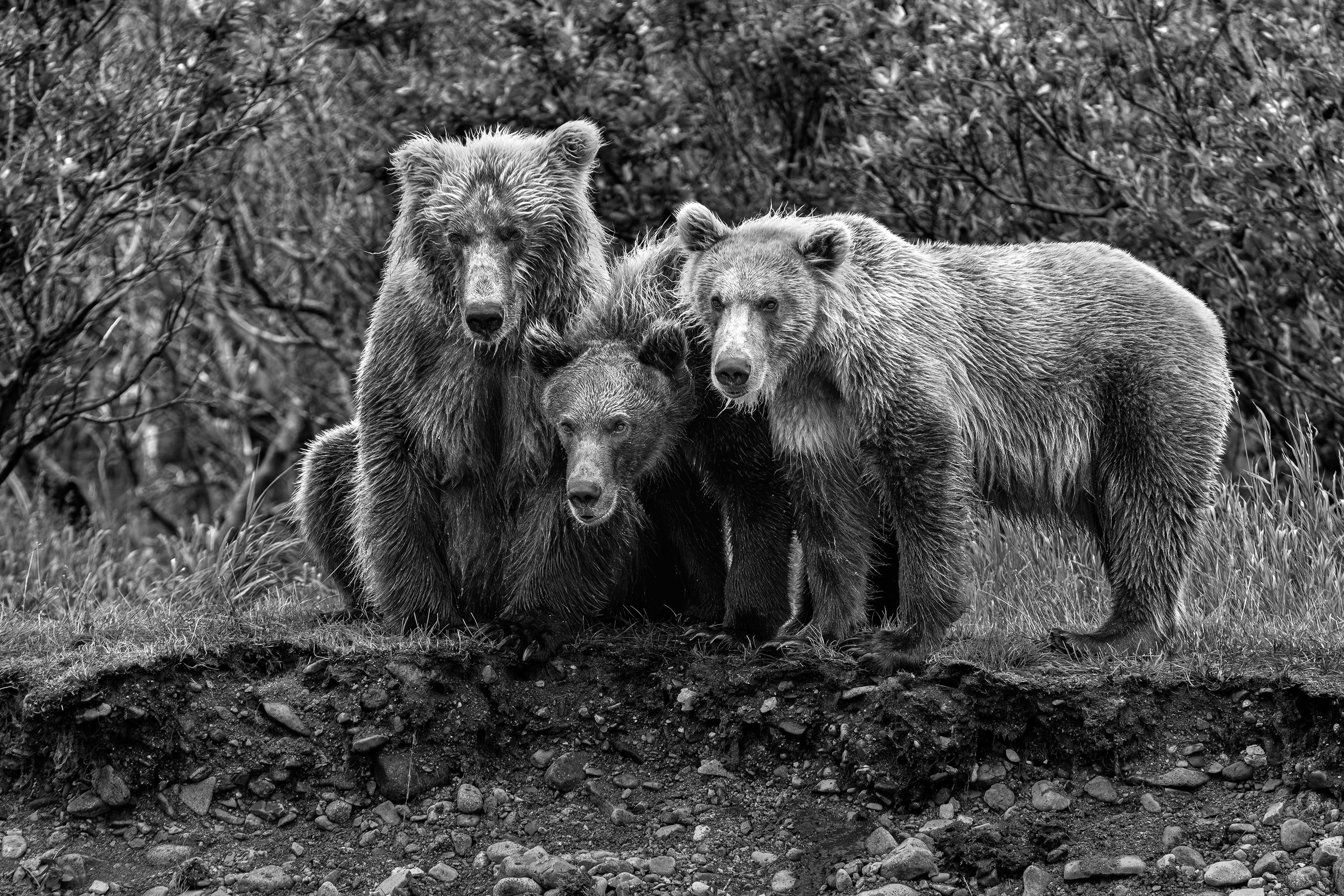
It always comes back to bears.
The funny thing is, I used to be terrified of bears.
Growing up, bears represented something to fear. They were dangerous, unpredictable animals. The kind you hoped never to encounter in the wild.
Today, I make my living guiding people to see them.
I’ve guided bear experiences in so many places around the world. I’ve spent thousands upon thousands of hours in their presence, sometimes just a few feet away. I’ve watched mothers raise their cubs, bears compete for salmon, young bears play, and enormous males move through the landscape with a gentleness that still surprises me.
I’ve learned to read their body language, understand their behaviour, and feel comfortable guiding in just about any environment where bears live.
But here’s what’s interesting.
The more time I spend with bears, the more I realize how much we misunderstand them.
And the more I learn, the more I realize how much I still don’t know.
Bears are intelligent, adaptable, curious, and remarkably individual animals. They have personalities. They form relationships. They communicate in ways that most people never get the opportunity to understand.
Of course, they are powerful wild animals that deserve enormous respect. But the image of bears that so many of us grow up with is often very different from the animals I’ve come to know.
I went from fearing bears to building my life around them.
And somewhere along the way, that relationship became something much bigger than photography or guiding.
It became a responsibility.
A world of bears. A world of challenges.
Bears are found in roughly 66 countries around the world.
Eight species, living in vastly different landscapes. From polar bears navigating the Arctic sea ice to sun bears in Southeast Asia’s tropical forests. From Andean bears in South America’s cloud forests to brown bears fishing for salmon in Alaska.
Each species has its own extraordinary story.
And each faces its own challenges.
Habitat destruction. Human persecution. Trophy hunting. Climate change. Poor wildlife management policies. Fragmented landscapes. The loss of important wildlife corridors. Conflict with people as human populations expand into bear habitat.
The list goes on and on.
In some places, bears are losing the forests they depend on. In others, they’re being killed because they’re perceived as dangerous or inconvenient. Elsewhere, government policies actively undermine their protection.
And even in places where bears appear to be thriving, the reality can be far more complicated.
I’ve witnessed some of these challenges firsthand, and the more I travel, the harder it becomes to simply observe them and move on.
I can photograph a bear. I can share its story. I can bring people into its world and hopefully change the way they think about it.
But when I leave, the challenges that bear faces remain.
That’s something I think about a lot.
We already have something powerful in common.
Here’s another thing that fascinates me about bears.
For an animal that inspires so much fear, bears are also one of the most universally loved animals on the planet.
Think about it.
For millions of us, one of our very first connections with an animal was a teddy bear.
We slept beside one. We carried it around. We hugged it when we were scared.
An animal that represents danger in the wild somehow became one of our greatest symbols of comfort, love, and security.
I’ve always found that contradiction extraordinary.
And I think there’s something powerful in it.
Bears already have a place in our hearts. Across cultures, generations, and countries, people feel a connection to them.
What if we could turn more of that affection into meaningful conservation action?
Because here’s the other thing I’ve learned.
All over the world, there are extraordinary people working to protect bears.
Researchers spending years studying them. Local conservationists fighting to keep forests standing. Community leaders finding ways for people and bears to coexist. Small grassroots organizations working with very little funding, often against enormous odds.
I’ve met some of these people. Others I’ve followed and admired from afar.
And I keep thinking about how much more they could accomplish with greater support, stronger networks, and more people hearing their stories.
I don’t believe the world necessarily needs another organization trying to do everything itself.
I think it needs more people helping those who are already doing the difficult work.
So what would a nonprofit actually do?
I’ve been thinking about three areas where I believe I could make a meaningful contribution.
1. Conservation storytelling
This is where I feel I have something unique to offer.
I’ve spent much of my life using photography and storytelling to connect people with wildlife.
I’ve seen firsthand how a single encounter with a bear can change someone’s perspective. How a photograph can inspire curiosity. How a story can challenge a belief that someone has held their entire life.
But I want to take that further.
I want to tell the stories that aren’t being told.
The bears living on the edge of disappearing forests. The people dedicating their lives to protecting them. The consequences of government policies that rarely receive public scrutiny. The extraordinary successes that show conservation can work.
Not just beautiful images of bears, although those will always matter.
Stories that educate, challenge, inspire, and ultimately lead to action.
2. Supporting grassroots bear conservation
I don’t want to create an organization that competes with the people already doing incredible conservation work.
I want to help them succeed.
Imagine building a global network of grassroots organizations working to protect bears, and helping connect them with funding, visibility, expertise, and supporters.
Perhaps that’s helping protect a wildlife corridor in Ecuador. Supporting communities living alongside bears in Asia. Funding research that informs better protection. Or helping a small organization launch a project that could make a meaningful difference but simply doesn’t have the resources.
The idea would be to raise funds and direct them toward credible, locally led conservation efforts where they can have a real impact.
Not to arrive somewhere and tell people what they should be doing.
But to listen, learn, and support the people who understand these landscapes and their challenges far better than I ever could.
3. Campaigning for better policies
This might be the most challenging part. But perhaps also one of the most important.
I’ve become increasingly aware that protecting individual bears or small areas of habitat is only part of the solution.
Sometimes the greatest threats come from the policies governing how we treat wildlife.
And changing those policies can protect far more bears than any single conservation project.
I want to be more involved in that work.
Whether it’s challenging unnecessary bear killing, advocating for stronger habitat protections, opposing trophy hunting, or pushing for policies that allow people and bears to coexist, I believe there’s a need for informed, credible, and persistent voices speaking up for bears.
That doesn’t mean every issue is simple. Conservation rarely is.
It means being willing to do the research, listen to different perspectives, work with experts and local communities, and take a stand when the evidence calls for it.
I don’t want to create an organization that simply tells people bears are wonderful.
I want to help create a world where bears have a better chance of surviving and thriving.
But do I really need to start something new?
This is the question I keep coming back to.
There are already wonderful conservation organizations doing important work. I’ve supported several of them, and I have enormous respect for what they accomplish.
Would it be better to put more of my time and resources behind those organizations?
Or could I build something that fills a gap, connects existing efforts, and brings a different approach to bear conservation?
I don’t know the answer yet.
And there’s another reality.
The Wildlife Collective has grown into something that requires an enormous amount of my time and energy. I’m also helping build Kapoto Camp in Kenya, raising a young family, and trying to find a better balance between all the things that matter to me.
Starting a nonprofit would be a serious commitment.
It would require funding, governance, accountability, the right people, and a clear understanding of what we could actually achieve.
The last thing I want is to create another organization simply because I have an idea I’m excited about.
If I do this, I want to do it properly.
I want it to be thoughtful, transparent, collaborative, and built for the long term.
And I want to be able to point to real outcomes. More habitat protected. Better policies. Stronger grassroots organizations. Fewer bears killed unnecessarily. More people understanding why bears matter.
Because at the end of the day, the measure of success shouldn’t be how big an organization becomes.
It should be what changes because it exists.
Maybe this is what everything has been leading toward.
Sometimes I think about how unlikely this entire journey has been.
I spent a decade working as an economist at the World Bank before making the decision to leave that career behind and pursue wildlife photography.
At the time, I had no idea where it would lead.
I certainly never imagined I’d spend thousands of hours with bears, guide people across the world to see them, build a wildlife travel company, or find myself having conversations with conservationists and policymakers about how we can better protect them.
But each experience has led to another.
And somewhere along the way, I’ve developed something I didn’t have when I started.
A deeper understanding of bears. Relationships with people working to protect them. A platform that allows me to reach people around the world. And, perhaps most importantly, a growing sense of responsibility to use those things for something meaningful.
I don’t want to spend my life simply visiting extraordinary wild places and watching what happens to them.
I want to be part of protecting them.
And while I care deeply about so many animals, I’ve come to accept something about myself.
Bears are my story.
They’re the animals that changed my life.
They’re the animals I understand best.
And they’re the animals I feel most compelled to stand up for.
I think there’s something to be said for recognizing where you can make the greatest difference, rather than trying to do everything.
Maybe that’s where I need to focus more of my energy.
So, what do you think?
I’m sharing all of this because I genuinely haven’t made a final decision.
I’m exploring what this could look like. I’m speaking with people I trust, learning about what it takes to build an effective nonprofit, and thinking carefully about whether this is the right next step.
But I’m excited by the possibility.
The idea of bringing people together from around the world, united by a shared commitment to protecting bears, is something I find incredibly inspiring.
A community that celebrates bears, tells their stories, supports the people protecting them, and isn’t afraid to speak up when they need our help.
I don’t know exactly what it would become.
But I know why I want to explore it.
Bears have given me more than I ever could have imagined. They’ve taken me to extraordinary places, introduced me to wonderful people, challenged my assumptions, and completely changed the direction of my life.
I feel like it’s time for me to give more back to them.
And I’d love to know what you think.
Would you support an organization like this? Would you follow its work, share its stories, contribute financially, or get involved in campaigns to protect bears?
Are there organizations or individuals doing important work that you think I should connect with?
And perhaps most importantly, do you think the world needs something like this?
I’d genuinely love to hear your thoughts, including any concerns, suggestions, or ideas about how to make this vision stronger.
Because if I do take this next step, I know I can’t do it alone. Nor would I want to.
I want to bring together people from around the world who share a love for bears and a belief that we can do more to protect them. People with different experiences, skills, perspectives, and ideas, all working toward something bigger than any one of us.
I want to build something meaningful. Something that brings people together, supports those already doing incredible work, and makes a real difference for bears.
And if I’m going to make this happen, I’m going to need a lot of help.
Quote of the Day
Never doubt that a small group of thoughtful, committed citizens can change the world; indeed, it’s the only thing that ever has.
— Margaret Mead
Thank you for being part of The Wildlife Collective. Together, we are helping build a deeper connection between people and the natural world while supporting the conservation of wildlife and wild places. Stay tuned for more stories from the field, conservation news, photography tips, and unforgettable wildlife encounters from around the globe.
Until next time, keep exploring, keep learning, and keep falling in love with the wild.
Zac Mills
The Wildlife Collective