
The Alaska government told you these bears weren’t being wasted.
They told you the hides were salvaged.
They told you the meat was donated to local villages.
They told you this was ethical wildlife management.
Then someone finally flew over the killing fields.
This spring alone, the State of Alaska gunned down 68 brown bears from helicopters as part of its Mulchatna Predator Control Program. Since the program began in 2022, more than 250 bears have now been killed from the air in one of the largest predator control programs in modern North American history.
For years, the public had only the state’s version of events.
Now, for the first time, we have photographs.
And they tell a very different story.
A dead yearling cub lies curled up on the tundra, exactly where it fell.
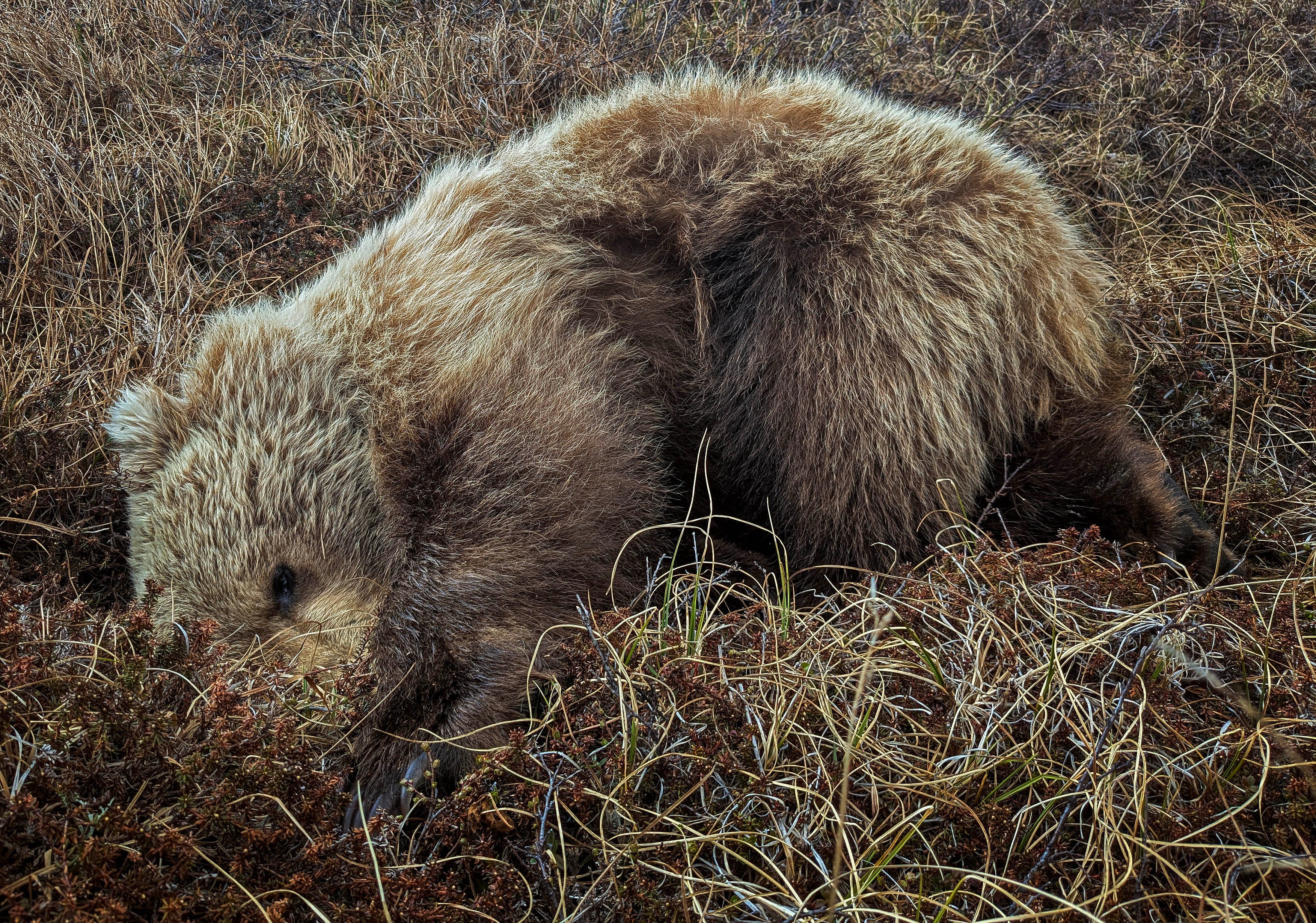
It isn’t skinned.
It isn’t salvaged.
It isn’t taken to a village.
It is simply left behind to waste away.
Nearby lies an adult brown bear. Partially butchered. Its head removed. Its front paws gone. The rest of its body abandoned where it died. Around the carcasses are spent shotgun slugs and plastic debris left behind on the tundra.
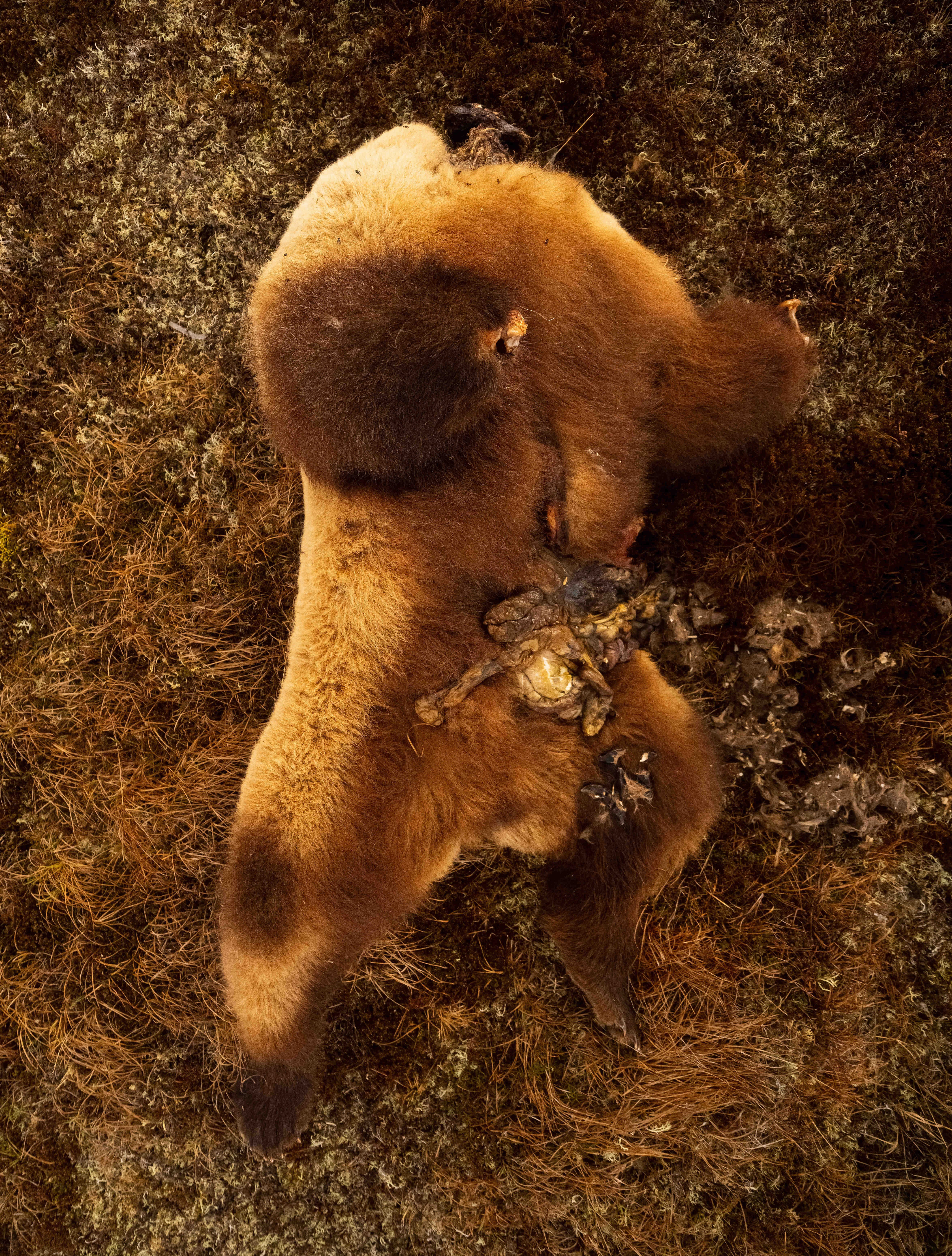
These bears didn’t attack anyone.
They weren’t threatening a community.
They weren’t breaking into cabins.
They were simply born in the wrong place.
From a helicopter high above, they never stood a chance.
I’ve spent years on foot with Alaska’s brown bears.
I’ve watched mothers patiently teach their cubs to fish for salmon. I’ve watched bears dig for clams, wrestle with siblings, nap in the afternoon sun, and patiently wait beside rivers for the perfect fish. I’ve watched them make decisions, solve problems, and care for their young.
I know these animals.
They’re intelligent.
They’re curious.
They’re individuals.
And now, one after another, they are being erased from the landscape by government helicopters.
What makes these photographs so disturbing isn’t only the killing.
It’s the contradiction.
Only days after these bears were found, Alaska’s Commissioner of Fish and Game publicly stated that no animals are wasted and that the meat is donated to local villages. Yet the first independent documentation of this program shows abandoned bear carcasses left to decompose on the tundra. Those two stories cannot both be true.
This isn’t just about bears anymore.
It’s about honesty.
It’s about transparency.
It’s about whether we should trust the people charged with managing Alaska’s wildlife.
But this story didn’t begin this spring.
The Mulchatna Predator Control Program was launched in 2022 after the Alaska Department of Fish and Game argued that predators were preventing the recovery of the Mulchatna caribou herd.
Their solution wasn’t to better understand the changing ecosystem.
It wasn’t to invest in habitat restoration.
It wasn’t to address disease.
It wasn’t to study the growing impacts of climate change.
It wasn’t to ask whether decades of human harvest had also contributed to the herd’s decline.
Instead, they chose helicopters.
They chose to chase bears across the tundra from the air and shoot them.
Not because these individual bears had done anything wrong.
Not because they posed a danger to people.
Simply because they were bears.
This is not how most people imagine wildlife conservation.
And it certainly isn’t how one of the world’s greatest wildlife destinations should manage its natural heritage.
Perhaps the most frustrating part of all of this is that there is still no compelling scientific evidence that this aerial slaughter will accomplish what the state claims it will.
Scientists have pointed to a combination of climate change, increasingly unpredictable winters, disease, parasites, habitat conditions, and human harvest as important pressures on the herd.
Yet year after year, Alaska continues to spend well over a million dollars of taxpayer money flying helicopters across the tundra to gun down bears from the air.
More than 250 bears.
Many of them mothers.
Many of them young.
This isn’t conservation.
It isn’t responsible wildlife management.
And it isn’t something Alaskans should be proud of.
We can have honest conversations about predator management. Wildlife conservation is rarely simple. But those conversations must be rooted in transparency, rigorous science, fiscal responsibility, and respect for the animals whose lives are being taken.
This program has become none of those things.
Instead, it has become an expensive, politically driven campaign that asks taxpayers to fund helicopters, asks the public to accept incomplete explanations, and asks Alaska’s bears to pay the ultimate price.
Alaska’s bears deserve better. And so do we.
We should expect wildlife management that follows the science, tells the truth, and reflects the values of the people it serves. Not fear, politics, or secrecy.
If you believe Alaska’s wildlife should be managed with integrity, compassion, and sound science, I hope you’ll make your voice heard.
Please take a moment to sign the petition calling for an end to the Mulchatna aerial bear killing program and help show that there is a better path forward.
Because these bears cannot speak for themselves.
We can.
Quote of the Week
You may choose to look the other way but you can never say again that you did not know.
— William Wilberforce
Alaska Bear Camp Openings
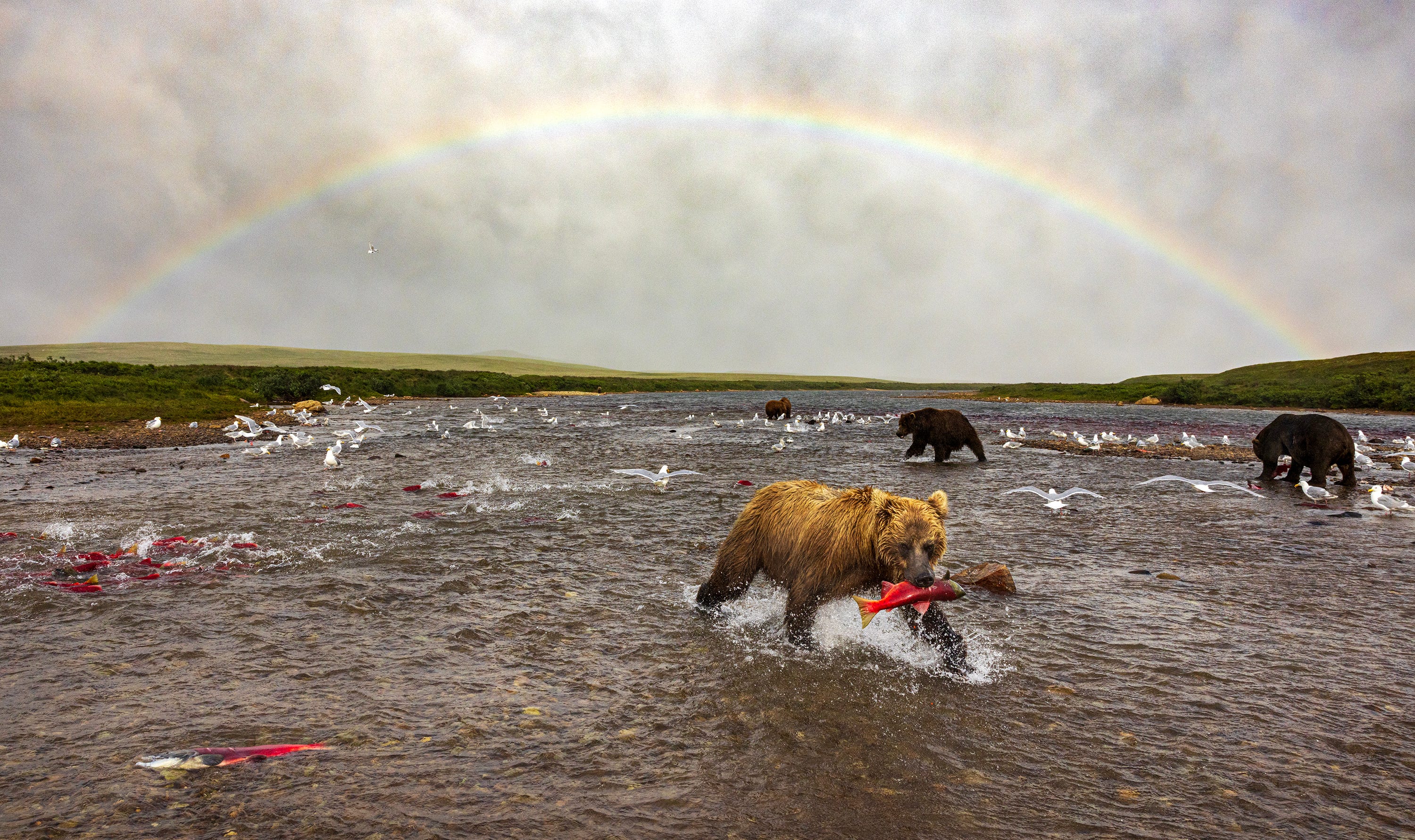
Not far from where Alaska’s aerial bear slaughter program is taking place, we host our annual Alaska Bear Camp. The contrast couldn’t be greater. In one area, helicopters are being used to gun bears down from the sky; in another, people travel from around the world to watch these same animals thrive in the wild. Bear viewing generates tens of millions of dollars for Alaska’s economy each year and supports hundreds of local jobs, demonstrating that living bears are worth far more than dead ones. We now have just two spots left on our August 16–20 Alaska Bear Camp. Of all the places I’ve been fortunate enough to visit around the world, this remains my favorite place on Earth. We’ll be there during the peak of the salmon run, when we typically see 20 to 40 brown bears each day fishing for red salmon right in front of us. If you’ve ever dreamed of experiencing wild brown bears in Alaska, I’d love to have you join us. Please send me a message if you’re interested.
Thank you for being part of The Wildlife Collective. Together, we are helping build a deeper connection between people and the natural world while supporting the conservation of wildlife and wild places. Stay tuned for more stories from the field, conservation news, photography tips, and unforgettable wildlife encounters from around the globe.
Until next time, keep exploring, keep learning, and keep falling in love with the wild.
Zac Mills
The Wildlife Collective