
There are moments in conservation that leave you angry. Not frustrated. Not disappointed. Angry.
The recent decision to resume the aerial slaughter of brown bears in Alaska’s Mulchatna region is one of those moments.
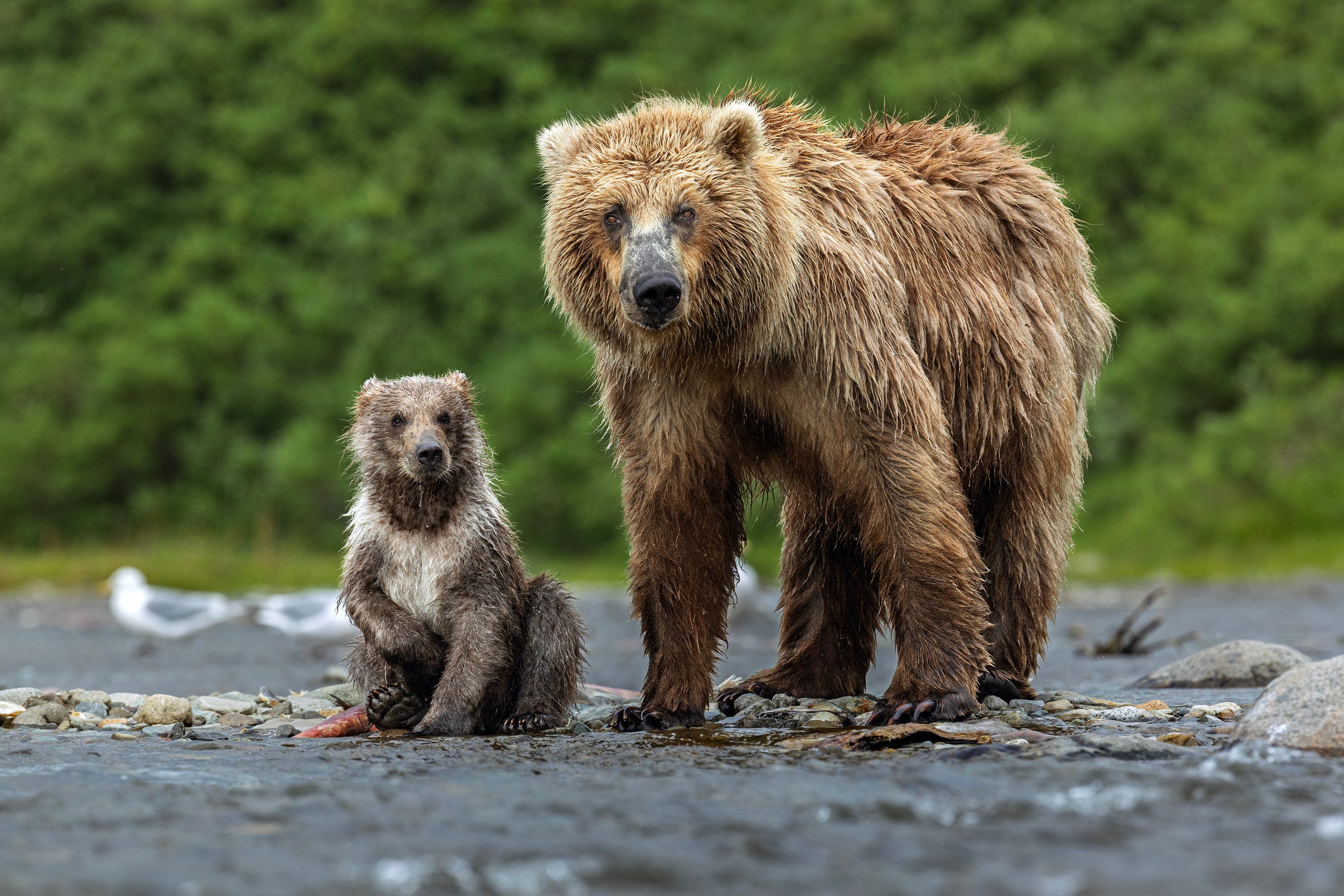
For years, I’ve spent my life alongside bears. I’ve watched them fish quietly in remote rivers at sunrise. I’ve seen mothers carefully guide tiny cubs across sedge meadows. I’ve watched bears play, rest, struggle, survive, and simply exist in the wild places they belong. These are intelligent, emotionally complex animals that shape entire ecosystems. And now, once again, the government of Alaska is shooting them from helicopters.
Not for food.
Not for human safety.
But because the state believes killing predators will somehow “fix” a declining caribou herd.
The numbers are staggering. Since this predator control program began, at least 180 brown bears have already been killed from aircraft between 2023 and 2024. That includes cubs and females with cubs. In 2023 alone, 99 bears were killed in less than a month, including 20 cubs. In 2024, another 81 brown bears were killed.
And despite legal victories against the program, the killing has resumed again in 2026.
This is happening across an enormous 40,000 square mile area of southwest Alaska. An area bordering some of the most iconic bear ecosystems on Earth, including regions near Katmai National Park and Preserve, Lake Clark National Park and Preserve, and the world famous Brooks Falls bear region.
The justification is the struggling Mulchatna caribou herd, which has declined dramatically from roughly 200,000 animals in the 1990s to around 15,000 today.
But here’s the part that many people are missing.
Many scientists and former wildlife biologists dispute the idea that bears are the primary problem.
Research and field data increasingly point toward habitat change, climate impacts, nutrition stress, disease, and ecosystem shifts as major drivers of the caribou decline. In fact, according to reporting tied to the state’s own data, only 1 out of 44 documented calf mortalities in 2024 was attributed to a bear.
One.
Yet the response is to gun down bears from helicopters.
What makes this even harder to stomach is that courts have already ruled parts of the program unlawful. In March 2025, Alaska Superior Court ruled the original program was “unlawfully adopted and therefore void.” Another judge later stated the state acted in “bad faith” when continuing parts of the program.
Still, the killing continues.
I think one of the most dangerous things in wildlife management is when we start treating predators as obstacles instead of essential parts of functioning ecosystems. Bears are not villains in some simplified story where removing them magically restores balance. Nature is infinitely more complicated than that.
And honestly, there’s something deeply heartbreaking about the contrast here.
Thousands of people travel from around the world to Alaska because they dream of seeing wild brown bears. They save for years to experience these animals ethically and respectfully. Entire local economies benefit from bear tourism, photography, guiding, and conservation storytelling. Bears inspire people to care about the natural world. They are one of the great symbols of wild Alaska.
Yet in another part of the same state, those same animals are being chased down and shot from helicopters.
As someone who has spent countless days living beside bears in remote Alaska, I can tell you this with certainty: these animals are far more than statistics on a management spreadsheet.
They are individuals.
And once you spend enough time with them, you realize something else too.
The real solution to conservation problems is rarely violence disguised as management.
Especially when the science itself remains deeply contested.
We should be investing more into habitat research, ecosystem restoration, climate resilience, and long term science based management. Not repeating predator control policies that many experts argue have failed for decades.
In partnership with the Alaska Wildlife Alliance, I will be closely following this situation and continuing to learn more as additional information comes to light. I’ll keep sharing updates as this develops because I truly believe these bears, and the wild ecosystems they help shape, are worth fighting for.
Quote of the Week
The greatness of a nation and its moral progress can be judged by the way its animals are treated.
— Mahatma Gandhi
Tour Updates
Hello from Singapore, where I have just arrived after a long 15 hour flight from Vancouver. Despite my best intentions, I didn’t get nearly as much work done on the plane as I had hoped. Over the next few days, I’ll be finalizing our 2027 Borneo and Sumatran orangutan tours, along with more details for our 2027 Nunavut Polar Bears tours and our Cantabrian Brown Bears in Spain tours for May and June 2027. A lot is coming together behind the scenes right now and I can’t wait to share more soon.
2026 Tours with Availability
Sept 2-9: Kenya Big Cat Safari (2 spots)
Sept 13-21: Brazil Jaguars (2 spots)
*NEW Nov 24-30: Mountain Gorillas (3 spots)
*NEW Nov 30 – Dec 5: Mountain Gorillas (3 spots)
Feel free to reply to this email with any questions, feedback, or just to share your latest wildlife photos. Feel free to share this message with fellow nature lovers, too—let’s grow this community together!
Thank you for being a part of The Wildlife Collective community. Stay tuned for more updates, conservation news, and incredible wildlife encounters!
Best regards,
Zac Mills
The Wildlife Collective