
There are few moments in nature that remind us just how ancient and extraordinary this world truly is.
Every year, the earth’s wildest places come alive with two of the greatest migrations on the planet — each one a breathtaking reminder of life’s endurance, beauty, and raw determination.
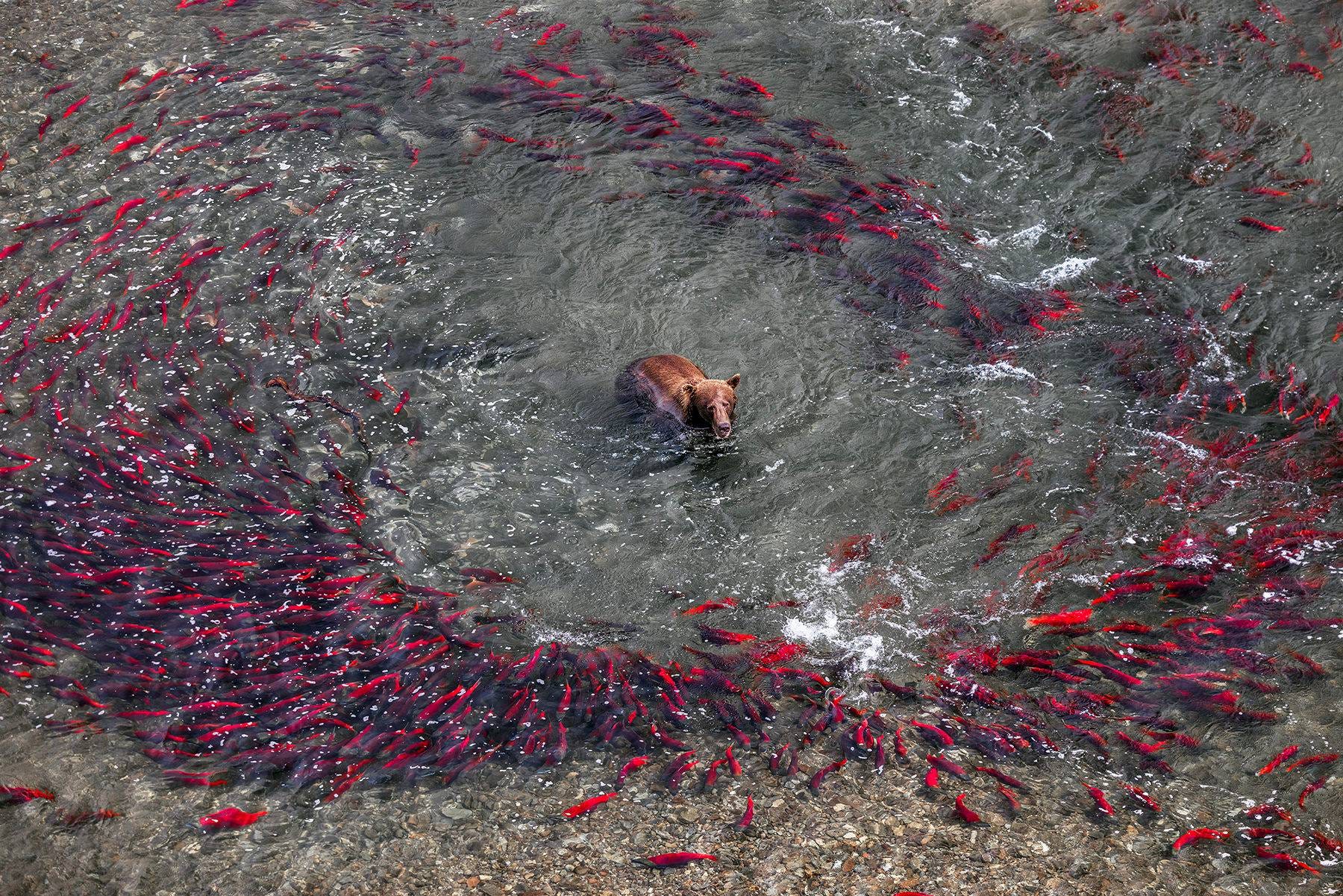
In the heart of Alaska, the rivers begin to turn red. The salmon run is more than a migration — it’s a homecoming. After years at sea, millions of salmon fight their way upstream to the very rivers where their lives began. It’s a journey of impossible odds, dodging eagles from the sky, navigating strong currents, and facing the most iconic Alaskan residents: brown bears.
And it’s here, as you stand on the riverbank, camera in hand, that time seems to slow. You’ll watch as a bear rises from the shallows, water cascading off its coat, eyes fixed on the fish just inches away. This is one of nature’s oldest stories unfolding in front of you — not behind glass, not on a screen, but in the wild, where it belongs.
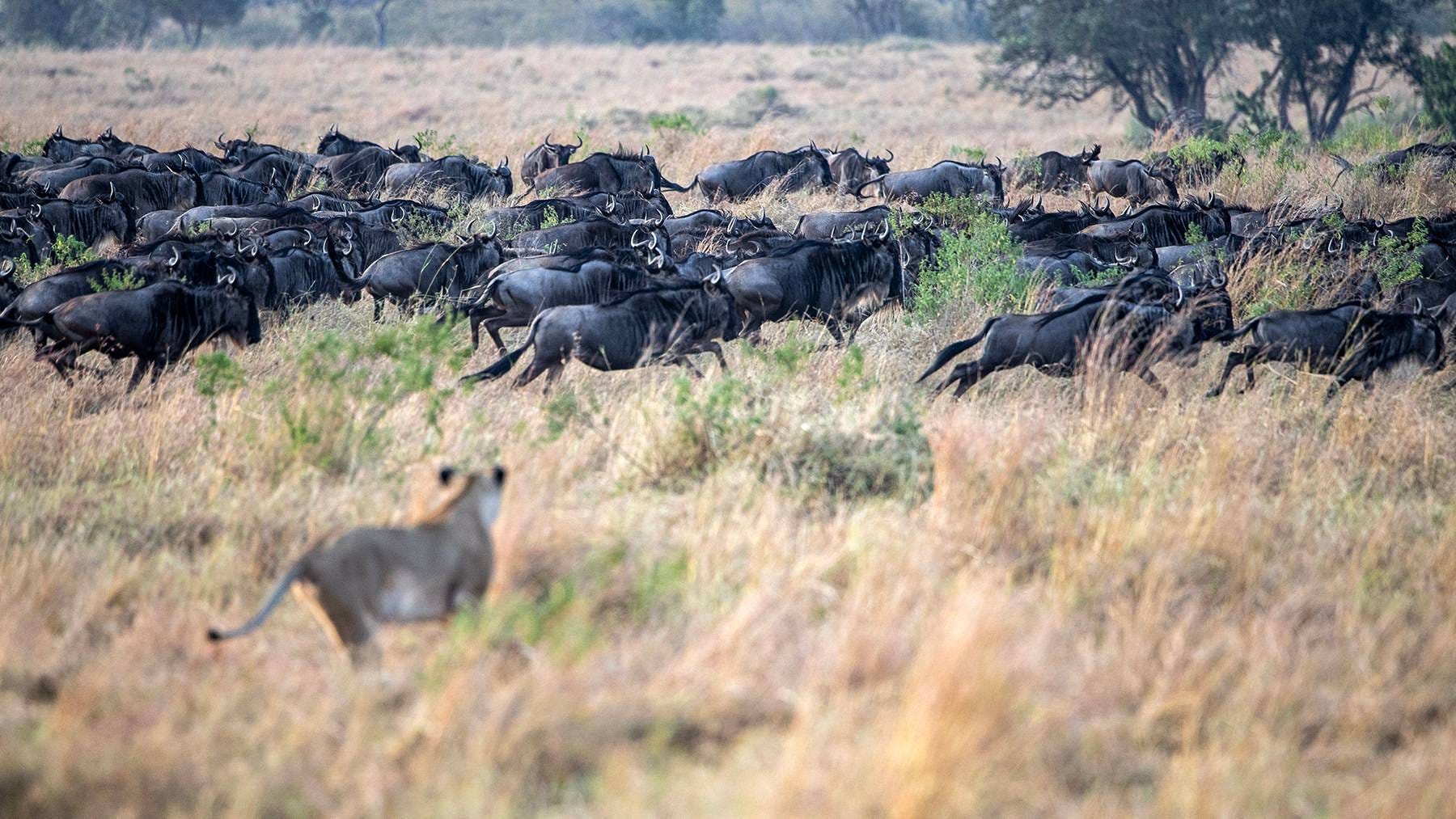
And on the other side of the world, the ground begins to tremble. The Great Migration of the Masai Mara is one of the last true wildlife spectacles on Earth. Over a million wildebeest, zebras, and gazelles surge across the open savannah, following ancient instincts toward fresh grazing grounds. Along the way, nature’s most dramatic scenes play out: crocodiles lie in wait at the river crossings, lions prowl the golden grasses, and the endless herds stretch across the horizon as far as the eye can see.
Being there — feeling the rumble, breathing in the fresh African air, hearing the calls of wildlife echo across the plains — it changes you. It’s a reminder of the wild world we live in, and your place within it.
These aren’t ordinary tours. These are front-row seats to Earth’s greatest journeys.
And the best part? We still have a few spots left this summer on both of these unforgettable experiences.
If you’ve ever dreamed of standing face-to-face with a bear in Alaska or watching the sun set over the Mara as wildebeest move like a living river below, this is your moment.
Simply reply to this email and I will send you more information!
Conservation News
From Conflict to Coexistence: How One Italian Village Found Harmony with Bears. In conservation, we often hear about the challenges: people and wildlife competing for space, communities feeling powerless, and animals paying the ultimate price. But what’s less talked about — and more important than ever — are the stories of success.
One of the most inspiring comes from Pettorano sul Gizio, a medieval village tucked into Italy’s Central Apennines, where locals have turned a coexistence challenge into an opportunity for renewal.
This mountain community lies at the heart of Marsican brown bear territory — a critically endangered subspecies of brown bear, with only around 60 individuals surviving in the wild. For years, interactions with bears meant crop damage, broken fences, and fear. But rather than fueling the cycle of conflict, Pettorano sul Gizio made a bold choice: to embrace coexistence.
In 2015, it became Italy’s first official “bear-smart” community — a label earned not by chance, but by action. Residents worked with conservationists to roll out practical solutions: bear-proof garbage bins to remove attractants, electric fencing to protect livestock and orchards, community workshops to foster understanding, and rapid-response teams to handle bear sightings safely and constructively.
The impact has been extraordinary. Since 2020, no bear-related damages have been reported in the area. Even more remarkable? The town’s fortunes changed too. Visitors, once rare, have flocked to Pettorano in growing numbers — from just 250 in 2020 to over 2,400 last year. Tourism has breathed new life into local businesses, while the bears, once seen as a threat, have become a symbol of pride.
At a time when so many communities feel overwhelmed by the challenges of living alongside wildlife, Pettorano sul Gizio shows that the tools and solutions already exist. Coexistence is not only possible — it can spark local pride, economic renewal, and a healthier relationship with the natural world.
Their success is inspiring over 18 other communities across Europe, offering a powerful reminder: when people and wildlife both have space to thrive, the benefits ripple far beyond conservation.
Upcoming Tours
We have some exciting tours coming up, and there are still a few spots available! If a tour you’re interested in is listed as full, feel free to reach out—we may be able to add more dates. We’re now booking tours through 2026, and you can also inquire about private tours or additional destinations not currently listed. Don’t miss the chance to join us on these unforgettable wildlife experiences!
2025
ORANGUTANS — May 8-15 (full)
ORANGUTANS — May 15-22 (full)
MOUNTAIN GORILLAS — June 13-18 (2 spots)
BIG CATS & GREAT MIGRATION — June 18-25 (full)
BEARS & RED FISH 1 — Aug 2-7 (1 spot)
BEARS & RED FISH 2 — Aug 7-11 (2 spots)
BEARS & RED FISH 3 — Aug 11-15 (full)
BIG CATS & GREAT MIGRATION — Sept 8-15 (4 spots)
SPIRIT BEARS — Sept 29 – Oct 3 (full)
HOKKAIDO BROWN BEARS — Oct 9-17 (1 spot)
CHURCHILL POLAR BEARS — Nov 1-6 (full)
CHURCHILL POLAR BEARS — Nov 6-13 (full)
MOUNTAIN GORILLAS — Nov 22-28 (full)
MOUNTAIN GORILLAS — Nov 30 – Dec 5 (3 spots)
KENYA BIG CAT SAFARI — Dec 5-12 (4 spots)
Click to see our full list of tours
I love hearing from you! Feel free to reply to this email with any questions, feedback, or just to share your latest wildlife photos.
Thank you for being a part of The Wildlife Collective community. Stay tuned for more updates, tips, and incredible wildlife encounters!