
A cancellation has opened two spots for our polar bear tour in Churchill this November.
→ Churchill Polar Bears Nov 1-6, 2026 (1 spot)
→ Churchill Polar Bears Nov 6-13, 2026 (1 spot)
I don’t get many opportunities to say that. Our Churchill trips usually fill well in advance, and this year is particularly special to me because it will mark my eighth season in a row returning to this little town on the edge of Hudson Bay.
I first went to Churchill in 2019. I’ve been back every year since.
There are places I visit because of the wildlife, and then there are places that become much more than that. Churchill has become one of those places for me.
It is difficult to describe Churchill to someone who has never been there. There are no roads connecting it to the rest of Canada. You arrive by plane or train and suddenly find yourself in this tiny community where the boreal forest gives way to tundra and, beyond it, the enormous expanse of Hudson Bay.
The landscape can look almost empty at first.
Then you start looking.
And somewhere along the coast, a polar bear is walking toward the frozen edge of Hudson Bay.
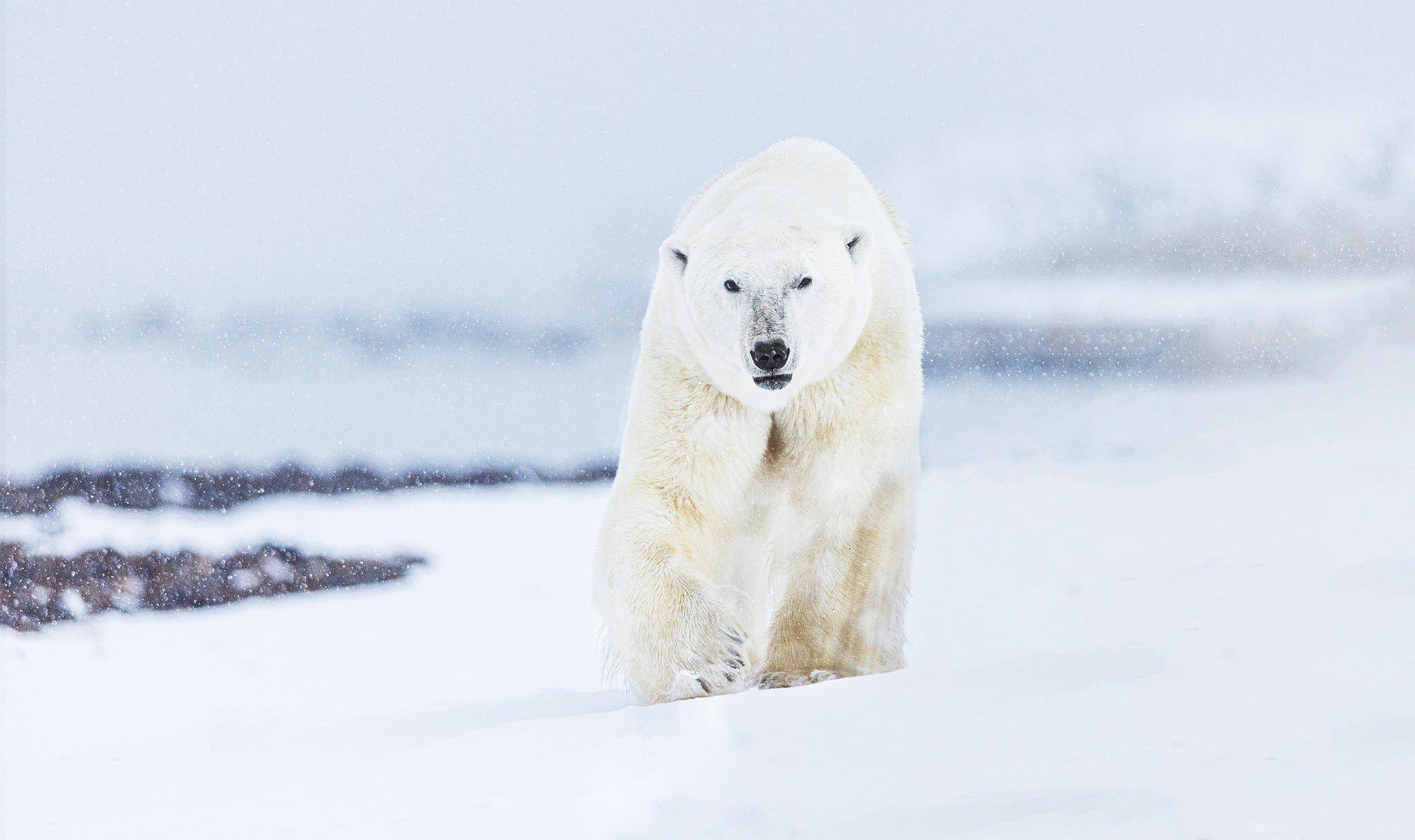
Waiting for the ice
That is what makes November in Churchill so special.
The bears of Western Hudson Bay have spent months on land. Polar bears depend on sea ice to hunt seals, and each autumn they begin gathering along the coast as temperatures fall, waiting for Hudson Bay to freeze.
There is something incredibly powerful about watching this ancient rhythm unfold.
Some bears sleep for hours. Others walk seemingly endless distances along the shoreline. Males spar with one another. Mothers move across the tundra with cubs following behind them.
And then one morning you look out across Hudson Bay and see ice beginning to form.
The bears notice too.
This is what they have been waiting for.
Churchill is more than polar bears
The bears are what originally brought me north, but they are only part of why I love Churchill.
This place has an extraordinary history.
People have lived in this region for thousands of years. Archaeological evidence around Churchill stretches back roughly 4,000 years, through Pre-Dorset, Dorset and Thule cultures, with long histories of Inuit, Cree and Dene presence and trade. Europeans later arrived searching for the Northwest Passage, followed by the fur trade and the construction of Prince of Wales Fort. Much later came the railway, the port, military installations and even a rocket research range.
You feel those layers of history when you are there.
But what I probably love most is that Churchill remains a place where people and polar bears are trying to figure out how to live alongside one another.
A bear wandering toward town isn’t simply part of a tourism experience. It is a serious situation for the community and for the bear. Churchill’s Polar Bear Alert Program has spent decades working to reduce conflict and keep both people and bears safe.
After eight seasons, I still find that relationship fascinating.
The bears are changing
There is another reason returning to Churchill means more to me now.
The Western Hudson Bay polar bear population is declining.
The most recent population survey estimated 618 polar bears in 2021, down 27% from the 2016 estimate of 842 bears. The population is now roughly half the size estimated in the 1980s, although researchers caution that the earliest estimates used somewhat different methods.
And the science explaining what is happening has become increasingly clear.
A major study published in Science in 2025 used more than four decades of observations and sea-ice data from Western Hudson Bay. Researchers were able to connect declining sea ice with the energy available to individual bears, their reproduction and ultimately the decline of the population.
The basic problem is painfully simple.
Polar bears need sea ice to hunt seals.
In Western Hudson Bay, the ice-free period is now roughly three to four weeks longer than it was in the early 1980s. During much of their time ashore, the bears are fasting and living from stored fat. Less time on the ice means less time hunting and more time relying on those reserves.
The consequences are already visible in the population. Researchers have documented declines in adult females and younger bears, exactly the groups expected to be particularly vulnerable to these energetic pressures.
Nobody can say exactly what Churchill’s polar bear population will look like decades from now.
But its future is uncertain.
And that changes the way I experience this place.
Eight seasons later
When I first came to Churchill, I was simply overwhelmed by the opportunity to see polar bears.
Eight seasons later, I think about them differently.
I notice the individual bears more. I spend more time watching behaviour instead of worrying about photographs. I think about how extraordinary it is that an animal can spend months fasting on land, waiting for an entire ocean to freeze so that it can hunt again.
And I think about how quickly that world is changing.
Photography is obviously a huge part of these trips for me. Churchill can produce extraordinary images. But I hope people come home with something more than photographs.
I want people to understand the bears.
I want them to understand the landscape.
I want them to understand why sea ice matters and why what happens to a frozen bay in northern Manitoba connects to decisions being made thousands of kilometres away.
Most of all, I want people to care.
Because it is difficult to stand on the edge of Hudson Bay, watch a mother and her cubs walking across the tundra, and not feel that their future matters.
Two places have opened
Because of a recent cancellation, we now have two places available on our Churchill polar bear tour this November.
We keep these trips small. We spend our days searching for and photographing polar bears across the tundra, but we also make time for the landscapes, wildlife, history and community that make Churchill such an extraordinary place.
This will be my eighth consecutive season there.
I know there will come a morning when I step outside into that familiar cold, look across the tundra toward Hudson Bay and wonder where the first bear of the day will appear.
After all these years, that feeling hasn’t gone away.
If anything, knowing how much this population has already changed makes every encounter feel a little more important.
Two spots are available. If you have ever dreamed of seeing and photographing wild polar bears in Churchill, I would love to have you join us this November.
→ Churchill Polar Bears Nov 1-6, 2026 (1 spot)
→ Churchill Polar Bears Nov 6-13, 2026 (1 spot)
Quote of the Day
What we do now, and in the next few years, will profoundly affect the next few thousand years.
— Sir David Attenborough
Back Home, Busier Than Ever
I’m back home in the Canadian Rockies, and it feels good to be here. After so much time on the road, I’ve been enjoying simple days with my kids in the mountains, getting outside together and appreciating this incredible place we get to call home. These are the days I value most, and as the kids get older, I’m increasingly aware of how quickly they pass.
At the same time, I’m busier than I have ever been. There are so many exciting things happening behind the scenes right now, some of which I’ve been working toward for years, and a few will finally come to fruition soon. My biggest constraint these days isn’t ideas or ambition, it’s time. Running your own business means there is always something that needs attention, and I’m constantly trying to find the right balance between building what comes next and spending time with my family.
And if you’re waiting to hear back from me, thank you for your patience. I’m hoping to get back to everyone this week!
Thank you for being part of The Wildlife Collective. Together, we are helping build a deeper connection between people and the natural world while supporting the conservation of wildlife and wild places. Stay tuned for more stories from the field, conservation news, photography tips, and unforgettable wildlife encounters from around the globe.
Until next time, keep exploring, keep learning, and keep falling in love with the wild.
Zac Mills
The Wildlife Collective