
I spend a lot of my life around bears.
And somewhere along the way, I stopped calling female bears “sows.”
I know it is the technically accepted term. I know biologists, guides, photographers and wildlife managers use it every day. I am not suggesting they are wrong for doing so.
It just doesn’t feel right to me anymore.
When I am sitting beside a river in Alaska watching a mother bear trying to catch enough salmon to feed herself while keeping three cubs safe, I don’t see a sow.
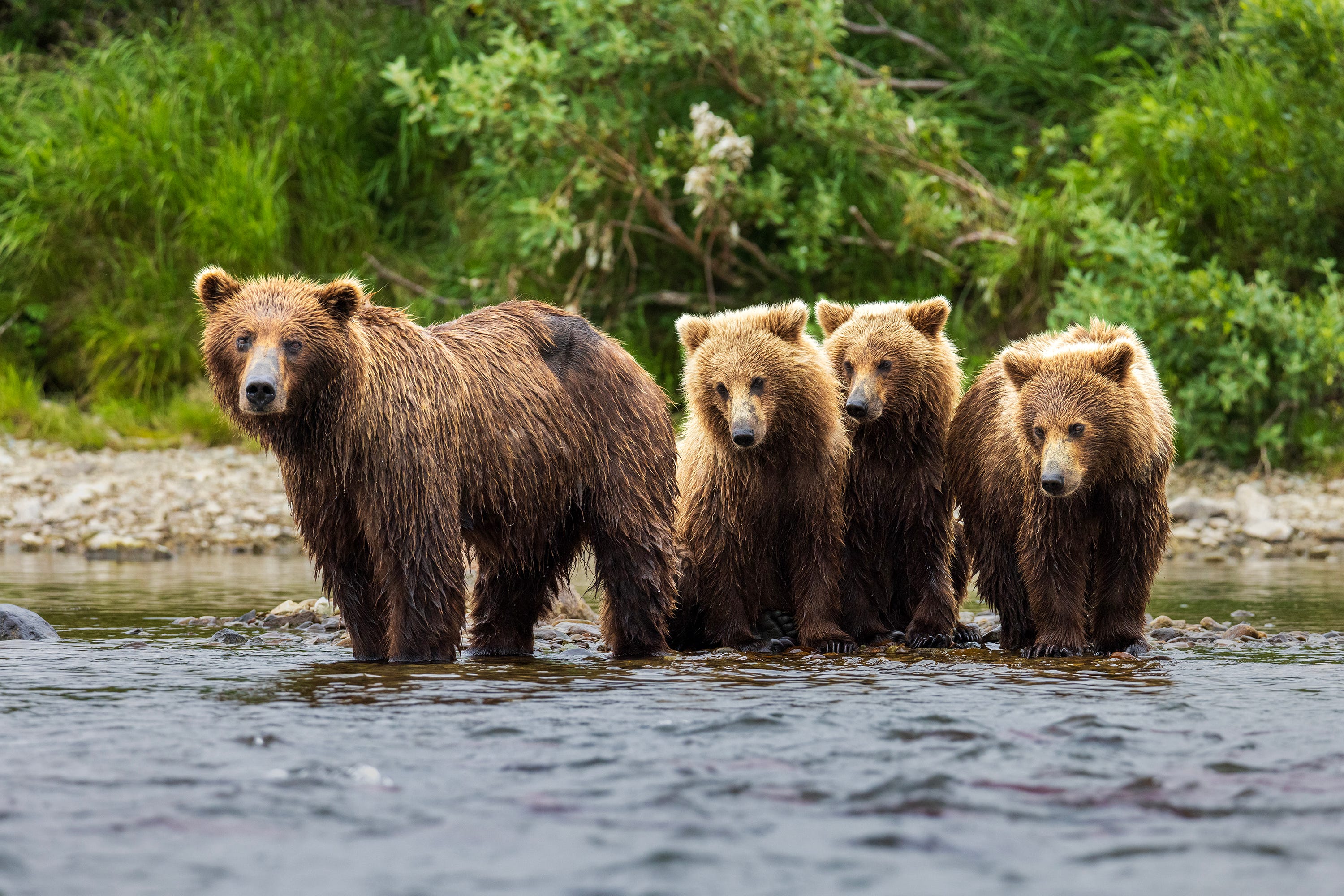
I see a mother.
I see an individual making decisions every few seconds.
She is watching the river. Watching other bears. Watching her cubs. Deciding when it is safe to fish, when it is time to move, when another bear is too close, and when her cubs need her.
Sometimes she is patient. Sometimes nervous. Sometimes fiercely protective. Sometimes she seems exhausted.
And sometimes she simply lies down while her cubs climb all over her.
The more time I spend with bears, the harder it becomes for me to reduce them to categories.
Male. Female. Boar. Sow. Adult. Subadult.
Those words can be useful scientifically. But they can also create distance.
And I think distance matters.
Because language shapes how we see the world.
When we describe a bear simply as a population unit, a management number or a “sow,” it becomes a little easier to forget the individual standing in front of us.
These animals are not statistics.
They are sentient beings.
They experience their surroundings. They learn. They remember. They make choices. They respond to danger. They form relationships. And anyone who has spent enough time watching bears knows that individual bears can behave very differently from one another.
Mothers make that especially difficult to ignore.
I have watched mama bears put themselves between their cubs and enormous males. I have watched them teach cubs where to fish. I have watched cubs wander too far and mothers immediately become alert. I have watched families sleep together, play together, travel together and navigate landscapes filled with risks that we often create for them.
Calling her a “mama bear” does not make her human.
I don’t need her to be human.
She is extraordinary precisely because she is a bear.
But I do believe our language should leave room for the fact that there is someone behind the species name.
That is why I find the word “sow” increasingly demeaning. Not because the word itself was created with bad intentions, but because, to me, it reduces an individual I have come to respect into a clinical category.
And I don’t want more distance between us and wildlife.
I think we need less.
So I call them mothers. Mama bears. Sometimes, when I know them, I call them by the names we use to distinguish them from one another.
Because they are not all the same.
They have different personalities. Different histories. Different tolerances. Different strategies for surviving.
They are individuals.
That belief sits at the heart of how I photograph wildlife and how I want The Wildlife Collective to operate.
The goal isn’t simply to get close enough to make a photograph.
It is to spend enough time with an animal that we begin to see them differently.
Because I believe respect begins with recognition.
When a bear stops being a bear and becomes an individual in our minds, something changes.
We care differently.
And ultimately, I think the future of wildlife depends on more of us making that change.
Quote of the Day
Sometimes the strength of motherhood is greater than natural laws.
— Barbara Kingsolver
Churchill Polar Bear Opening | November 6–13
We have just had one spot become available on our November 6–13 Churchill Polar Bear tour. This is one of my favourite wildlife experiences of the year, spending a full week on the ground in Churchill as polar bears gather along the shores of Hudson Bay waiting for the sea ice sto form. Our focus is on intimate, respectful encounters and giving our small group as much time as possible in the field with these incredible bears. If seeing and photographing polar bears in the wild has been on your list, this is a rare last-minute opportunity to join us this November. Please send me a message if you would like more information.
Thank you for being part of The Wildlife Collective. Together, we are helping build a deeper connection between people and the natural world while supporting the conservation of wildlife and wild places. Stay tuned for more stories from the field, conservation news, photography tips, and unforgettable wildlife encounters from around the globe.
Until next time, keep exploring, keep learning, and keep falling in love with the wild.
Zac Mills
The Wildlife Collective