
I’m writing this from Churchill, Manitoba, during Polar Bear Week.
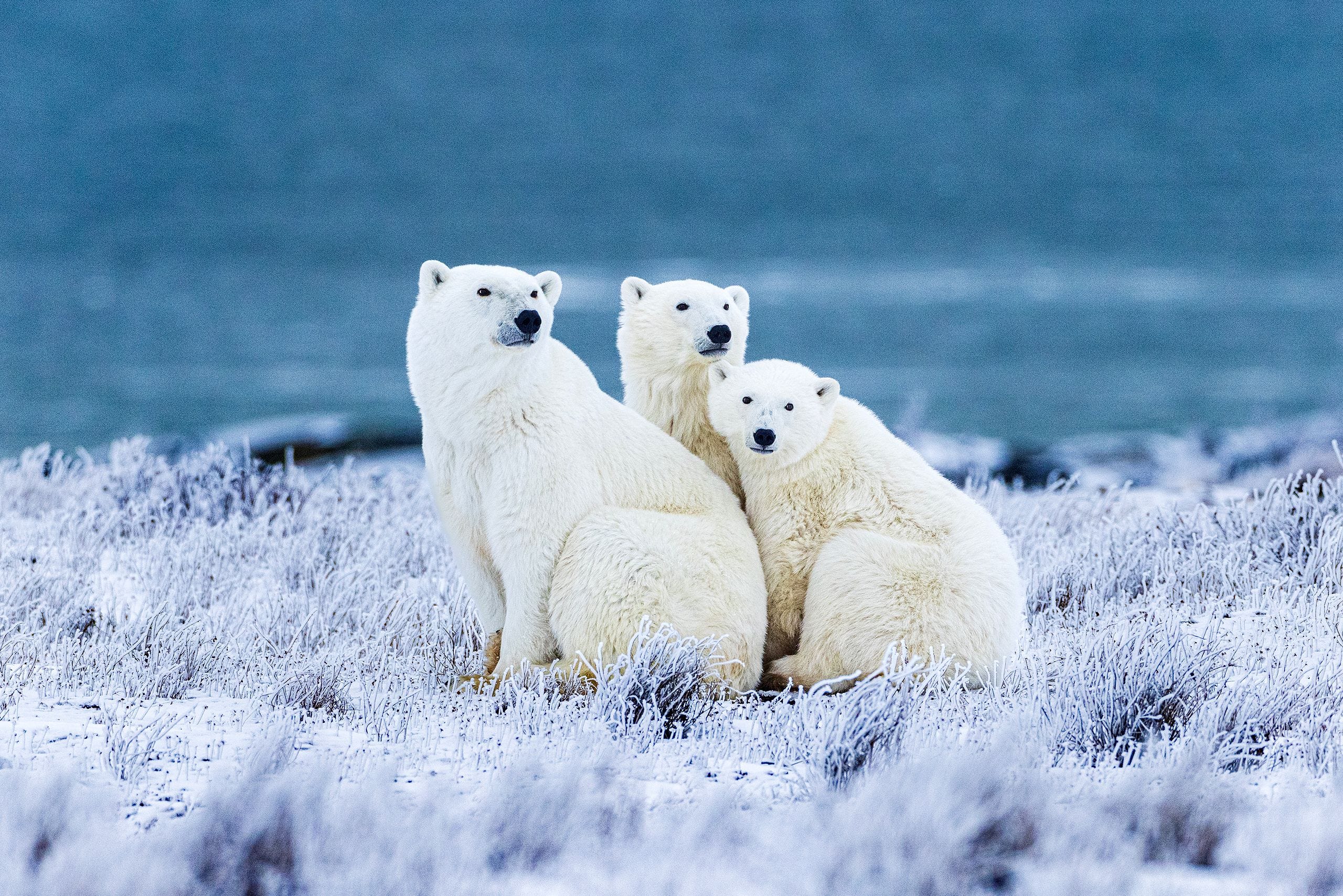
Yesterday morning I watched a mother polar bear and her two cubs walking along the shores of Hudson Bay, waiting for the sea ice to form. I’ve spent years photographing bears around the world, and moments like this are why I do what I do. There are few things more special than watching a polar bear in the wild.
Polar Bear Week takes place during the first week of November and was created by Polar Bears International (PBI) to coincide with the annual gathering of polar bears along the shores of Hudson Bay. It’s intended to raise awareness about the threats polar bears face, particularly climate change, and encourage people to support conservation efforts.
It’s a worthwhile initiative. But I find it troubling that the organization behind a week dedicated to protecting polar bears continues to defend allowing the international commercial trade in their skins.
Over the next week, we’ll see thousands of beautiful polar bear photographs shared across social media. We’ll hear about melting sea ice, climate change, and the importance of protecting these extraordinary animals. People will be encouraged to donate, and many will do so because they genuinely care about polar bears.
But how many of those people know where PBI stands on the commercial trade in polar bear skins? And how many would still donate if they knew?
Polar bears are still being killed so their skins can be sold internationally. And two of the world’s most influential conservation organizations, Polar Bears International and WWF, continue to defend allowing that trade. WWF opposed previous efforts to introduce stronger international trade protections, while PBI maintains that the existing regulated trade does not pose a significant threat to polar bear populations.
I’ve respected the work of these organizations for years. But after what I recently experienced in Nunavut, and after looking more closely at their positions, I no longer support Polar Bears International while it maintains its current position.
Here’s why.
This Isn’t About Indigenous Hunting Rights
I want to make an important distinction from the outset.
I respect Inuit hunting rights, cultural traditions, and the importance of subsistence hunting in northern communities. I also recognize that climate change is by far the greatest long-term threat to polar bears.
But neither of those things explains why we should continue allowing polar bear skins and body parts to be sold on the international commercial market.
Under CITES, the international agreement governing wildlife trade, polar bears are listed under Appendix II. This allows regulated international commercial trade.
Moving polar bears to Appendix I would generally prohibit international commercial trade in their parts. It would not take away Inuit subsistence hunting rights or prohibit hunting within Canada.
These are separate issues, yet they are often discussed as though protecting international trade is necessary to protect Indigenous hunting rights.
I’m not calling for an end to Inuit subsistence hunting. I’m calling for an end to the international commercial trade in dead polar bears.
Why I Disagree With Polar Bears International
In April 2026, Polar Bears International published an article titled Why is polar bear trade and sport hunting legal?.
I encourage everyone who supports PBI to read it.
Their position is that international trade does not currently pose a significant threat to polar bear populations and that polar bears do not meet the scientific criteria for the stronger protections of CITES Appendix I.
I understand their argument. I also recognize the valuable scientific work PBI has done over the years.
But I think they’re asking the wrong question.
Why does the international commercial trade in polar bear skins need to exist at all?
Why should someone on the other side of the world be able to buy a polar bear skin as a luxury item? What conservation benefit comes from maintaining that market?
I don’t think it’s enough to say that the trade is sustainable or that it isn’t currently threatening the survival of the species.
That might answer a scientific question about population numbers. It doesn’t answer whether the trade should exist in the first place.
We’re talking about an animal whose future is already deeply uncertain. An animal that depends on sea ice that is disappearing. And we’re still allowing its skin to be sold to the highest bidder.
I find that incredibly difficult to reconcile.
What the Trade Secrets Documentary Exposed
If you haven’t watched the documentary Trade Secrets, I strongly encourage you to do so.
The film examines the international trade in polar bear skins and raises some uncomfortable questions about the role of major conservation organizations.
In February 2025, The Guardian published an investigation into WWF’s involvement in the polar bear fur trade.
The investigation reported that more than 4,000 polar bear skins were exported from Canada between 2002 and 2021. Some were destined for luxury markets where a single skin can sell for tens of thousands of dollars.
WWF opposed proposals in 2010 and 2013 to move polar bears to CITES Appendix I, which would have provided stronger restrictions on international commercial trade.
WWF disputes the suggestion that it supports or facilitates the fur trade. Its position is that regulated hunting and trade can provide economic benefits to Indigenous communities, and that climate change remains the greatest threat to polar bears.
I understand that northern communities need economic opportunities. But I struggle to understand why maintaining an international market for polar bear skins should be part of the solution.
I’d much rather see conservation organizations investing in ways for communities to benefit economically from living polar bears, while working to reduce international demand for their skins.
With their influence and resources, surely we can expect more.
What Happened in Nunavut Changed My Perspective
A few days ago, I returned from Nunavut, where I had been leading a new polar bear photography experience.
I’d gone there hoping to develop another exceptional place where people could experience and photograph polar bears in the wild. Somewhere remote, with very few visitors, where we could spend meaningful time with these animals in their natural environment.
The trip started well. But things changed dramatically toward the end.
We learned that polar bears were actively being hunted in the same region where we were trying to photograph them.
Thirteen hunting tags had been allocated in the community. We were told that the first five tag holders had been offered $10,000 each to transfer their hunting opportunities to a trophy hunting operator.
On our final day, we saw photographs of three polar bears that had been killed.
It was awful.
I knew before going to Nunavut that polar bears were legally hunted there. I wasn’t naive about that. But our tour operator had assured us that hunting wouldn’t be taking place while we were there.
What I hadn’t fully appreciated was how directly the commercial value of a dead polar bear could influence what was happening in the places where we were trying to see them alive.
We had travelled thousands of kilometres and spent considerable money for the privilege of watching and photographing these animals. At the same time, other people were paying for the opportunity to kill them.
I found that incredibly upsetting.
The trophy hunting we learned about in Nunavut is not the same thing as the international fur trade. They involve different rules and markets. But the experience forced me to think more seriously about the financial incentives we create around dead polar bears.
I make my living taking people to see wildlife, so I have my own interests in this discussion. I don’t pretend otherwise.
But I believe there’s an important difference between an economy that depends on an animal being alive and one that depends on it being dead.
Churchill Shows Us Another Way
I’m now back in Churchill, where I’ve been guiding polar bear photography trips for years.
Every autumn, people come from all over the world to see polar bears gathering along the coast of Hudson Bay. They stay in local hotels, eat in restaurants, hire guides, and spend money in the community.
The same bears can be seen and photographed year after year, supporting local businesses and providing employment simply by being alive.
Churchill has built an international reputation around living polar bears. And while its circumstances are very different from those of remote Nunavut communities, I think it offers an important lesson.
There is real economic value in keeping wildlife alive.
I’m not suggesting that every community in the Arctic can become Churchill. Some are extraordinarily remote, travel is expensive, infrastructure is limited, and wildlife tourism isn’t always a realistic substitute for other sources of income.
But surely we should be doing more to explore those opportunities.
Imagine if more conservation funding went toward helping Inuit communities build and own wildlife tourism businesses. Training local guides. Developing accommodation. Creating jobs that give people a financial reason to protect the animals living around them.
That seems like a much better investment in the future of polar bears than defending an international luxury market for their skins.
Conservation Organizations Need to Be Held Accountable
Before becoming a wildlife photographer, I spent nearly a decade working at the World Bank on governance and public policy in more than 20 countries.
One of the things that experience taught me is that institutions need to be held accountable, regardless of how good their intentions might be.
Conservation organizations are no different.
I know people involved in polar bear conservation who are deeply committed to protecting these animals. I respect the research, education, and community work that Polar Bears International has undertaken.
But respecting an organization doesn’t mean agreeing with every position it takes.
I understand that CITES decisions involve scientific criteria and that organizations may disagree about whether polar bears meet those criteria. But there’s a difference between saying a species doesn’t currently qualify for an Appendix I listing and saying that the commercial market for its skins should continue.
An organization can acknowledge the scientific limitations of a particular legal approach while still advocating for an end to international commercial trade.
That’s the position I would like to see PBI take.
Until then, I can’t support the organization.
This Polar Bear Week, Ask Better Questions
Every Polar Bear Week, the conversation is dominated by climate change. And rightly so. Without sea ice, polar bears face an incredibly difficult future.
But it frustrates me that we devote so much attention to a problem that will take decades of international cooperation to address, while barely discussing something we could make meaningful progress on much sooner.
We cannot restore Arctic sea ice tomorrow. But we can work to end the international commercial market for polar bear skins.
These aren’t competing priorities. We should be doing both.
I also think we need to be more careful about where we donate our money. Just because an organization has a recognizable name, beautiful photographs, and a compelling conservation message doesn’t mean we should accept every position it takes.
If you support Polar Bears International or WWF, I encourage you to contact them and ask some questions.
Do you support ending the international commercial trade in polar bear skins and body parts?
Why did you oppose, or not support, stronger CITES trade protections?
What are you doing to reduce international demand for polar bear skins?
How much are you investing in helping Inuit communities develop economic opportunities that don’t depend on selling dead bears?
And perhaps most importantly, do you believe the world would be a better place without an international luxury market for polar bear skins?
I’d genuinely like to hear their answers.
Polar Bears Deserve Better
Yesterday morning, watching that mother polar bear and her two cubs walking along the coast of Hudson Bay, I couldn’t help thinking about what I’d seen in Nunavut just a few days earlier.
Three bears killed. Their photographs being shared while we were still out looking for living bears.
I don’t know what the future holds for the mother and cubs I watched today. Nobody does. They have enough challenges ahead of them without us continuing to place a commercial value on their skins.
We should be doing everything we reasonably can to protect them. That means addressing climate change, respecting Indigenous rights, supporting northern communities, and ending the international commercial trade in their skins and body parts.
I don’t expect everyone to agree with me. But I do hope more people will start asking these questions, particularly of the organizations they support.
This Polar Bear Week, share the photographs. Celebrate these incredible animals. Support the people doing good conservation work.
But please look beyond the beautiful pictures and fundraising campaigns. Read what conservation organizations are actually saying. Ask where they stand. And if you disagree with their position, tell them.
I don’t believe a polar bear should end up as a rug on someone’s floor simply because someone is willing to pay for it.
And I don’t believe conservation organizations should be defending the continuation of that market.
It’s time to end the international commercial trade in polar bear skins and body parts.
Quote of the Day
It is difficult to get a man to understand something, when his salary depends upon his not understanding it.
— Upton Sinclair, I, Candidate for Governor: And How I Got Licked (1935)
Thank you for being part of The Wildlife Collective. Together, we are helping build a deeper connection between people and the natural world while supporting the conservation of wildlife and wild places. Stay tuned for more stories from the field, conservation news, photography tips, and unforgettable wildlife encounters from around the globe.
Until next time, keep exploring, keep learning, and keep falling in love with the wild.
Zac Mills
The Wildlife Collective