
Every morning, before I check my phone, before I answer emails, before I think about work, I drop to the floor and do 50 push-ups.
Not 50 throughout the day.
Not 10 sets of 5.
Fifty in a row.
Not because it’s the best workout in the world.
Not because 50 push-ups are going to transform my physique.
And certainly not because I enjoy every second of it.
I do it because it sets the tone for the day.
I’ve always believed that one of the easiest ways to train the mind is through the body. The body doesn’t negotiate. It doesn’t care about your excuses. It doesn’t care if you went to bed late, if it’s raining outside, or if you’re feeling a little tired.
It simply asks: are you going to do the thing you said you were going to do?
This morning was one of those mornings.
I was tired. The baby is sick and had been up. I could have easily told myself that missing one day didn’t matter.
And honestly, it probably wouldn’t.
But that’s not the point.
The point is that every time you keep a promise to yourself, you strengthen something far more important than your muscles. You strengthen trust in yourself.
You become the kind of person who follows through.
The push-ups themselves take less than a minute.
The real value comes from eliminating the debate.
There is no decision to make.
There is no motivation required.
There is only action.
Over time, those small acts of discipline compound.
When I am standing in the rain waiting for a spirit bear that may never appear, hiking through the Andes looking for elusive Andean bears, trekking through the jungles of Sumatra, or waking up at 4:00 a.m. to catch another flight to a remote corner of the world, I draw on the same mindset.
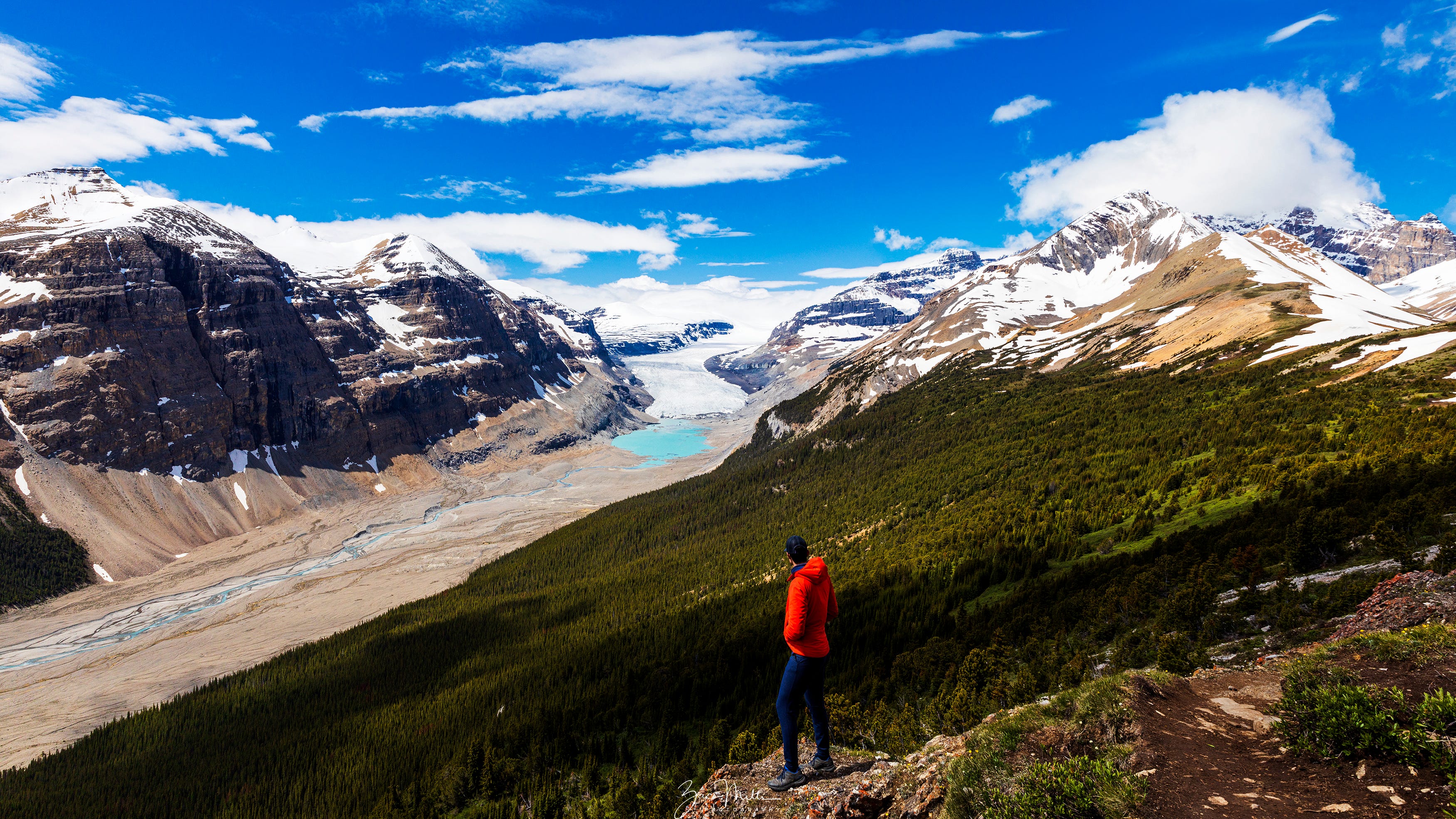
Do the work.
Show up.
Keep going.
No excuses.
The funny thing is that I usually work out later in the day as well. The 50 push-ups are not my workout. They are my reminder.
A reminder that discipline is a skill.
A reminder that comfort is often overrated.
A reminder that if I want to continue exploring wild places, carrying heavy camera gear, hiking mountains, and keeping up with my kids, I need to take care of the body that allows me to do those things.
But there is another reason.
I want to be prepared.
For anything.
I want an engine that doesn’t quit when conditions get difficult. An engine that keeps going when the weather turns bad, when the trail gets steep, when the hours get long, and when everyone else is tired.
I want to be the person people can count on.
The person who still has energy when help is needed.
The person who can carry the extra bag.
The person who can go back for someone who is struggling.
The person who is ready when circumstances become challenging.
The wild places I love are rarely easy to reach. Some of the most rewarding wildlife encounters happen far from roads, far from comfort, and far from convenience. They happen at the end of long hikes, difficult journeys, and uncomfortable days.
I want to train for that.
To go farther.
To stay out longer.
To reach the places that most people never see because they are unwilling or unable to make the effort required to get there.
So tomorrow morning, I’ll do another 50 push-ups.
Because life is short, the world is big, and there is still so much left to experience.
And I want to be ready for all of it.
Quote of the Week
I don’t stop when I’m tired. I stop when I’m done.
— David Goggins
Conservation News
When Conservation Success Creates New Challenges
Nepal has one of the most remarkable conservation success stories in the world. In just over a decade, the country almost tripled its tiger population, growing from roughly 120 tigers in 2009 to more than 350 today. It is the kind of achievement conservationists dream about and proof that, with enough commitment, endangered species can recover.
But success often creates challenges of its own.
A recent Mongabay article highlighted Nepal’s proposal to create a dedicated reserve for “problem tigers,” animals that have repeatedly come into conflict with people or have been linked to attacks on humans. As tiger numbers have increased, so too have encounters between people and tigers in some parts of the country. The government hopes that relocating these animals to a separate reserve could reduce conflict while still protecting the tigers.
On the surface, it sounds like a reasonable solution. If a tiger becomes dangerous, move it somewhere else. Protect local communities while giving the animal a place to live out its life. Everyone wins.
The reality, however, is more complicated. Tigers are highly territorial animals, and moving them into unfamiliar environments can create new problems. More importantly, relocating a tiger does not necessarily address the reasons it came into conflict with people in the first place. Habitat loss, declining prey, injuries, old age, and increasing overlap between human communities and tiger habitat can all contribute to conflict. Moving the animal may solve one immediate problem while leaving the larger issues untouched.
What I find most interesting about this story is that it highlights something conservationists do not always talk about enough. Saving a species is only the first step. The harder challenge is figuring out how people and wildlife can successfully coexist once populations begin to recover.
We often celebrate population numbers, and we should. More tigers is undoubtedly good news. But conservation cannot be measured solely by the number of animals on the landscape. It must also be measured by whether local communities continue to support living alongside those animals. If people feel that they are carrying all of the costs while receiving few of the benefits, support for conservation can quickly begin to erode.
This is not just a tiger issue. The same conversation is happening around bears, wolves, lions, leopards, and other large carnivores around the world. When predators recover, conflict becomes inevitable. The goal is not to eliminate conflict entirely. The goal is to manage it in a way that keeps both people and wildlife safe while maintaining public support for conservation.
In many ways, Nepal’s tiger dilemma is a good problem to have. A generation ago, the concern was whether there would be enough tigers left to save. Today, the challenge is learning how to share the landscape with them. That is a far more difficult conversation, but it is also one of the clearest signs that conservation is working.
Our 2026 Tours with Availability
Aug 16-20: Alaska Bear Camp (4 spots)
Sept 2-9: Kenya Big Cat Safari (2 spots)
Sept 13-21: Brazil Jaguars (2 spots)
Thank you for being part of The Wildlife Collective. Together, we are helping build a deeper connection between people and the natural world while supporting the conservation of wildlife and wild places. Stay tuned for more stories from the field, conservation news, photography tips, and unforgettable wildlife encounters from around the globe.
Until next time, keep exploring, keep learning, and keep falling in love with the wild.
Zac Mills
The Wildlife Collective