
I recently refreshed the homepage of The Wildlife Collective. It feels cleaner. More honest. More aligned with who we actually are.
A lot of people ask me why we focus on just three: bears, big cats, and great apes.
The real answer? I love all wildlife. Elephants. Wolves. Whales. Foxes. If it’s wild, I’m in. But as this company grows, I’ve realized something important. If we try to be about everything, we lose what makes us exceptional. Depth beats breadth. Every time.
So I made a deliberate choice to go deep instead of wide.
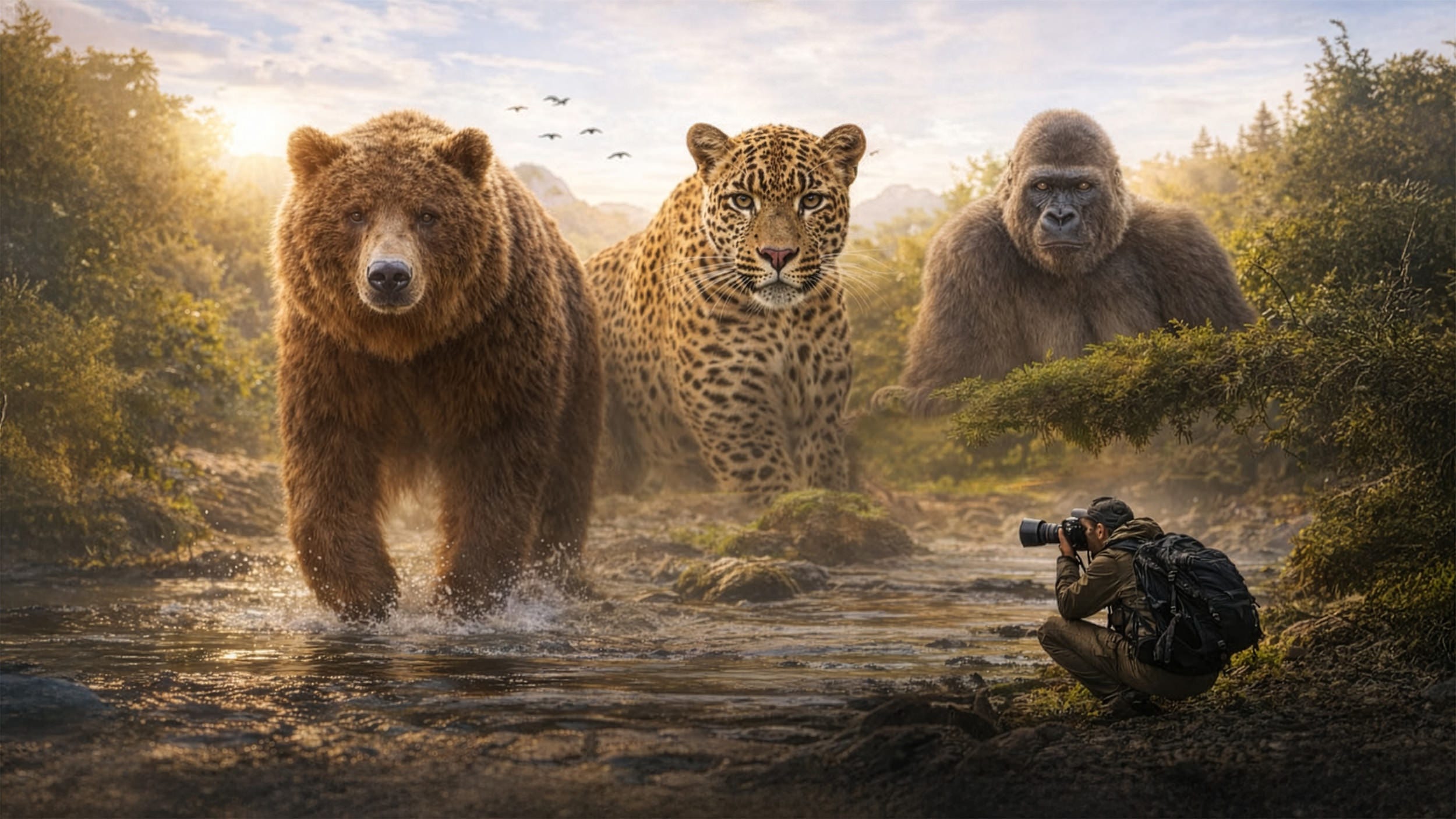
Bears, big cats, and great apes represent something powerful. Strength and vulnerability at the same time. They are keystone species. When bears thrive, entire river systems and forests benefit. When big cats remain on the landscape, prey systems stay balanced. When great apes survive, vast rainforests remain standing. Their presence shapes ecosystems in ways most people never see.
They’re also some of the most misunderstood animals on Earth. Feared. Misrepresented. Blamed. And yet their biggest threats are habitat loss, poaching, climate change, and human expansion. Not the other way around.
When we bring people into their world ethically and respectfully, something shifts. Fear turns into amazement. Distance turns into empathy. And that changes how people see the wild.
When we tell their stories, we’re really telling our own. Resilience in a brown bear working a salmon run. Family in a gorilla troop. Patience and precision in a leopard at dusk. These animals reflect courage, intelligence, coexistence. Protecting them isn’t just about saving charismatic species. It’s about protecting entire ecosystems and the wild places that keep our planet alive.
There’s also a practical side to this focus. These three groups span five continents. Bears across North America, South America, Europe, and Asia. Big cats from India and Africa to South America and Southeast Asia. Great apes in equatorial Africa and Southeast Asia. By narrowing our focus, we can identify the very best places in the world to see them ethically. We can return year after year. Build long term relationships. Support the same conservation partners. Learn individual animals. That depth creates better experiences for our guests and allows us to create tours that feel intentional, immersive, and truly transformative.
The new homepage simply reflects that clarity.
Clearer focus. Higher standards. Deeper intention.
I’d genuinely love your thoughts. Does this focus resonate with you? If you were thinking about joining us in the field, what would you want to know? What feels strong? What feels missing?
Final Day: Alaska Bear Camp $5 Raffle
What if I told you that for about the cost of a fancy coffee, you could win an unforgettable Alaska bear-viewing adventure… and also help protect the very bears you dream of seeing?
Right now, the For the Bears Adventure Raffle with the Alaska Wildlife Alliance is live — and we’re so proud to support it.
Here’s what one lucky winner will receive:
Two spots on our Alaska Bears & Red Fish Camp from July 30 — to August 3, 2026
Small group, ethical, on foot bear viewing for a truly immersive experience on our favorite tour of the year
Expert guiding and photography support
A trip valued at over $11,000
Imagine standing in some of the most breathtaking bear habitat on the planet, watching massive brown bears dive for bright red salmon right in front of you.
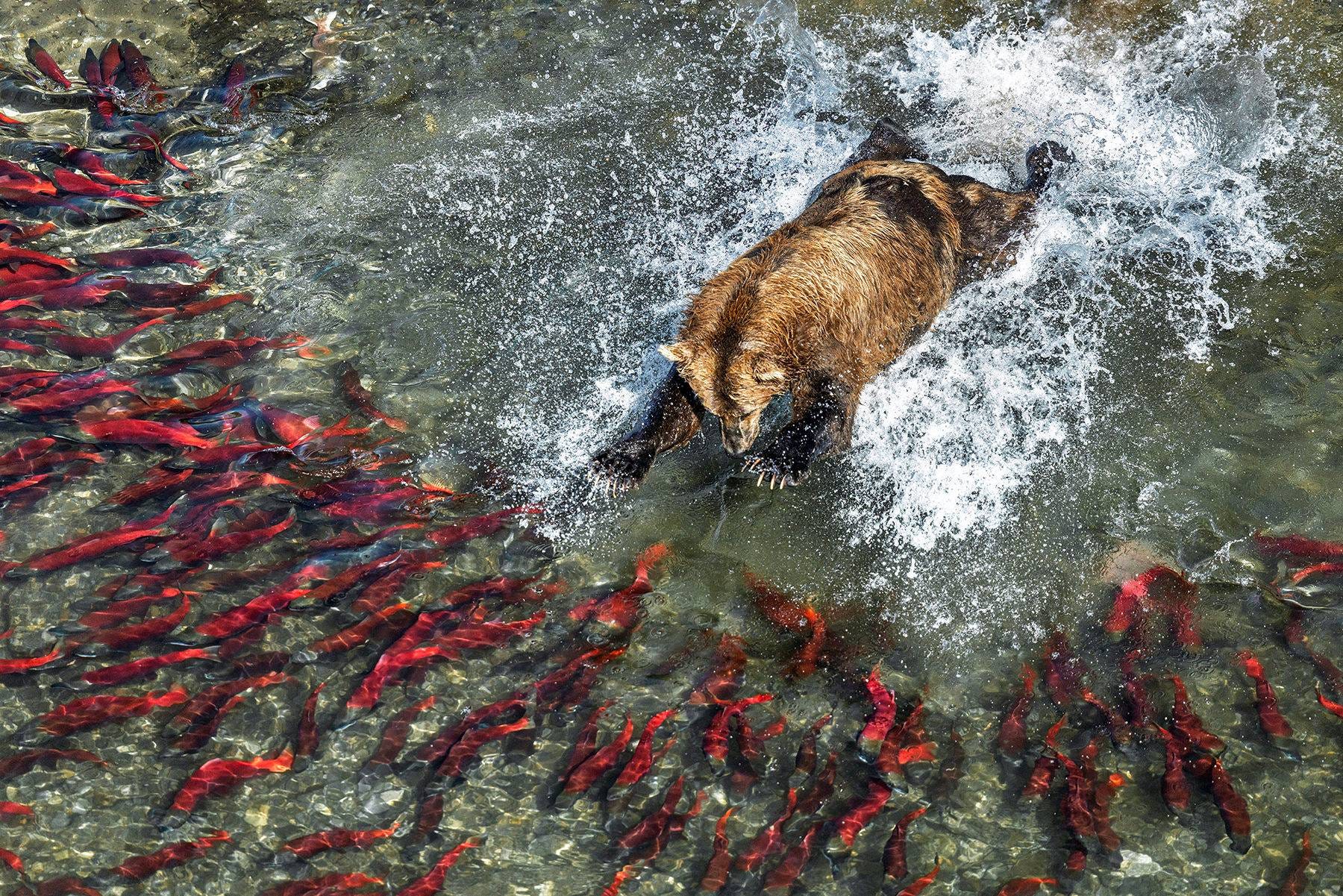
We regularly see up to 40 bears a day during peak season. And you’ll be visiting at the absolute best time when the salmon are running, the bears are the most active, and the landscape feels alive in every direction.
Tickets are just $5.
You can buy as many as you want.
Only 5,000 will be sold.
So please show your support and enter to win the trip of a lifetime. And again — it’s just $5. That’s the power of collective small actions: they add up in a big way. Please share this widely with anyone who loves bears, wild places, and real conservation impact.
And even if your name is not drawn, you can feel proud knowing you helped protect the very bears that make Alaska so extraordinary.
The winner will be drawn at random on March 3, 2026, announced live via video from Anchorage, Alaska, and contacted directly by phone and email. The prize must be claimed within one week of notification.
Quote of the Week
War does not determine who is right — only who is left.
— Bertrand Russell
Conservation News
War’s Shadow on Wild Places
There are moments in life when the world feels unbearably heavy. As I watch the war escalate across the Middle East, with Iran now deeply entangled in regional violence, I am horrified by the suffering unfolding before us. Civilians are losing their lives. Families are being displaced. Fear and instability ripple far beyond national borders. The human cost of war must always be front and centre. But alongside that heartbreak is another quieter tragedy that rarely makes the headlines.
In the deserts of Iran lives one of the rarest big cats on Earth, the Asiatic cheetah. Once roaming across vast stretches of Asia from the Arabian Peninsula to India, it now survives only within Iran’s borders. Conservationists believe that roughly 27 individuals remain in protected reserves. That number is almost impossible to comprehend. Twenty seven wild cheetahs standing between survival and extinction.
The Asiatic cheetah has been in trouble for decades. Habitat loss, declining prey, expanding roads, and human encroachment steadily reduced its range and numbers. Even in times of relative stability, protecting such a tiny population requires constant effort, funding, research, and strong enforcement. When conflict escalates, conservation often becomes secondary. Resources are diverted. Monitoring becomes harder. Protected areas become more vulnerable. The fragile thread holding a species together can begin to fray even faster.
I am horrified to think that while bombs fall and political tensions dominate the global stage, these animals are trying to survive in silence. Wildlife does not choose sides. It does not understand ideology or borders. Yet it absorbs the consequences of human decisions. War reshapes landscapes, disrupts governance, strains economies, and places additional pressure on ecosystems already stretched thin. For a population as small as the Asiatic cheetah, even small disruptions can carry enormous consequences.
The fate of this cat is a reminder that peace matters beyond human society. Stability creates space for conservation. Cooperation allows science and protection to continue. When we talk about ending war, we are also talking about safeguarding the last wild fragments of our planet. If the Asiatic cheetah disappears, it will not simply be the loss of a subspecies. It will be the loss of resilience, history, and beauty that survived against extraordinary odds. In times like these, caring about wildlife may seem small, but it is part of a larger commitment to a world where life, in all its forms, is valued and protected.
More Tours Coming Soon
Our Gabon Gorillas and Forest Elephants tour sold out almost immediately, and we could not be more excited for what awaits in the Central African rainforest. Next week, we will be unveiling a series of extraordinary India journeys for 2027, along with new Alaska Bear Camp opportunities and additional great ape expeditions. If you have been dreaming of bears, big cats, or great apes in the wild, now is the time to start planning.
Most of our 2026 tours are now full, which we are incredibly grateful for. Below is a list of the remaining available spots for the year.
2026 Tours with Availability
April 27 – May 2: Himalayan Brown Bears (3 spots)
June 16-24: Bolivia Jaguars on Foot (4 spots)
Sept 2-9: Kenya Big Cat Safari (2 spots)
Sept 13-21: Brazil Jaguars (4 spots)
*NEW Nov 24-30: Mountain Gorillas (3 spots)
*NEW Nov 30 – Dec 5: Mountain Gorillas (4 spots)
2027 Tours with Availability
*NEW April 10-18: Patagonia Pumas & King Penguins (4 spots)
Click to see our fill list of tours
Feel free to reply to this email with any questions, feedback, or just to share your latest wildlife photos. Feel free to share this message with fellow nature lovers, too—let’s grow this community together!
Thank you for being a part of The Wildlife Collective community. Stay tuned for more updates, tips, and incredible wildlife encounters!
Best regards,
Zac Mills
The Wildlife Collective