
Over the last few years, I have spent much of my life traveling the world in search of extraordinary wildlife moments.
One month I might be standing beside brown bears in Alaska. The next, tracking orangutans through the rainforests of Sumatra. Then perhaps photographing mountain gorillas in Uganda, pumas in Patagonia, or polar bears in the Canadian Arctic.
I do this because I love wildlife. But I also do it because I believe stories matter.
Photography has always been about more than creating beautiful images. At its best, photography captures a moment that actually happened. It documents a memory, an experience, an encounter that will never occur in exactly the same way again.
Today, however, photography is facing a challenge unlike anything it has encountered before.
Artificial intelligence can now generate astonishingly realistic images with a few words and the click of a button.
Recently, while in Sumatra, I photographed a simple rainforest trail winding through the jungle. Out of curiosity, I asked an AI image generator to add a polar bear to the scene.
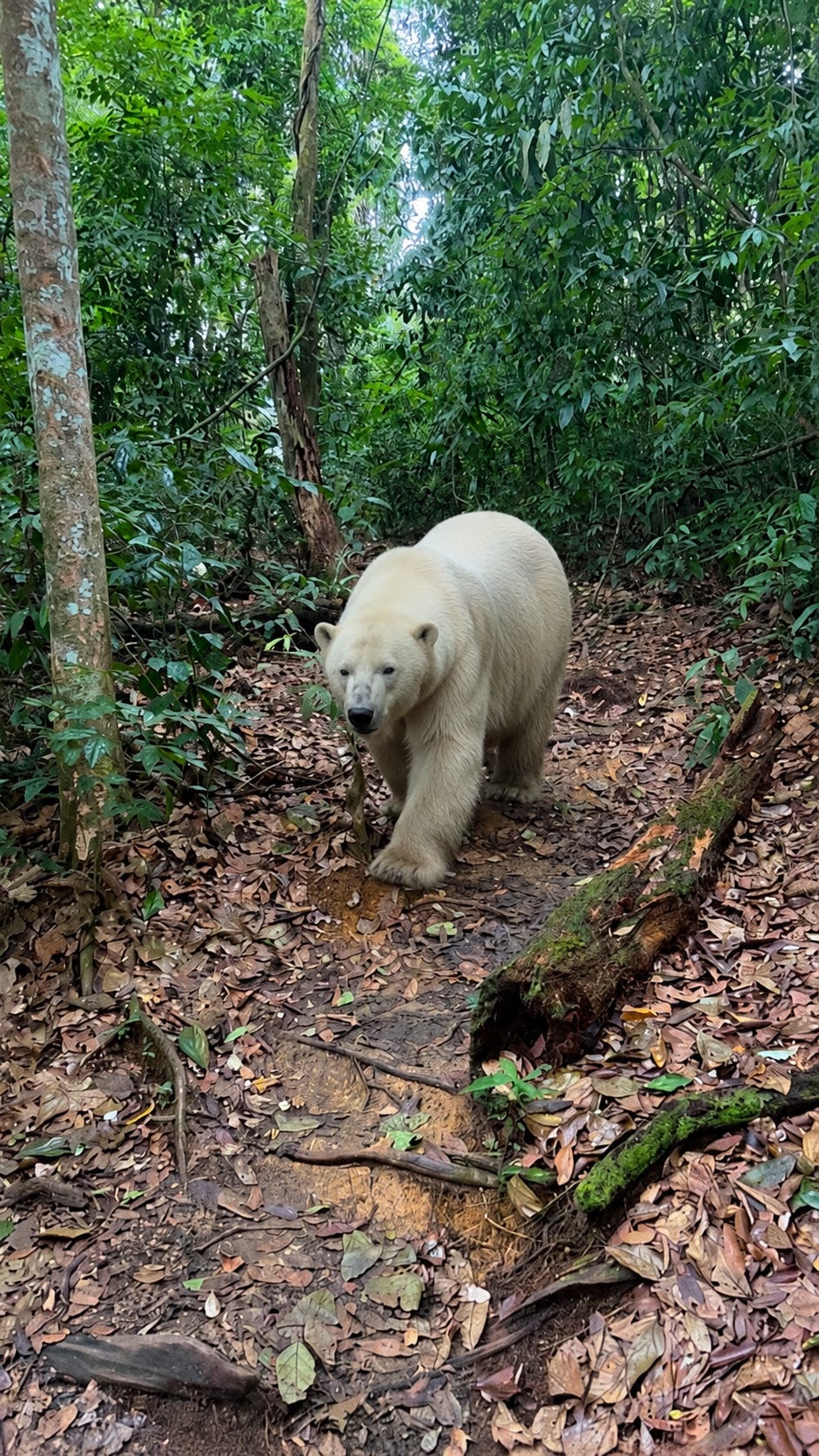
The result was surprisingly convincing.
At first glance, it looked real. A polar bear standing in the middle of a Sumatran rainforest. The lighting matched. The shadows looked believable. The composition felt natural.
If you look closely, you can still spot some issues. The paws aren’t quite right. There are small details that give away the illusion.
But the truth is that AI is improving incredibly quickly. Those flaws will likely disappear.
This raises an obvious question.
If AI can generate virtually any image we can imagine, what happens to photography?
The answer is that I genuinely don’t know.
I think AI will replace a significant amount of photography.
Stock photography is already being disrupted. Commercial imagery will likely change dramatically. Entire categories of images that once required photographers may soon be generated instantly.
But I don’t think that means photography disappears.
In fact, I think it may become even more valuable.
Consider the Mona Lisa.
It has been copied billions of times. You can download it instantly. You can buy posters, prints, postcards, and coffee mugs featuring the image.
Yet the original remains priceless.
Why?
Because it is real.
It is the actual painting. The object that Leonardo da Vinci touched. The piece of history that has survived for centuries.
The copies are visually similar.
But they are not the same.
I suspect photography may evolve in a similar way.
The value of many photographs has never been the pixels themselves.
The value comes from the story behind them.
The image of a polar bear is interesting.
But knowing that someone spent days in the Arctic waiting through snow and wind for that exact moment makes it meaningful.
The photograph of a mountain gorilla becomes more powerful when you know it documents a real encounter with a critically important species.
A photograph of an orangutan matters because it represents a moment that actually occurred in a rapidly disappearing rainforest.
People connect with stories.
People connect with experiences.
People connect with authenticity.
An AI-generated image can be beautiful.
But it cannot tell me what it felt like to stand ten feet from a wild brown bear in Alaska.
It cannot tell me about the smell of the rainforest in Sumatra after a tropical downpour.
It cannot tell me about the conversations with local guides, conservationists, researchers, and communities who dedicate their lives to protecting wildlife.
Those things are real.
And real matters.
Perhaps the future of photography will be less about creating images and more about documenting experiences.
Less about producing content and more about telling stories.
Less about perfection and more about authenticity.
I don’t know exactly what AI will do to photography over the next decade.
Nobody does.
But I remain optimistic.
Because I believe people will always want to connect with reality.
They will always want to know that a moment truly happened.
They will always be curious about the world beyond their own experience.
And as long as that remains true, there will be value in the photographers who venture into the wild, witness extraordinary moments, and bring those stories back to share with the rest of us.
The technology may change.
The tools may change.
But the human desire for authentic stories is timeless.
And that gives me hope.
Quote of the Week
We do not remember days, we remember moments.
— Cesare Pavese
Before & After
The first image is a photo I took while walking a trail in Sumatra. The second is the exact same image after I asked AI to add a polar bear.
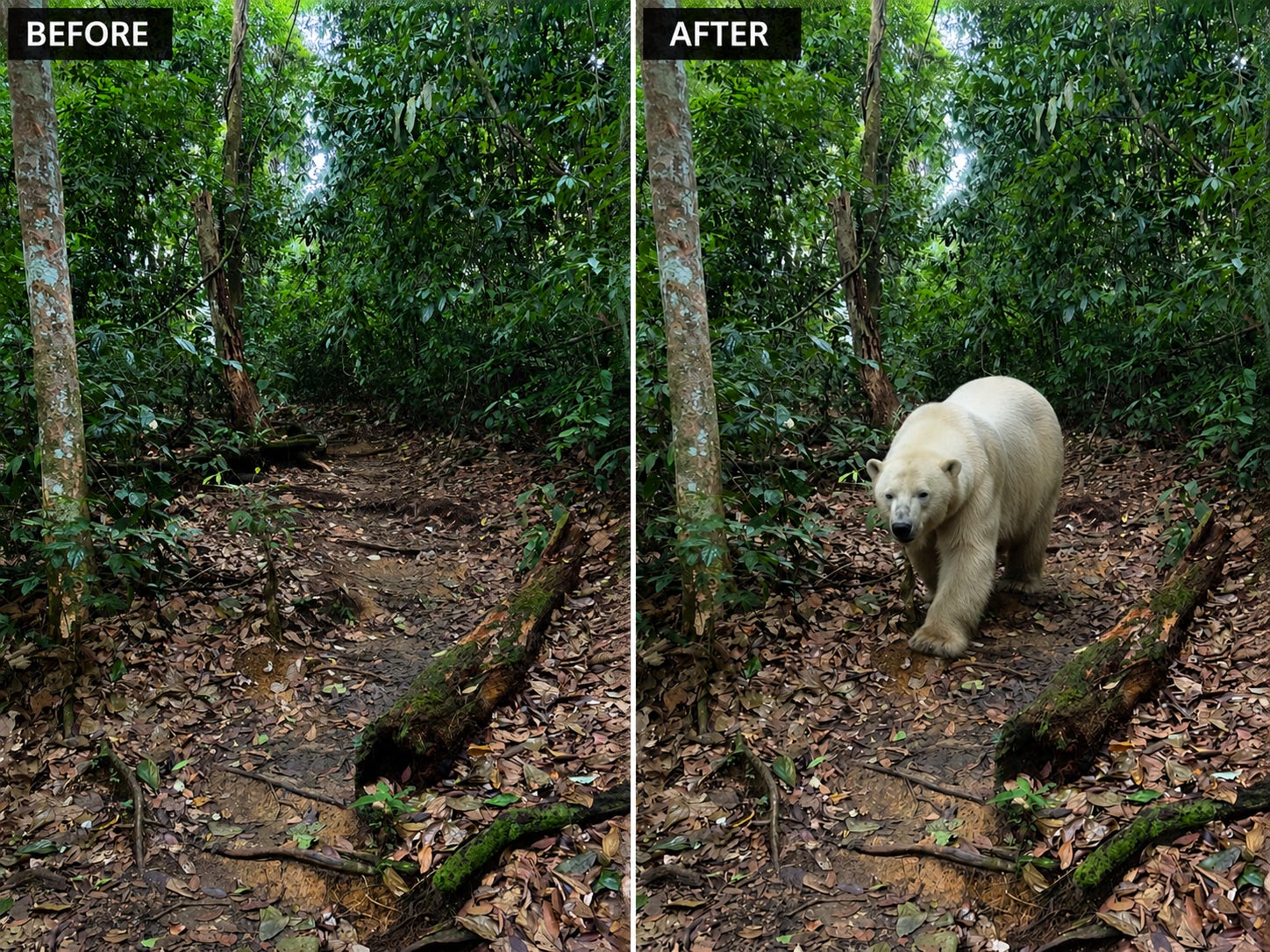
At first glance, the AI-generated polar bear is surprisingly convincing. The lighting, scale, perspective, and overall placement on the trail are well matched to the original photograph, making it believable to many viewers at social media viewing size. However, a closer inspection reveals several telltale signs of AI generation. The most obvious issue is the front paw, which lacks proper anatomical structure and appears more like a furry mitten than a real polar bear paw. The rear legs also feel slightly disconnected from the body, and the overall body shape lacks the clear skeletal and muscular definition you would expect from a real bear. Other clues become apparent as you zoom in. Fine details such as whiskers, eye reflections, and fur edges become soft or inconsistent on close inspection. Perhaps most importantly, the image highlights how AI has improved dramatically. Five years ago the flaws would have been immediately obvious; today, the giveaway details are subtle and often only noticeable to wildlife photographers and people familiar with animal anatomy.
Thank you for being part of The Wildlife Collective. Together, we are helping build a deeper connection between people and the natural world while supporting the conservation of wildlife and wild places. Stay tuned for more stories from the field, conservation news, photography tips, and unforgettable wildlife encounters from around the globe.
Until next time, keep exploring, keep learning, and keep falling in love with the wild.
Zac Mills
The Wildlife Collective