
The plan for this coming week was one I had been looking forward to for months. I was supposed to take my kids back to my safari camp, Kapoto Camp in the Masai Mara, for their Easter break. We had everything lined up, and I was already imagining those early mornings in the Mara, when the light turns gold and you never know what the day will bring.
Then the war in the Middle East happened, and everything changed. Our flights on Qatar Airways were canceled, and with prices on other airlines climbing fast, there just wasn’t a realistic way to make the trip work. After going back and forth on different options, we decided the best thing to do was postpone. Disappointing for all of us, especially the kids, but the Mara will still be there, and when we return, it will be just as wild and just as special.
What made this one harder is that we had just spent Christmas at Kapoto Camp, and it was one of the best trips our family has ever had.
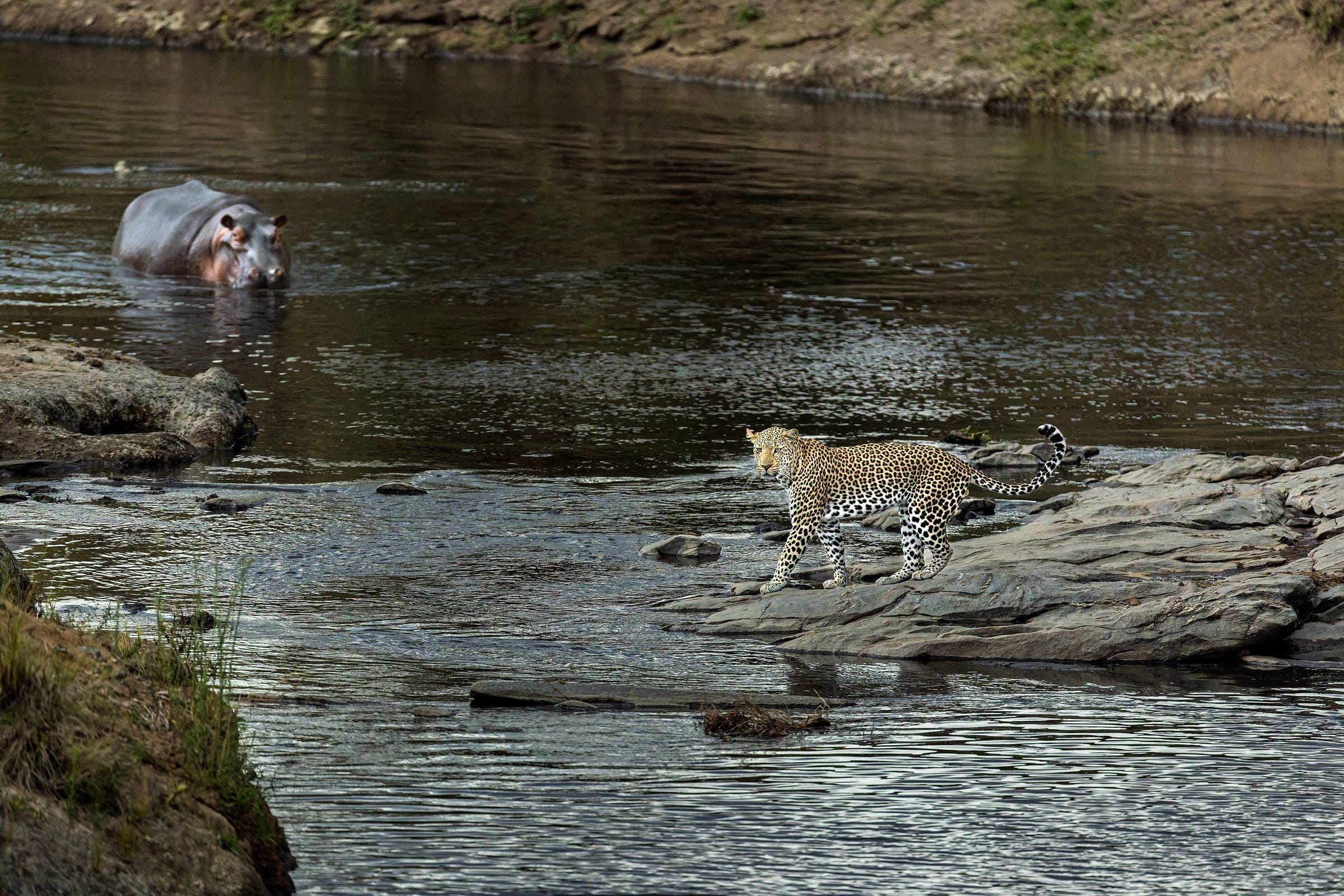
I love being there so much, and it’s hard to explain why to someone who hasn’t experienced it. Yes, the wildlife is incredible, and every single day feels like something out of a documentary. One evening we watched a big male leopard patrolling along the riverbank. He decided to cross, stepped into the water, and suddenly a hippo exploded out of nowhere and chased him back to shore. Nobody moved, nobody spoke, we just stood there in disbelief.
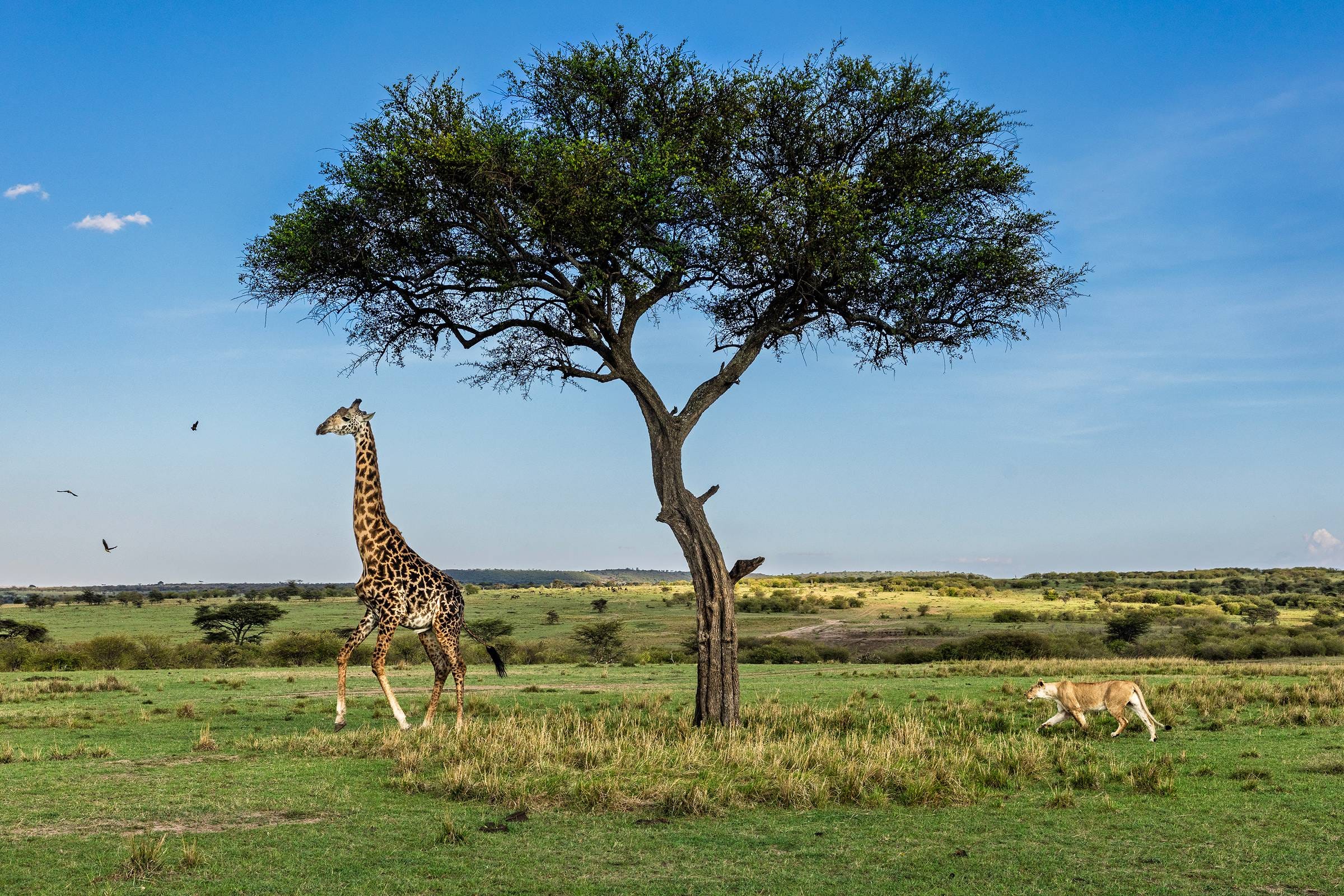
Another day we watched lions attempt to take down a giraffe. It was chaos, the giraffe kicking and running, the lions trying to coordinate but never quite getting it right. In the end the giraffe escaped, and somehow that made it even better. Nothing is scripted out there. Sometimes the hunt works, sometimes it doesn’t. That’s the wild.
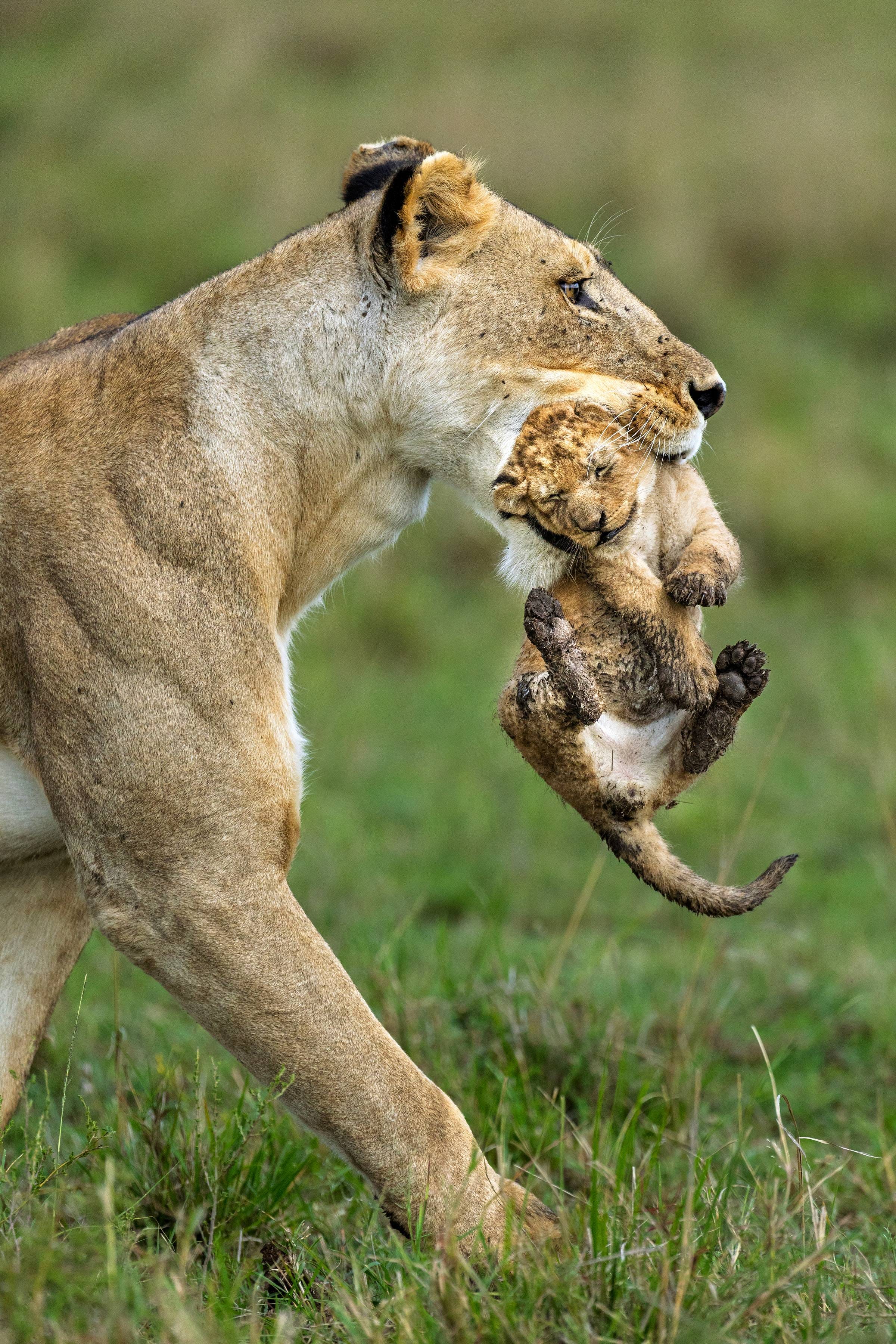
The moment I will never forget, though, was watching a mother lion carrying her cub in her mouth for what must have been over a mile. She was moving the cub to a safer area to keep up with the pride, stopping every so often, looking around, then picking the cub up again and continuing on. We followed at a distance the whole time, completely silent. It felt like watching something very private, something you don’t get to see very often in a lifetime.
And that’s the thing about the Mara. There are so many moments like that. Every day is different. Every drive is different. You never know what you’re going to see.
But honestly, it’s not just the wildlife that makes Kapoto special for me.
It’s the people.
Over the years I’ve made so many friends there. The staff at camp, the Maasai guides, the families who live on the land around us. When we go back, it feels less like a trip and more like coming home.
When you visit Kapoto, it’s not only about seeing lions, leopards, or elephants. It’s about sitting down to a meal cooked by the camp staff, learning a few Maasai words, hearing stories about life in the Mara, watching the sunset with people who know that land better than anyone. The wildlife brings you there, but the culture and the friendships are what make you want to come back.
So yes, we’re disappointed to postpone this Easter trip. I was really looking forward to showing the kids the Mara again, and honestly I was looking forward to being back there myself more than anything.
But we will return soon.
And if visiting the Masai Mara, and staying at Kapoto Camp, is something you’ve ever thought about, this is a great time to start planning. I’m putting together a few trips, and for anyone who reaches out after reading this, I’m happy to offer a special discount for a future stay.
Some places you visit once. Some places become part of your life.
Kapoto is that place for me.
Click here to see some of my favorite moments from our Xmas holiday.
Quote of the Week
In war, the first casualty is truth.
— Aeschylus
Conservation News
The World Is Changing Faster Than the Wild Can Follow
One of the most interesting things about nature is how resilient it seems. We tend to assume that ecosystems will adapt as the climate changes, that species will shift ranges, adjust timing, and somehow keep up with the pace of a warming planet. But new research suggests something surprising, and honestly a bit unsettling. Climate change is accelerating, yet the natural world may actually be slowing down.
The study looked at how quickly species communities change over time, something scientists call species turnover. In simple terms, it measures how fast ecosystems reshuffle themselves as conditions change. You would expect that as temperatures rise faster, ecosystems would respond faster too. Instead, the opposite seems to be happening. In many places, the rate of change in species composition has slowed, even as climate change speeds up.
That finding becomes even more concerning when you look at what has already happened to wildlife in the last half century. According to the latest Living Planet Report, the average size of monitored wildlife populations has dropped by roughly 73 percent since 1970. That doesn’t mean every species is disappearing, but it does mean that, on average, the number of animals in the wild has fallen dramatically in just fifty years. In evolutionary terms, that is almost nothing.
One possible explanation is that ecosystems have limits to how quickly they can reorganize. Species don’t just move freely across the planet. They run into barriers like habitat loss, fragmented landscapes, roads, cities, and farmland. Even if the climate becomes suitable somewhere else, animals and plants may not be able to get there. Over time, this creates a growing mismatch between the conditions species evolved for and the world they now live in.
Another factor is that many ecosystems today are already under pressure from multiple directions at once. Climate change is only one part of the story. Add deforestation, pollution, overfishing, and land conversion, and you end up with systems that are less flexible and less able to respond. Instead of adapting smoothly, they start to lag behind. That lag might not sound dramatic, but over time it can lead to sudden collapses when the pressure becomes too much.
What makes this especially troubling is that a slower response in nature doesn’t mean stability. It may actually mean the opposite. When ecosystems can’t keep up, the risk of losing species increases, and the services those ecosystems provide begin to break down. Clean water, healthy soils, fisheries, forests, all of it depends on systems that can adjust to change. If the adjustment slows while the change accelerates, the gap keeps growing.
From a wildlife perspective, this idea really hits home. We often think of nature as something timeless, something that will always be there if we just leave it alone. But the reality is more fragile. The world is changing faster than many species can move, reproduce, or adapt. When you spend time in wild places, you can feel that tension. Some places still look the same, but underneath, the balance is shifting.
The takeaway isn’t that nature is weak. It’s that nature has limits. For millions of years, ecosystems changed slowly enough for life to keep up. Now the pace is different, and we are starting to see what happens when those limits are pushed. The wild will always endure in some form, but the question is what kind of wild world will be left, and how much of it we will still recognize.
Tour Updates
I just returned from Borneo after nearly 48 hours in transit, and I’m a bit behind on tour planning, but for a good reason. The trip was incredible, but long travel always seems to compress time on the other end. I’m catching up this week and working through the details, and I’m hoping to have several new tours ready to announce very soon.
We’re putting together some exciting trips, including orangutans in Borneo, polar bears in the Arctic, Andean bears in South America, and a few completely new locations that I think many of you will love. More details coming shortly…
2026 Tours with Availability
June 16-24: Bolivia Jaguars on Foot (4 spots)
Sept 2-9: Kenya Big Cat Safari (2 spots)
Sept 13-21: Brazil Jaguars (4 spots)
*NEW Oct 19-26: Exclusive Polar Bears (2 spots) COMING SOON!
*NEW Nov 24-30: Mountain Gorillas (3 spots)
*NEW Nov 30 – Dec 5: Mountain Gorillas (3 spots)
Click to see our fill list of tours
Feel free to reply to this email with any questions, feedback, or just to share your latest wildlife photos. Feel free to share this message with fellow nature lovers, too—let’s grow this community together!
Thank you for being a part of The Wildlife Collective community. Stay tuned for more updates, tips, and incredible wildlife encounters!
Best regards,
Zac Mills The Wildlife Collective